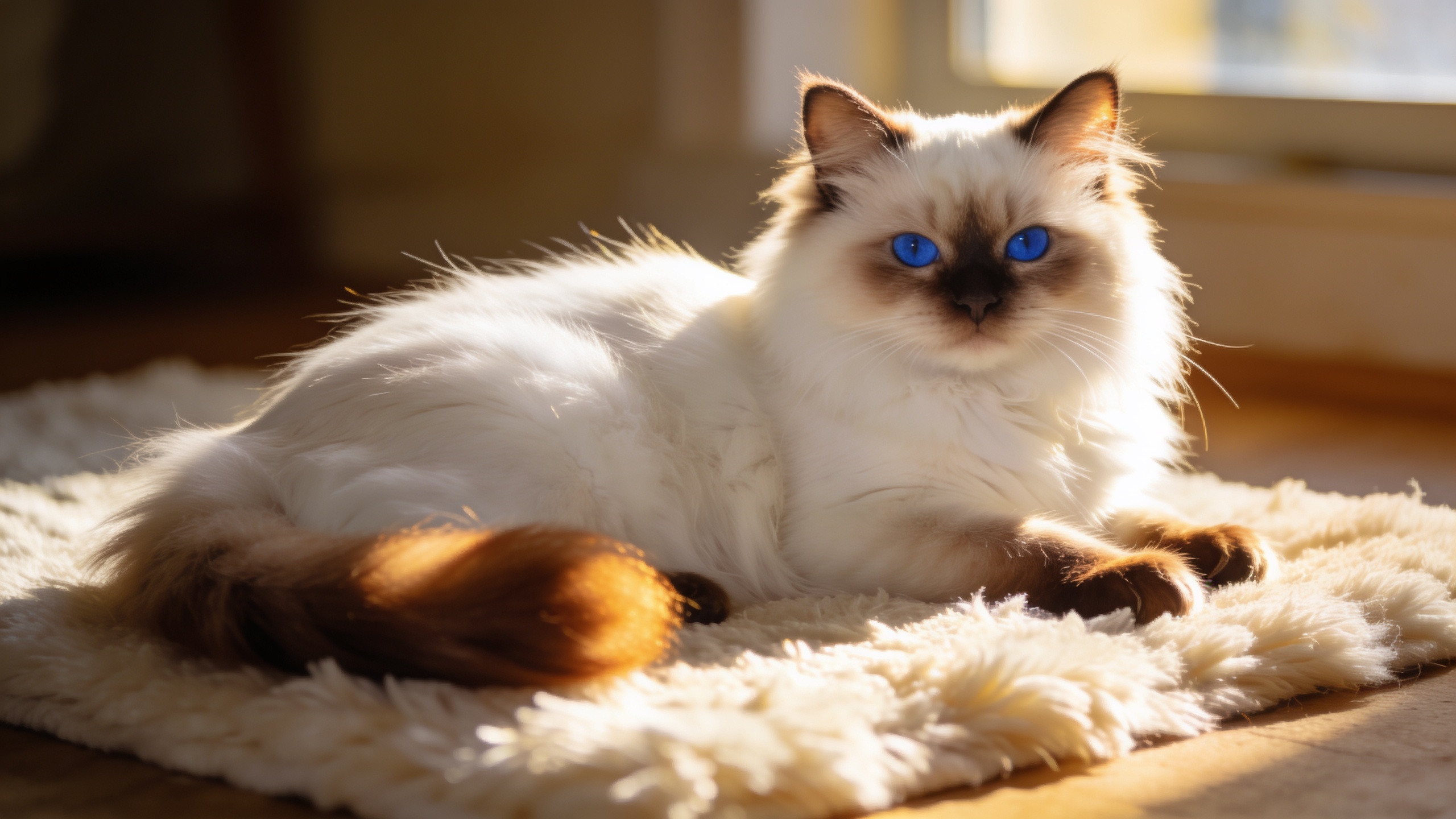
The Himalayan cat was created through deliberate outcrossing, not as a naturally occurring landrace. Breeders in the United States and the United Kingdom began crossing longhaired Persian cats with Siamese in the 1930s and 1940s to combine the Persian’s coat length and body type with the Siamese colorpoint pattern and blue eyes. Early programs were inconsistent because the colorpoint trait is recessive, so offspring had to inherit the responsible allele from both parents before the pointed pattern appeared. That genetic requirement made results unpredictable in the first generations and slowed breed stabilization.
The developing cat was initially treated as a Siamese variant in some registries because the defining trait was pattern rather than a separate body type. Over time, selective breeding shifted the phenotype toward the Persian outline: cobby body, shortened muzzle, round head, and dense long coat. That’s why the modern cat is genetically and structurally closer to the Persian than to the Siamese, despite the pointed coloration. Breed standards eventually separated the Himalayan as its own Persian division in many associations, while some registries still classify it within Persian color divisions rather than as an independent breed.
The point pattern is controlled by a temperature-sensitive form of pigment production. Melanin expression is reduced in warmer areas of the body, which is why cooler extremities such as ears, face, legs, and tail become darker. Kittens are often born nearly white or cream because the uterine environment is warm; the points deepen gradually as the kitten matures and peripheral body temperature differences become more pronounced. This temperature dependence also explains why ambient heat, illness, and localized inflammation can alter coat shading, sometimes producing lighter patches after fever or darker points in cooler seasons.
Because this breed was built on Persian ancestry, inherited risks common to Persian lines remain central to its history. Selective breeding for a flatter face intensified brachycephalic anatomy, which can affect airway resistance, tear drainage, and dental alignment. Long-term breeding choices also preserved a predisposition to polycystic kidney disease in many lines, along with ocular and dermatologic issues linked to facial structure and coat density. Responsible breeding history therefore depends not only on maintaining colorpoint expression, but also on screening for hereditary disease and avoiding overuse of closely related animals.

Sheba Perfect Portions Cuts Wet Cat Food, Multipack, 2.6 oz, 24 ct | Chicken, Salmon & Turkey cuts in gravy, grain-free, protein-rich, no corn/soy, essential vitamins & minerals, twin-pack trays
EUR 24.65 (as of September 29, 2026 18:35 GMT +00:00 - More infoProduct prices and availability are accurate as of the date/time indicated and are subject to change. Any price and availability information displayed on [relevant Amazon Site(s), as applicable] at the time of purchase will apply to the purchase of this product.)The historical emphasis on appearance has practical consequences for modern management. Cats with intense contrast between body color and points often descend from lines where coat quality, facial type, and eye color were prioritized over functional anatomy. When evaluating a Himalayan’s background, pedigree depth matters because it helps predict whether the cat is more Persian-dominant in type, whether the point coloration is stable, and whether health testing was incorporated into the breeding program. In this breed, origin is inseparable from genetics: the visible phenotype reflects both intentional selection and the structural trade-offs of that selection.
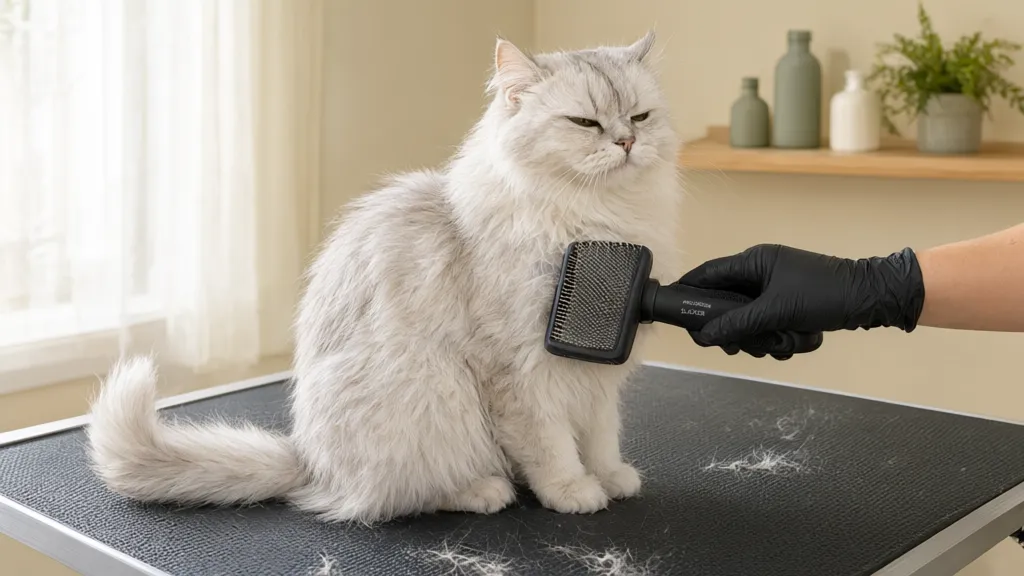
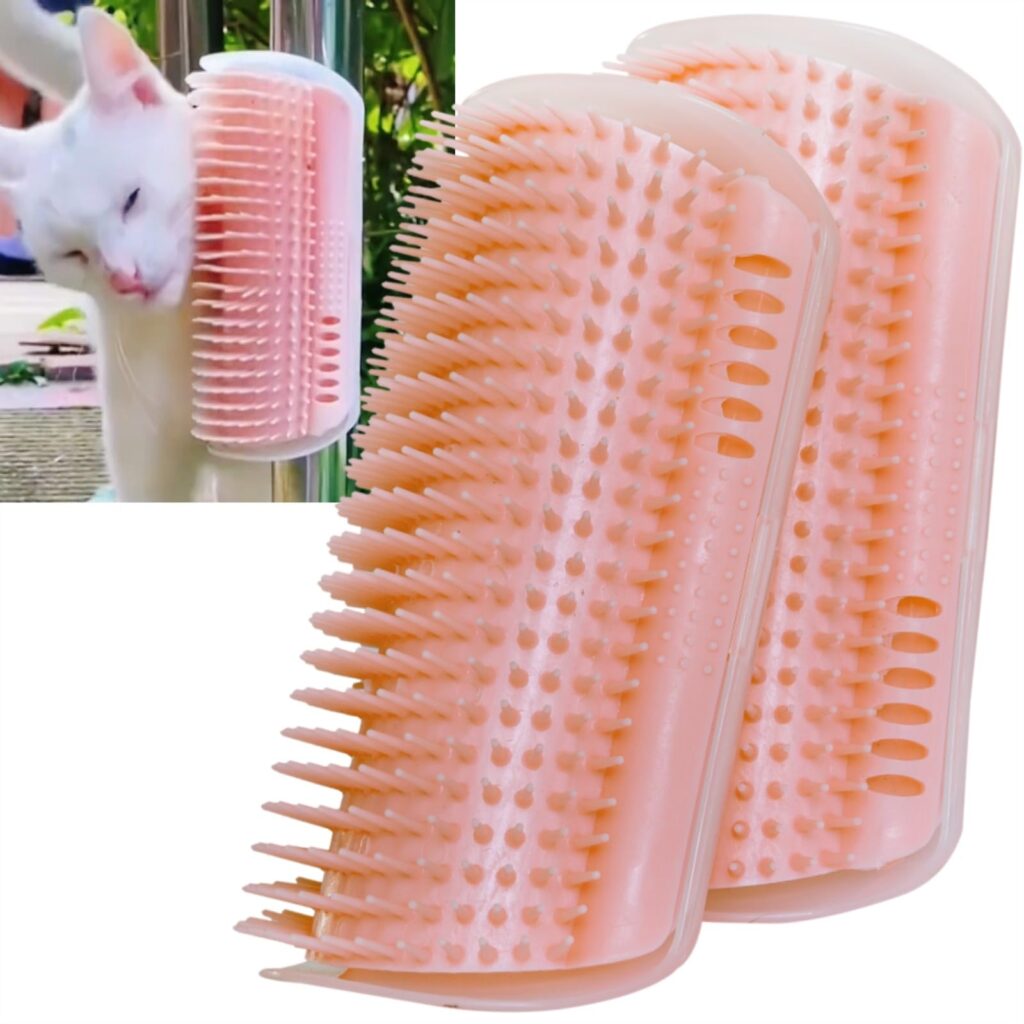
The coat is the dominant maintenance challenge and must be managed as a structural feature of the breed, not as cosmetic fluff. The long, dense undercoat mats quickly where friction and moisture accumulate, especially behind the ears, in the armpits, at the chest, and along the rear trousers. Mat formation is accelerated by sebaceous buildup, low grooming tolerance, obesity that limits self-cleaning, and any reduction in mobility. Daily combing to the skin with a stainless-steel comb is more effective than surface brushing because it detects tight tangles before they become painful mats that trap heat, debris, and skin moisture.
Eye care is often required because the shortened facial skeleton can compromise nasolacrimal drainage and increase facial fold wetness. Chronic tearing, or epiphora, leaves the periocular coat damp and predisposes to staining, dermatitis, and secondary bacterial overgrowth. Recurrent discharge that thickens, turns yellow-green, or is accompanied by squinting, corneal haze, or pawing at the face warrants prompt examination because brachycephalic anatomy can mask corneal injury until discomfort is advanced. Cleaning should remove secretion without abrading the skin, since repeated rubbing inflames the delicate facial folds.
Respiratory efficiency can be reduced by the same skull configuration that creates the breed’s characteristic appearance. Narrow nares, elongated soft palate, and reduced nasal cavity volume increase airflow resistance, so heat, stress, obesity, and exercise intolerance become clinically relevant sooner than in less brachycephalic cats. Audible breathing, open-mouth respiration, snoring during wakefulness, and poor heat dissipation are not normal quirks; they are signs that airway compromise may be present. Maintaining lean body condition reduces the extra workload on the chest wall and decreases the respiratory burden imposed by crowded upper-airway anatomy.
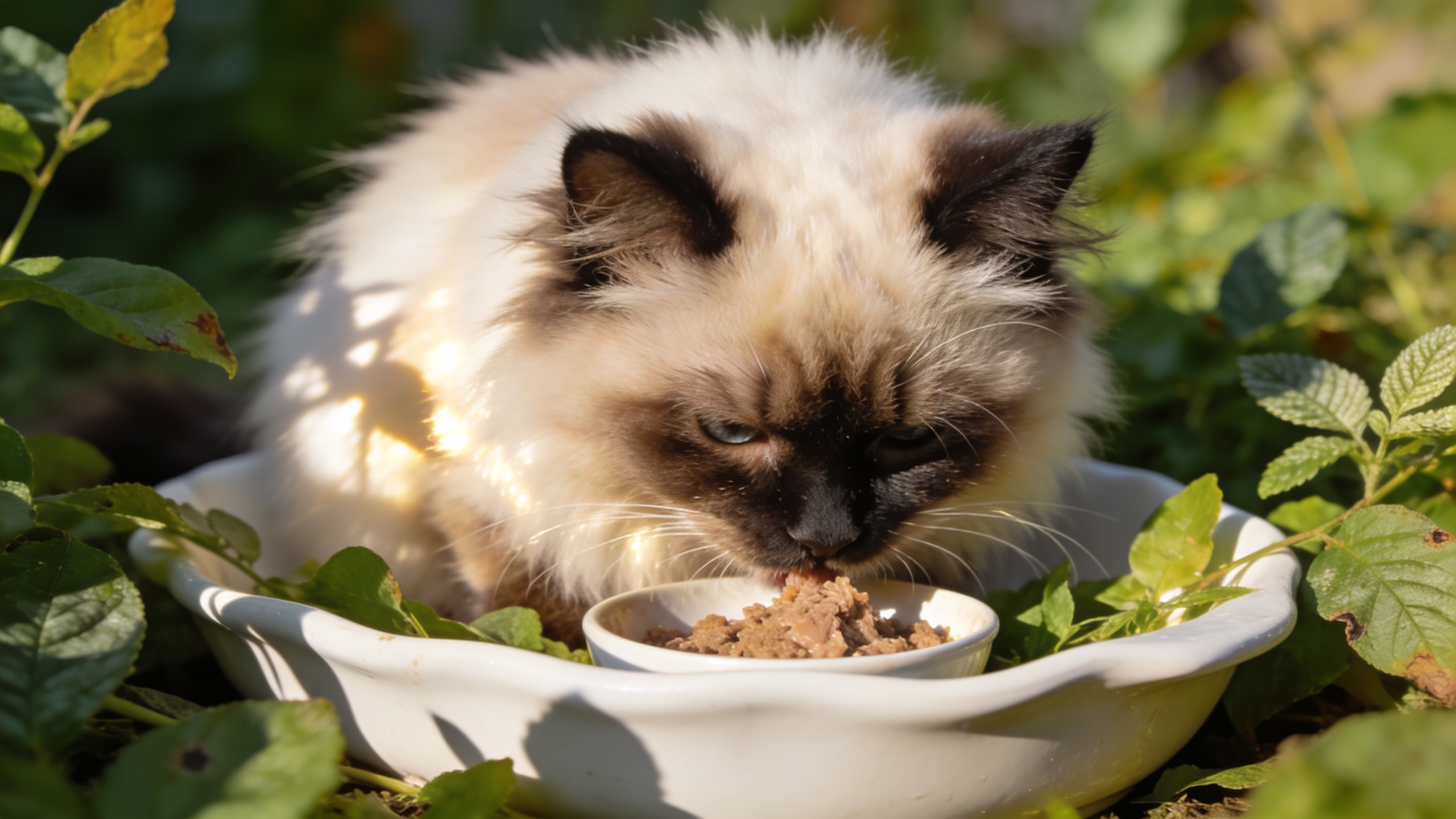
Feeding should be adjusted to facial structure and body type. Many individuals eat more efficiently from shallow, wide dishes because a short muzzle makes deep bowls awkward and can force the whiskers and nose into the food. Moisture-rich diets may be useful when water intake is inconsistent, particularly in cats with renal risk or a history of urinary concentration concerns, but caloric control remains essential because a heavy body intensifies orthopedic strain, grooming failure, and breathing difficulty. Because reduced activity is common in heavily coated, brachycephalic cats, energy-dense treats can rapidly produce fat accumulation even when the cat appears only moderately overconditioned.
Hereditary screening is central to care planning. Renal ultrasonography or validated DNA testing for polycystic kidney disease should be verified in breeding stock and, when history is unknown, considered in the individual cat’s preventive workup. Ophthalmic assessment is valuable when tearing, corneal irritation, or abnormal pupil response is noted, because facial conformation can coexist with inherited eye disease unrelated to the point pattern itself. Dental crowding and malocclusion are more likely when the skull is shortened, so tartar accumulation, gingival inflammation, and reluctance to chew require closer monitoring than in mesocephalic breeds.
High-priority observations: persistent tear staining, matting at the groin or axillae, noisy breathing at rest, reluctance to jump, foul breath, reduced grooming, and any sudden change in coat color after fever or illness.
Behaviorally, these cats are typically less indifferent to handling than their dense coat suggests; many tolerate routine grooming if introduced before tangles and facial irritation create negative associations. Forced restraint during coat care often worsens resistance because discomfort accumulates quickly in a cat with sensitive skin, pressure points from mats, or restricted nasal airflow. Short, predictable grooming sessions paired with immediate removal of debris from the eyes and coat are more effective than infrequent intensive sessions that turn care into a struggle.