Regular exercise preserves lean muscle mass, which is important in cats because inactivity quickly shifts body composition toward fat accumulation while muscle fibers atrophy. This matters most in indoor, neutered, and older cats, since lower testosterone and estrogen levels reduce baseline energy expenditure and increase the tendency to deposit abdominal fat. Muscle work also supports joint stability: stronger core, pelvic, and shoulder musculature reduces mechanical stress on hips, knees, and elbows, which can lessen stiffness in cats with early osteoarthritis, even when radiographs show mild disease. In geriatric cats, controlled movement helps maintain proprioception and coordination, lowering the risk of slips from furniture, missteps on stairs, and secondary soft-tissue strain.
Exercise improves cardiovascular conditioning by increasing heart rate variability, peripheral circulation, and oxygen delivery to working tissues. Cats with mild obesity, chronic deconditioning, or low-grade metabolic syndrome often show faster fatigue, but gradual activity increases aerobic tolerance without overloading the heart. Better circulation also supports thermoregulation and tissue repair, which is relevant after minor orthopedic strain or in cats recovering from confinement-related weakness. Short bursts of play mimic the cat’s natural hunt cycle, engaging fast-twitch muscle fibers and promoting short, high-intensity energy use that’s metabolically efficient for felines.
Weight control is one of the most measurable physical gains. Cats burn relatively few calories at rest, so even modest daily activity can prevent positive energy balance, especially in highly palatable diets and free-fed households. When body fat rises, inflammatory mediators increase, worsening insulin resistance and placing extra load on joints, spine, and hind limbs. Exercise helps interrupt that cycle by increasing caloric expenditure and improving glucose uptake by skeletal muscle. In cats with a tendency toward diabetes, movement is not a substitute for diet control, but it can improve insulin sensitivity and reduce postprandial glucose excursions when paired with measured feeding.
Digestive motility often benefits as well. Activity stimulates abdominal muscle contractions and may reduce constipation risk in sedentary cats, particularly those on low-moisture diets or living in stress-heavy environments that discourage normal elimination patterns. Cats that move more also tend to drink more if exercise sessions are paired with water access, which supports urine dilution and may reduce the concentration of crystals in cats predisposed to lower urinary tract disease. For long-haired breeds, improved mobility can reduce grooming difficulty and the formation of mat-associated skin traction, though exercise does not replace coat care.

Dr. Elsey's Ultra UnScented Clumping Clay Cat Litter 40 lb. Bag
EUR 20.16 (as of September 23, 2026 14:31 GMT +00:00 - More infoProduct prices and availability are accurate as of the date/time indicated and are subject to change. Any price and availability information displayed on [relevant Amazon Site(s), as applicable] at the time of purchase will apply to the purchase of this product.)Breed and body type influence how physical benefits appear. Maine Coons, Ragdolls, and other large-framed cats may need lower-impact activity because their mass increases joint load. Burmese, Abyssinians, and Bengals often tolerate higher-intensity play and may lose conditioning if understimulated. Brachycephalic cats such as Persians can fatigue more quickly, so shorter bouts with rest periods are safer than sustained chasing. Signs that activity is appropriately dosed include smoother jumping, steadier landing, reduced abdominal roundness over time, and more consistent gait symmetry; warning signs include panting, limping, vocalization during movement, reluctance to use stairs, or post-exercise hiding, which can indicate pain or overexertion and warrant veterinary assessment.
Cats are highly predator-driven mammals, so inactivity often produces not only boredom but neurobehavioral dysregulation. Predatory behavior is a sequenced pattern involving orient, stalk, chase, pounce, capture, and post-capture handling; when that sequence is repeatedly blocked, many cats redirect energy into climbing curtains, nighttime zoomies, ankle ambushes, or attack-bite play aimed at hands. Structured exercise provides an acceptable outlet for that motor pattern and reduces frustration-induced behaviors by completing the hunt arc in a controlled context. That is especially valuable in young adult cats, high-drive breeds, and single-cat households where the cat lacks social play partners.
Exercise also modifies arousal chemistry. Repeated, brief play sessions can lower baseline stress signaling by reducing chronic sympathetic activation and offering predictable energy discharge. Cats living with inconsistent feeding, noisy environments, or limited territory frequently show tension behaviors such as excessive grooming, tail flicking, startle reactivity, and prolonged hiding; when movement is paired with routine, many of these signs diminish because the cat’s environment becomes behaviorally legible. For some cats, especially those prone to stress cystitis, predictable activity can reduce the frequency of flare-ups by lowering emotional load, although environmental enrichment and litter-box management remain necessary.
Mentally demanding exercise is more effective than random motion because cats habituate quickly to repetitive stimuli. Toys that move erratically, hide, pause, and reappear mimic prey and force the cat to problem-solve, visually track, and time motor output. This engages attention networks in the feline brain and reduces the chance that the cat will seek stimulation through undesirable behaviors. Cats with high intelligence or strong prey focus often become destructive when under-challenged; in these individuals, puzzle feeders, food-dispensing toys, scent trails, and target-tracking games are not luxuries but behavior-shaping tools that channel cognitive energy into species-appropriate tasks.
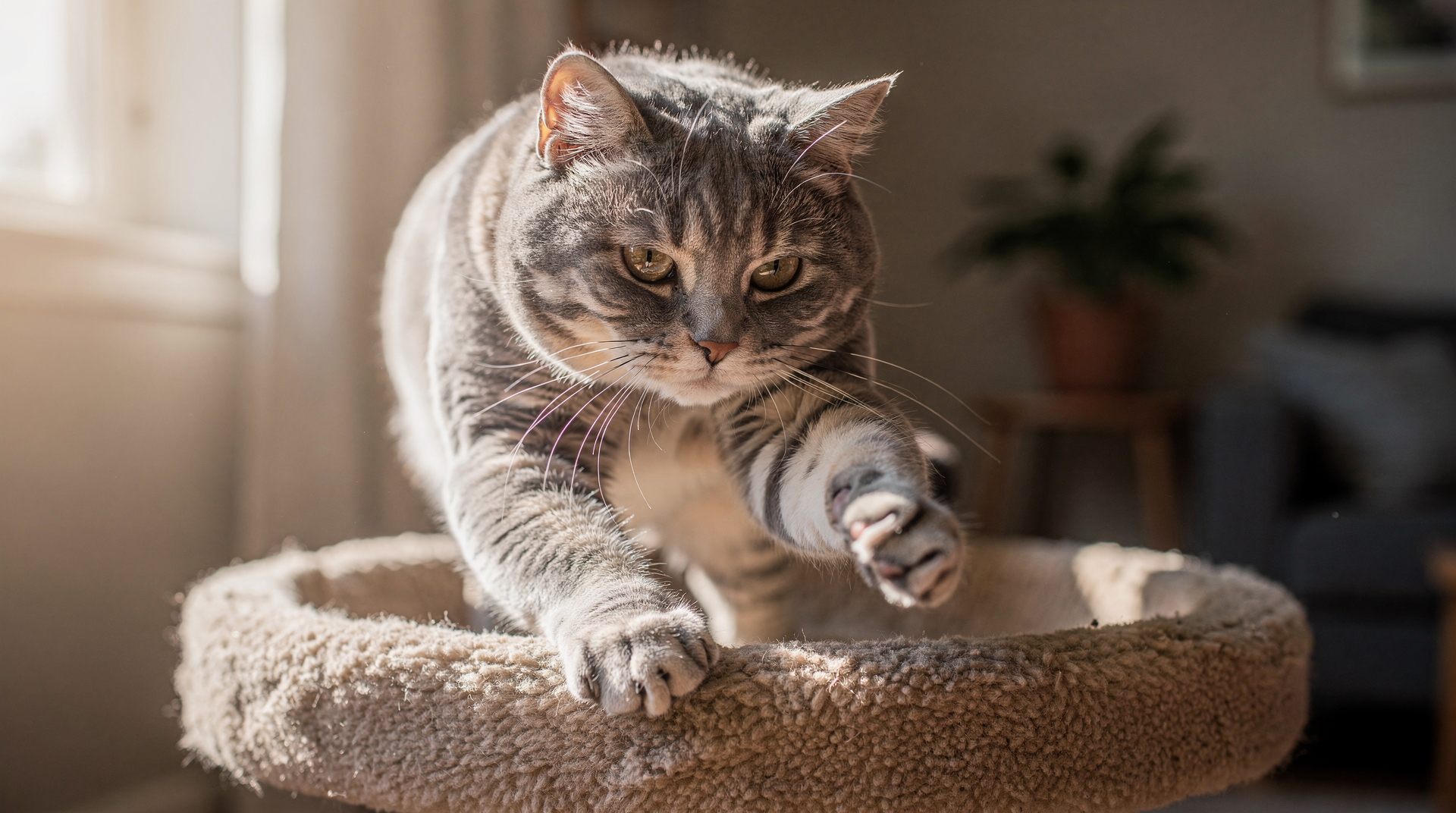
In kittens and adolescents, exercise is a key regulator of impulse control. A cat that practices brief stalking and capture learns bite inhibition, motor planning, and timing; a cat this is repeatedly interrupted during play may remain physically fit but socially unrefined. Overaroused kittens often escalate from playful swats to hard bites because they never complete the predatory sequence. Scheduled play with a lure toy, followed by a small food reward, can reduce this escalation and help the kitten associate movement with a predictable endpoint rather than frustration. In multicat homes, this can also lower intercat tension by reducing the likelihood of redirected aggression after exciting events outside the home.
Older cats benefit in a different way: mild exercise helps preserve cognitive engagement and environmental orientation. Senior cats with early cognitive dysfunction commonly show night vocalization, altered sleep-wake cycles, and apparent confusion. Movement that involves reaching, stepping, tracking, and mild climbing can maintain spatial mapping and body awareness, which supports confidence in the home. However, if a senior cat seems mentally dull, withdrawn, or unusually reactive, pain, hypertension, hyperthyroidism, or sensory loss may be driving the behavior; exercise should be adjusted, not intensified, until those problems are evaluated.
- flattened ears, dilated pupils, tail lashing, and inability to disengage from the toy indicate the session should end before frustration peaks.
- Use play that alternates chase and pause; nonstop high-speed pursuit can trigger panic in timid cats and does not reflect normal hunt behavior.
- For cats that bite after play, end with a small food reward or access to a treat puzzle to complete the predatory cycle and reduce post-play frustration.
- Cats with arthritis, obesity, or neurologic deficits may show behavior change before obvious lameness; reluctance to jump, choosing lower resting sites, or fewer exploratory passes through the home can signal that the cat is avoiding movement because it hurts.
Behavioral improvement from exercise is strongest when activity is frequent, brief, and individualized. A cat that receives two to four short sessions daily usually shows less restlessness than one given a single long session, because feline attention and sprint capacity are naturally episodic. Matching the pace, intensity, and reward to the cat’s age, temperament, and medical status prevents frustration and turns movement into a reliable regulator of mood, arousal, and household harmony.
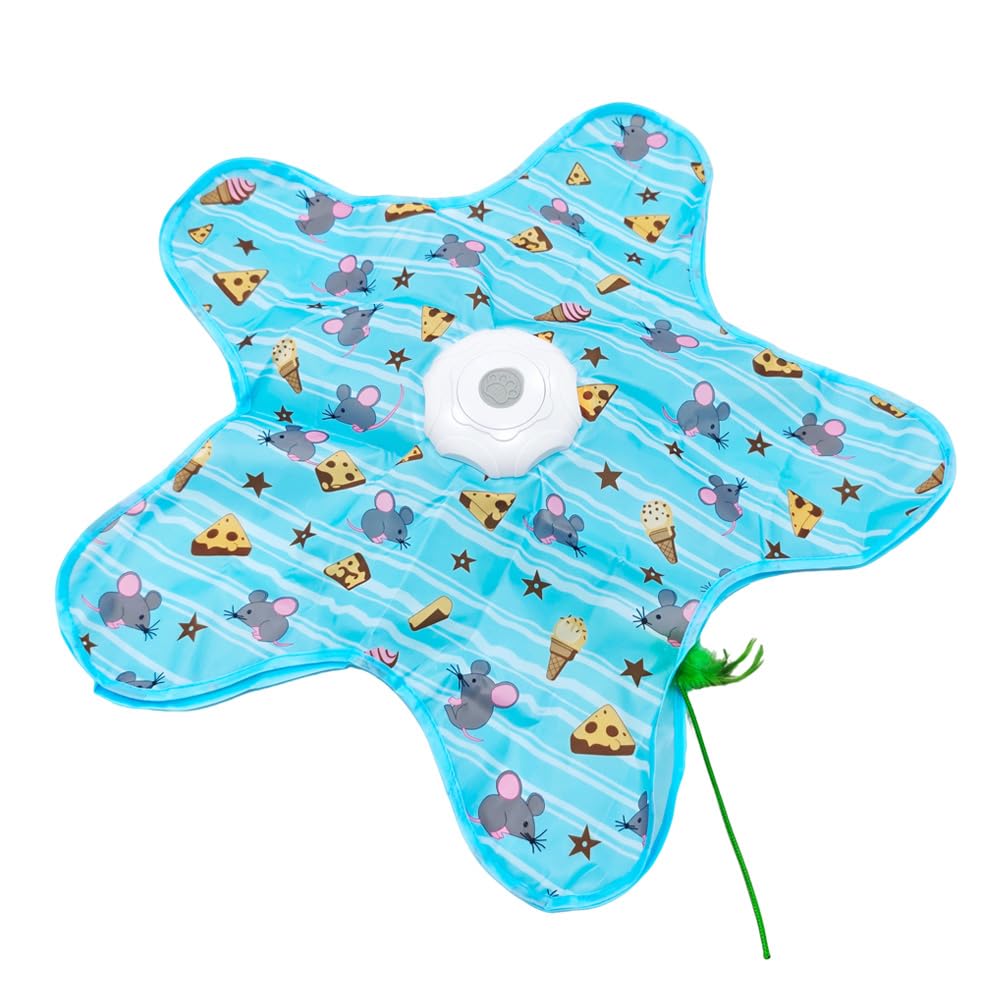
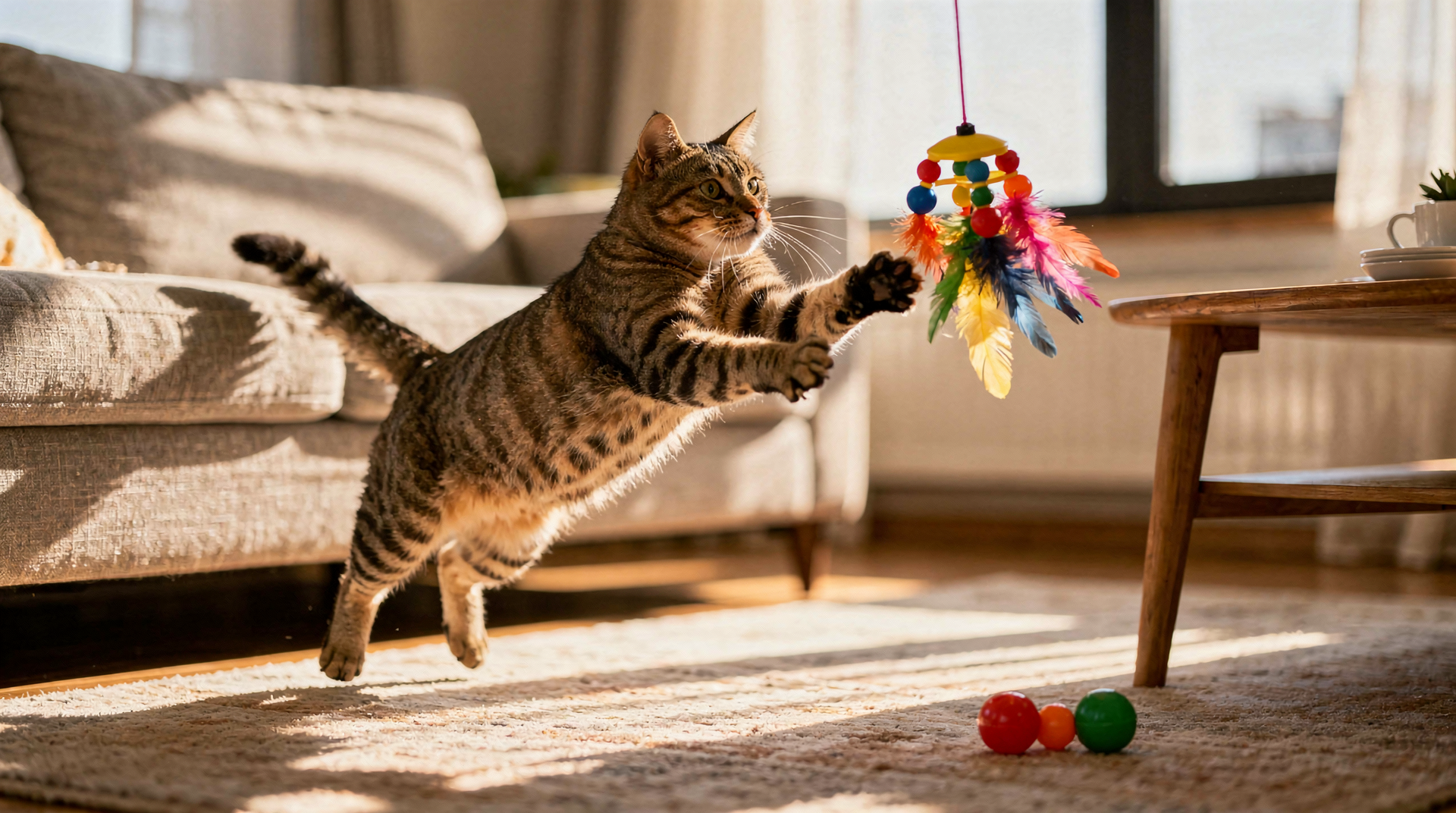
The most effective activity for cats is not random “wear them out” play but prey-simulating work that follows feline motor and sensory biology. Wand toys that dart, freeze, hide behind furniture, and reappear trigger the orient-stalk-chase-pounce sequence because motion near floor level activates hunting circuits more reliably than tossing toys overhead. Toys with feather, fur, crinkle, or small prey-like attachments are usually superior to large plush objects because they fit the cat’s instinct to seize small, moving targets. To avoid frustration, end each session with a successful capture and a small food reward; many cats settle more cleanly when play closes the predation loop rather than stopping at peak arousal.
Food puzzles and foraging devices convert calories into work, which is especially useful in neutered, indoor, and food-motivated cats. Cats are built for frequent small meals, so scattering part of the daily ration in puzzle feeders, paper bags with cut openings, snuffle mats designed for feline use, or multiple feeding stations forces problem-solving and slows intake without a starvation response. This approach is particularly helpful for cats that inhale meals, then vocalize or beg due to rapid gastric emptying. It also reduces boredom-linked pacing and door-framing behavior because the cat must search, paw, and manipulate objects to earn food.
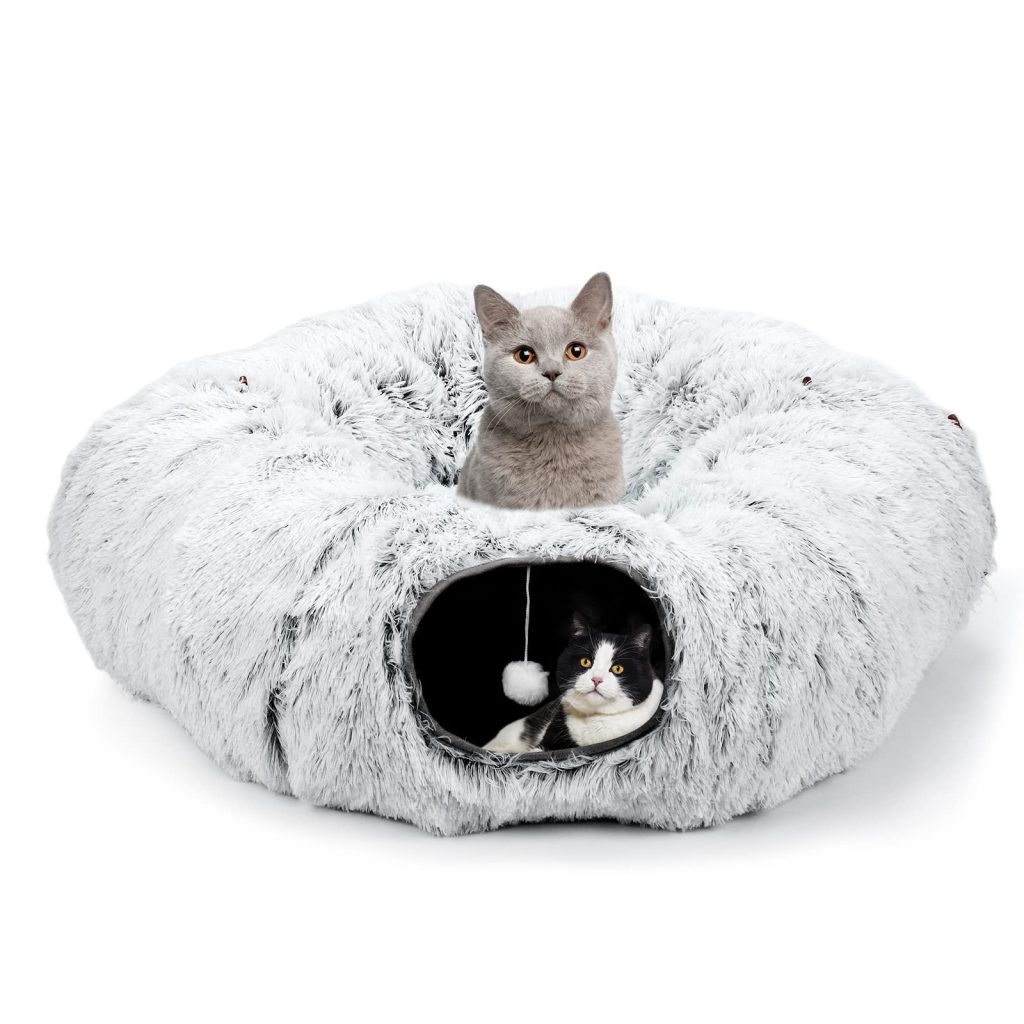
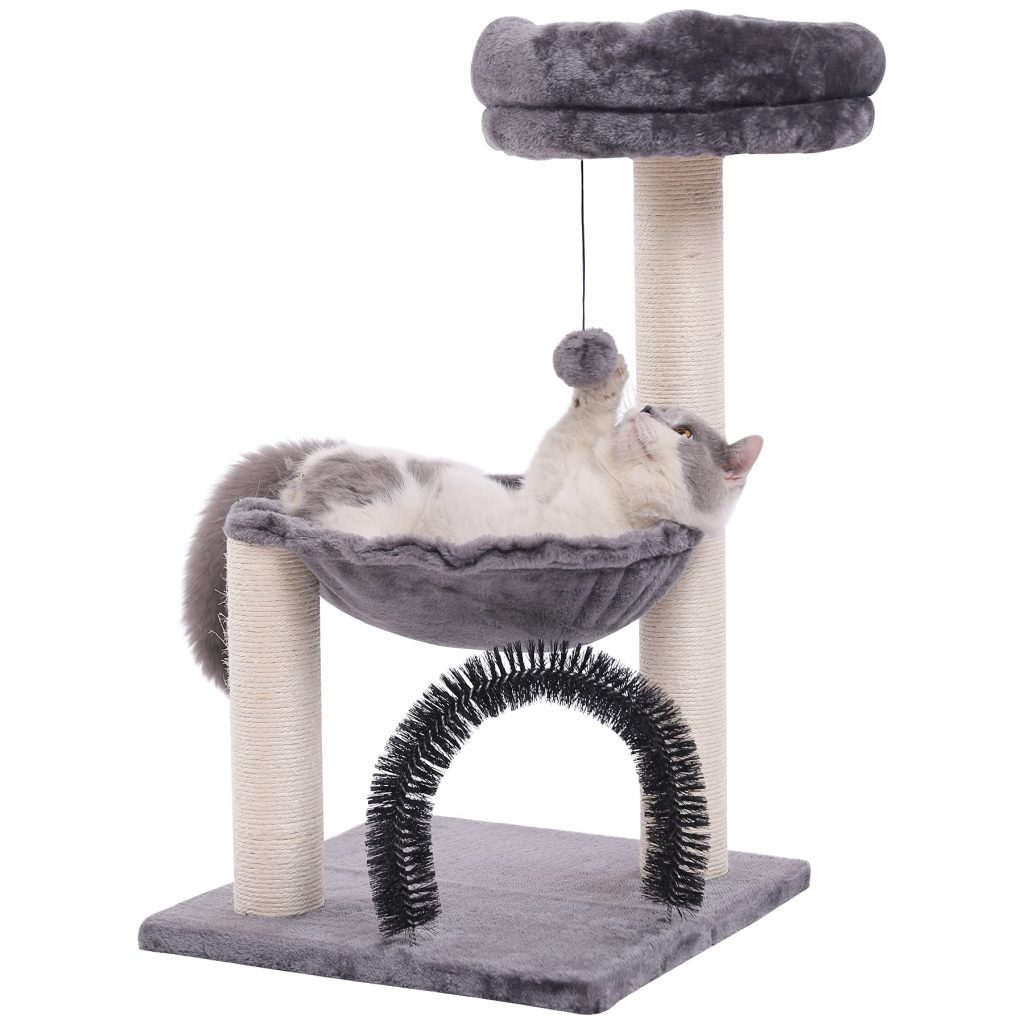
Vertical and hidden pathways exploit the cat’s climbing and ambush instincts. Cat trees with staggered platforms, wall shelves, window perches, tunnel systems, and boxes with two exits encourage short bursts of movement that mimic real hunting routes. Multi-level layouts are especially valuable for shy cats, because they allow exercise without direct social pressure from people or other pets. For older cats or those with arthritis, provide intermediate steps, ramps, or low-grade platforms so the cat can keep moving without needing painful high jumps; a cat that avoids vertical access may not be lazy, but protecting a sore joint.
Micro-sessions are better than marathon play. A 3- to 7-minute session repeated several times a day is often more effective than one long session because cats are sprinters, not endurance athletes. Rotate toy types every few days to prevent habituation, since many cats ignore items that remain visually and mechanically identical. Cats with strong prey drive, such as Bengals and Abyssinians, often need faster lure movement and more complex chase patterns; calmer or brachycephalic cats may prefer shorter chases with more pauses and less elevation.
Environmental details determine whether activity helps or overwhelms. Use non-slip surfaces for takeoff and landing, because slick floors increase the risk of soft-tissue strain and make painful cats less willing to move. Remove fragile objects from the play path so the cat can run, turn, and pounce without punishment or injury. For visually impaired seniors, toys with sound or scent are more effective than fast, silent objects, and for deaf cats, exaggerated visual movement is essential. If a cat repeatedly gives up mid-session, pants, crouches low, or licks lips excessively, reduce intensity and consider pain, cardiac disease, or poor conditioning.
Interactive play should be adjusted to the cat’s age and medical history rather than the owner’s idea of exercise volume. Kittens need controlled outlets for surge energy and bite practice; adults need enough challenge to prevent obesity and destructive behavior; seniors need gentle movement that preserves flexibility without provoking pain. Cats with heart murmurs, respiratory disease, severe obesity, neurologic disease, or uncontrolled hypertension require veterinary guidance before intense play, because overt exertion can mask underlying disease or expose exercise intolerance. The best activity plan is the one the cat chooses to repeat willingly, without post-play hiding, limping, or agitation.