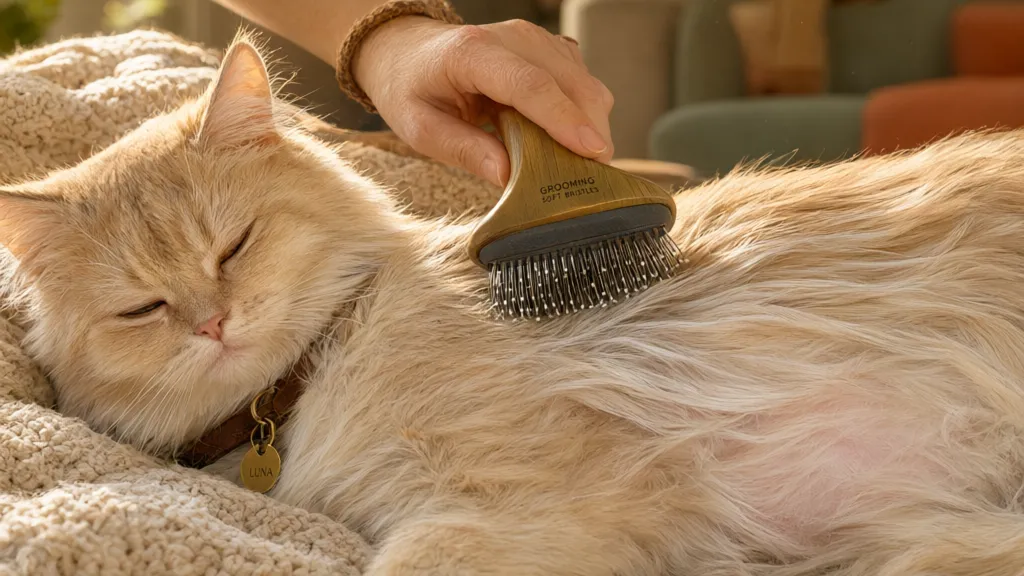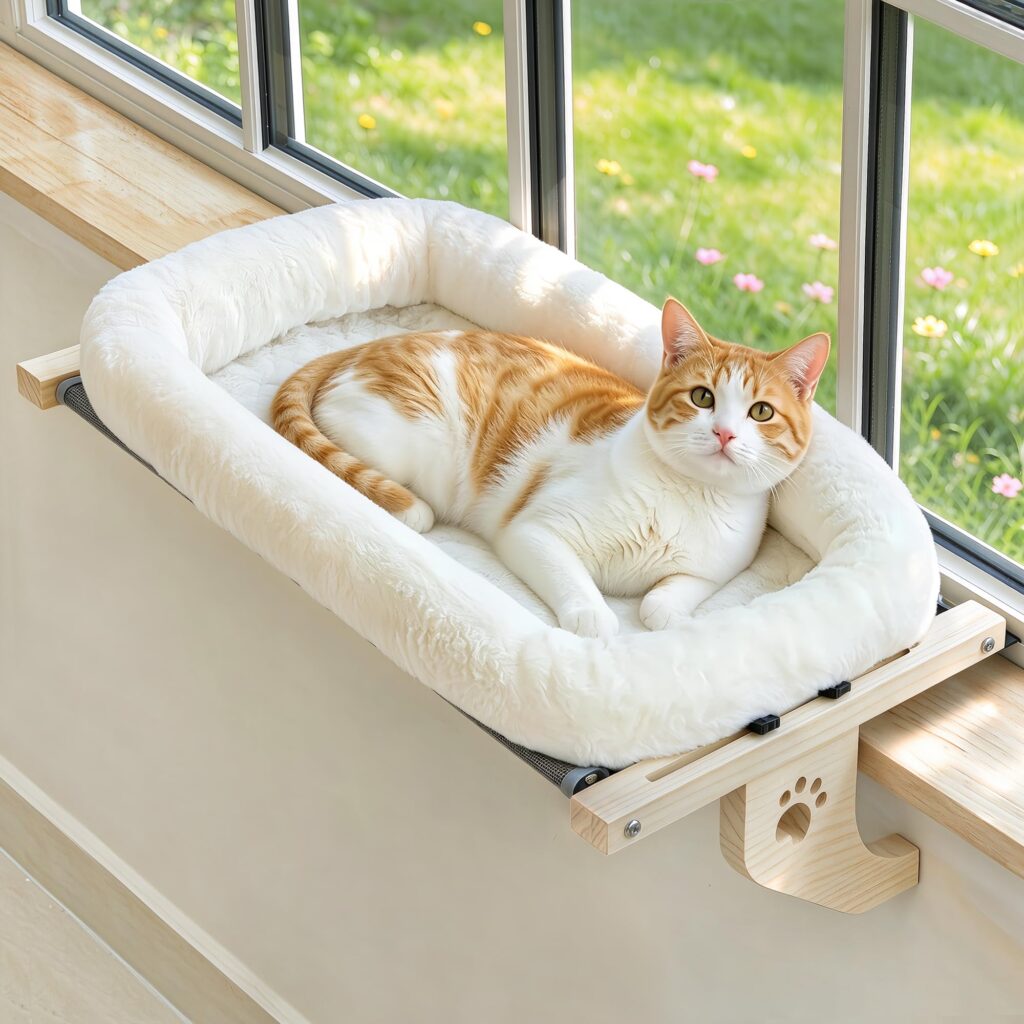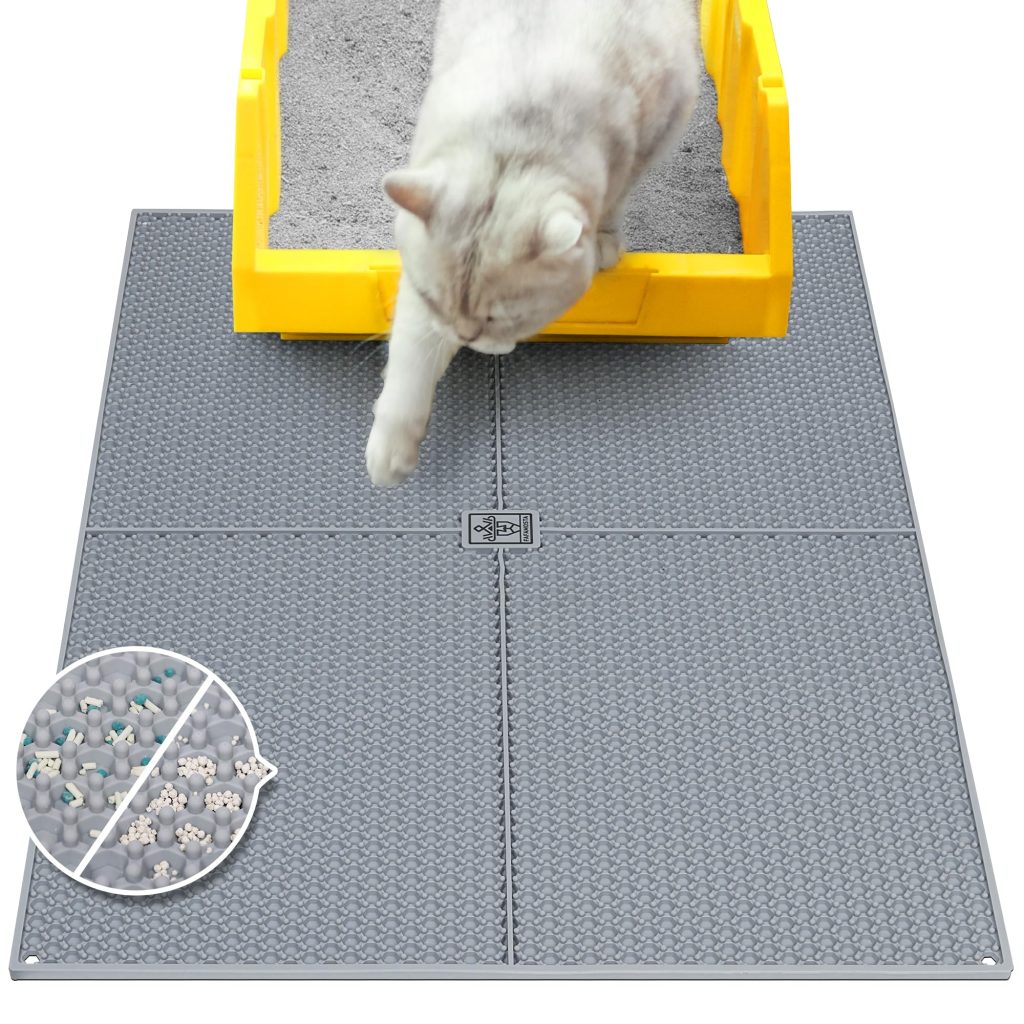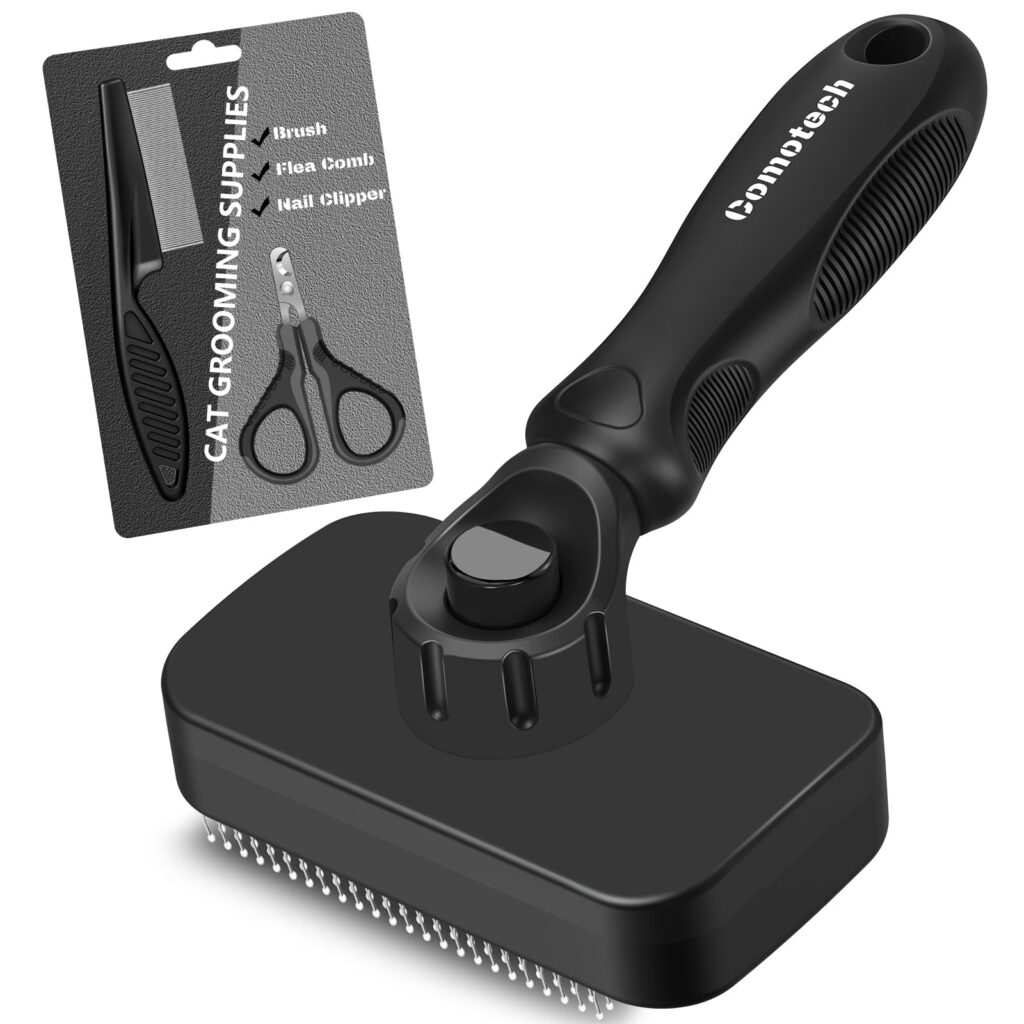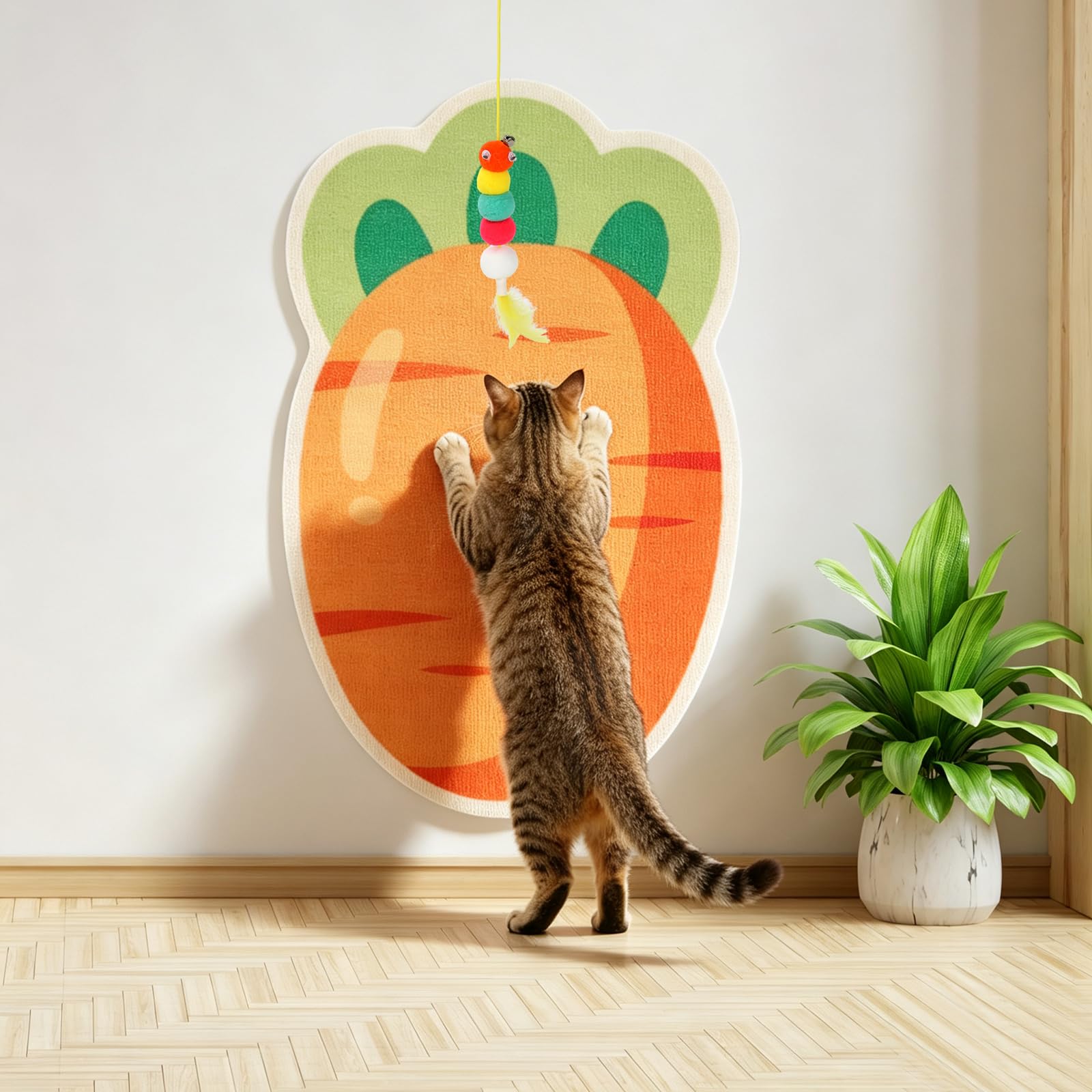
The FHTONGE self-adhesive felt scratcher offers a simple way to add a scratching surface where your cat already likes to scratch. Its 31.5-by-19.7-inch size gives a cat room to stretch, and its thin profile may suit homes where a freestanding post is awkward. The carrot design and hanging bell toy may attract some cats, but appearance alone won’t make a scratcher appealing: placement, stability, and your cat’s preferred scratching style matter most.
The felt is described as durable and less messy than cardboard, which may help keep paper-like debris off the floor. Felt can still show wear, shed fibers, or become less appealing over time, so inspect it regularly. The listing’s “nail file” wording should not be taken to mean the pad will reliably keep claws trimmed. Scratching helps cats stretch and maintain their claws, but it does not replace routine nail checks or trimming when needed.
Before applying the adhesive, choose a clean, dry, smooth surface and position the pad where scratching already happens. A cat that scratches a sofa arm may prefer the pad attached vertically at a similar height; a cat that scratches rugs may prefer it laid flat. Follow this product instructions, test the adhesive in an inconspicuous spot, and avoid delicate finishes or surfaces that could be damaged when it is removed. Although the listing says it peels away without residue, results can vary by surface, age, and condition.
- Place the scratcher near a favorite resting spot or the furniture your cat targets, rather than expecting your cat to seek it out across the room.
- Let your cat investigate it voluntarily. Reward interest with calm praise or a treat, and try moving the hanging toy gently to invite play.
- Keep other suitable scratching options available. Many cats benefit from a choice of vertical and horizontal surfaces with different textures.
- Check the pad’s edges and adhesive regularly, especially if it is mounted on a wall or sofa. Reattach or remove it if it lifts, shifts, or becomes loose.
The hanging bell may provide extra enrichment, but inspect its attachment and supervise play if your cat chews strings or small parts. Remove the toy if it becomes damaged or presents a snagging or swallowing risk. Keep the scratcher clean and replace it if the felt becomes badly worn, loose, or difficult to use.
Overall, that is a space-saving option for introducing a scratching surface without cardboard debris, provided the adhesive suits the chosen surface and the pad matches your cat’s preferences. Treat it as one part of a scratching setup—not a guaranteed furniture fix or a substitute for claw care—and let your cat’s use and comfort guide whether it earns a permanent spot.