Match the tool to coat length, density, and skin sensitivity. A fine-toothed metal comb reaches through long fur to the undercoat and reveals small tangles near the skin; a wide-toothed comb is safer for initial detangling. For short, close-lying coats, a soft rubber curry brush or grooming mitt lifts loose hair without scraping the skin. A soft bristle brush can smooth the coat and collect surface debris, but usually will not remove dense undercoat on its own.
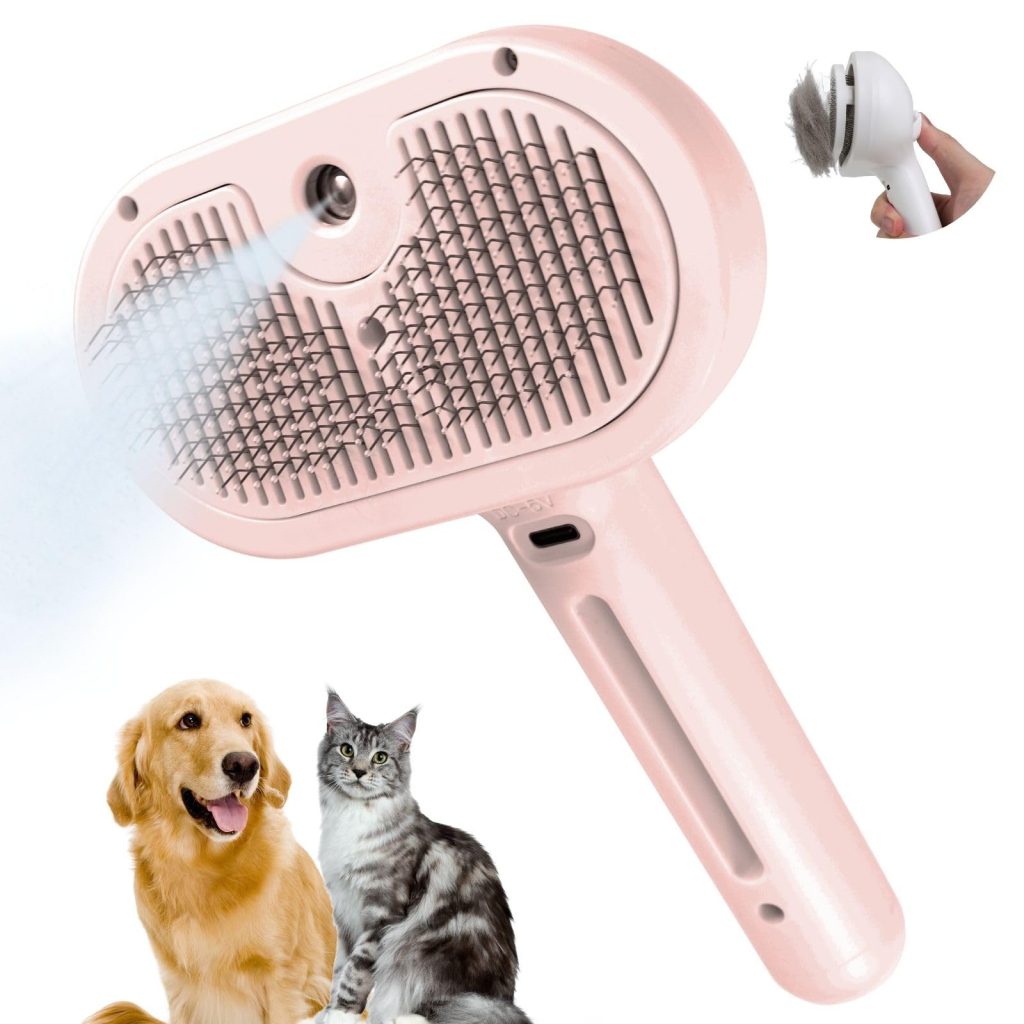
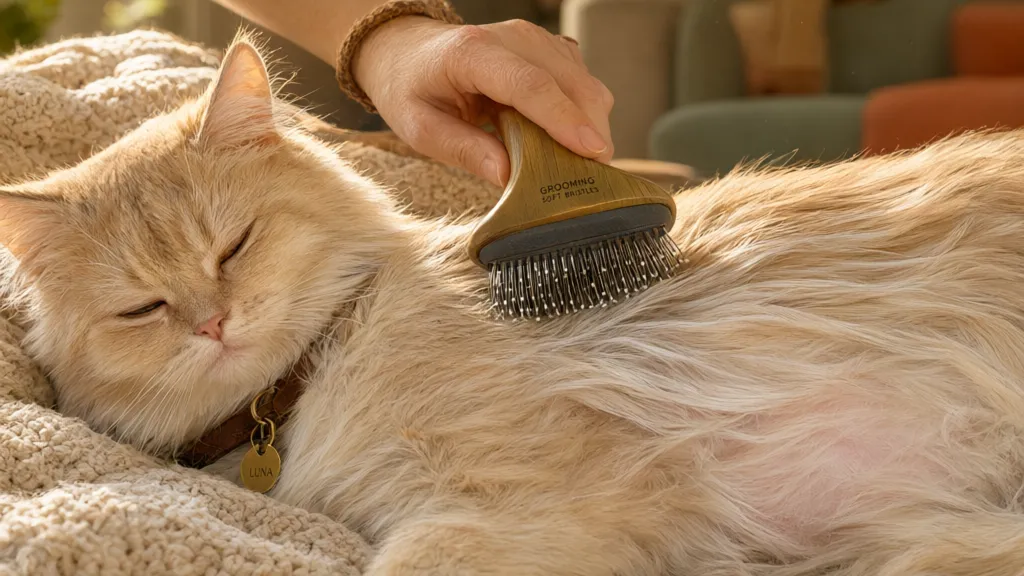
For medium- and long-haired cats, use a slicker brush with fine, angled wire pins to remove loose undercoat and separate coat sections. Choose flexible pins and a cushioned base; stiff, sharp pins can scratch thin feline skin, especially over the belly, armpits, groin, and inner thighs. Follow with a comb to check whether the brush has reached the coat close to the skin. If the comb catches, the coat may still contain a developing mat.
Consider coat structure as well as length. Dense double coats, common in breeds such as Persians and British Shorthairs, need tools that reach loose undercoat without cutting guard hairs. A de-shedding tool can remove substantial undercoat but may cause thinning, broken hairs, or irritation when pressed hard or used repeatedly; avoid it on fine, sparse, curly, or already damaged coats. Curly-coated cats, including Cornish Rexes and Devon Rexes, often need a soft rubber tool because firm bristles can disrupt fragile hairs and irritate exposed skin.
Inspect the tool before each use. Pins should be smooth, secure, and free of rust; teeth should have rounded ends rather than sharp edges. Choose a size that can be controlled around the cat’s contours, and avoid heavy handles that make pressure difficult to gauge. A comfortable grip helps prevent the forceful strokes that can cause brush burn—localized redness, tenderness, or hair loss from repeated friction.

Greenies Feline Natural Dental Cat Treats, Roasted Chicken Flavor, 9.75 oz | #1 vet-recommended, clinically-proven oral care, cleans teeth and freshens breath, cleans to gumline, natural ingredients
(as of October 28, 2026 02:02 GMT +00:00 - More infoProduct prices and availability are accurate as of the date/time indicated and are subject to change. Any price and availability information displayed on [relevant Amazon Site(s), as applicable] at the time of purchase will apply to the purchase of this product.)Let the cat’s response guide the choice. If the cat flinches, turns to bite the brush, or repeatedly moves away, the tool may be painful, too abrasive, or catching tangles. A senior cat, an overweight cat with limited grooming reach, or a cat with arthritis may have fragile skin or painful joints; use a soft tool and inspect carefully rather than pulling at knots. Tight mats close to the skin should be assessed by a veterinarian or professional groomer, since cutting them with scissors can injure skin tented beneath the mat.
Choose a quiet time when your cat is relaxed, not immediately after play, a meal, or a stressful event. Let the cat sniff the brush, then touch it briefly to a shoulder or cheek before making a stroke. Pair calm contact with a small treat or gentle praise; stop while the cat is still comfortable so grooming does not become a prolonged restraint session.
Begin with one or two light strokes along the direction of hair growth, usually from the head toward the tail. Work in short sections, parting the coat with your fingers so you can see whether loose hair or tangles lie close to the skin. Keep strokes short and pressure minimal: feline skin is thin and mobile, and repeated scraping in one spot can cause irritation even when the coat looks undisturbed.
Use your free hand to steady the skin beside a tangle, then tease the knot apart from its outer edge with your fingers or a comb. Do not pull upward against the skin; traction can hurt and make the cat associate brushing with pain. If a knot resists gentle separation, stop rather than forcing the tool through it. Mats that are tight or extensive need professional removal, often with clippers under appropriate veterinary supervision.
Approach sensitive areas gradually. Brush the back and shoulders first, then try the flanks; leave the belly, armpits, groin, tail, and legs for brief, separate attempts if the cat tolerates them. Avoid holding a cat on its back or pinning its limbs. A standing or seated position lets the cat shift away and reduces pressure on arthritic joints. For a cat that dislikes handling, brush one small area at a time and end each session before agitation escalates.
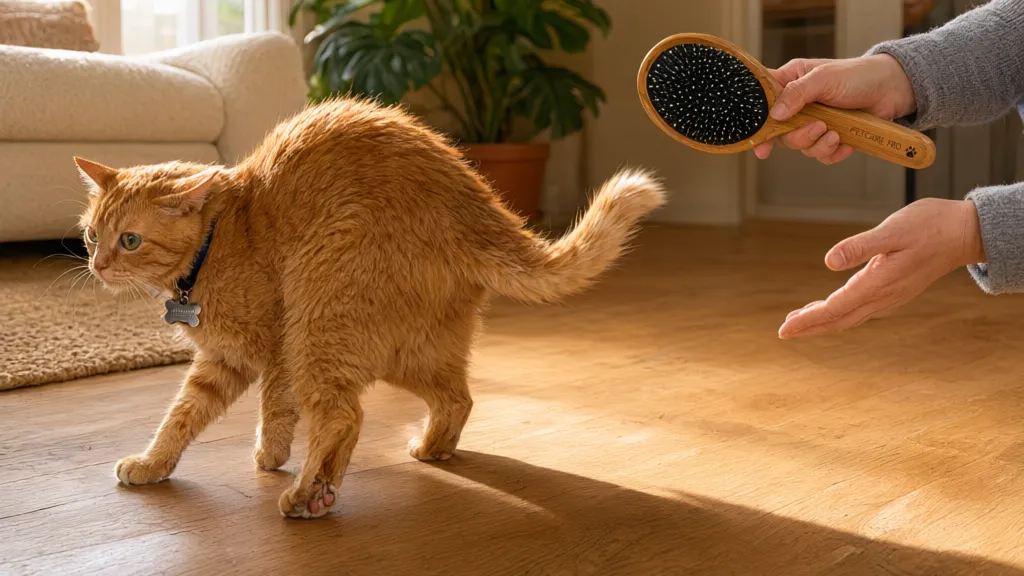
Watch for early stress signals: skin rippling, tail lashing, flattened ears, tense posture, repeated head turns toward the brush, or sudden grooming of the brushed area. Pause when these appear; swatting, biting, or fleeing usually means the cat has already exceeded its tolerance. Resume later with fewer strokes or a different body area. Stop and seek veterinary advice if brushing reveals painful skin, sores, parasites, unusual hair loss, or a sudden change in grooming tolerance.
Do not brush harder to make a stubborn knot come out. Repeated force can bruise skin, break hair, and create a painful association with grooming; the cat may later resist even gentle handling. If a comb repeatedly catches, stop and separate only a loose tangle with your fingers. Never cut a mat with household scissors: feline skin can be drawn up inside the knot and is easily sliced. Tight mats need clipping by a veterinarian or experienced groomer.
Overbrushing can damage the coat as surely as neglect can. Repeated strokes with a slicker brush or de-shedding tool may abrade skin, snap guard hairs, or create thin patches, particularly on the belly, hips, and other areas with little protective coat. Stop if the skin becomes pink, warm, tender, or visibly scratched; do not keep brushing merely because loose hair remains.
Avoid using a tool designed for another coat type. Fine wire pins can irritate sparse or curly coats, while a soft mitt may glide over dense undercoat without loosening it. A blade-style de-shedding tool can remove healthy coat when used too frequently or with pressure. If the coat looks uneven, feels rough, or develops broken hairs after grooming, reassess the tool and technique rather than increasing brushing time.
Do not brush through dirt, grit, or a wet, tangled coat. Debris can act like an abrasive between tool and skin, and wet hair clumps around knots, making them harder to separate without traction. Remove surface dirt gently and let the coat dry before routine brushing. If a substance is sticky, oily, or potentially toxic, do not pull it through the fur; ask a veterinarian how to clean it safely.
Forcing a frightened or struggling cat to stay still can turn grooming into a defensive encounter. Scruffing, pinning, or restraining the limbs may increase panic and can be especially painful for cats with arthritis or other mobility problems. End the session when the cat becomes tense, attempts to escape, or starts swatting; shorter sessions in a calm setting are safer than holding the cat until the coat is finished.
Do not treat every patch of thinning hair or every new mat as a grooming problem. Fleas, skin infection, allergies, pain, obesity, and illness can alter coat condition or prevent normal self-grooming. Redness, scabs, odor, persistent dandruff, bald areas, or a sudden change in grooming tolerance warrants veterinary assessment before brushing continues over the affected area.