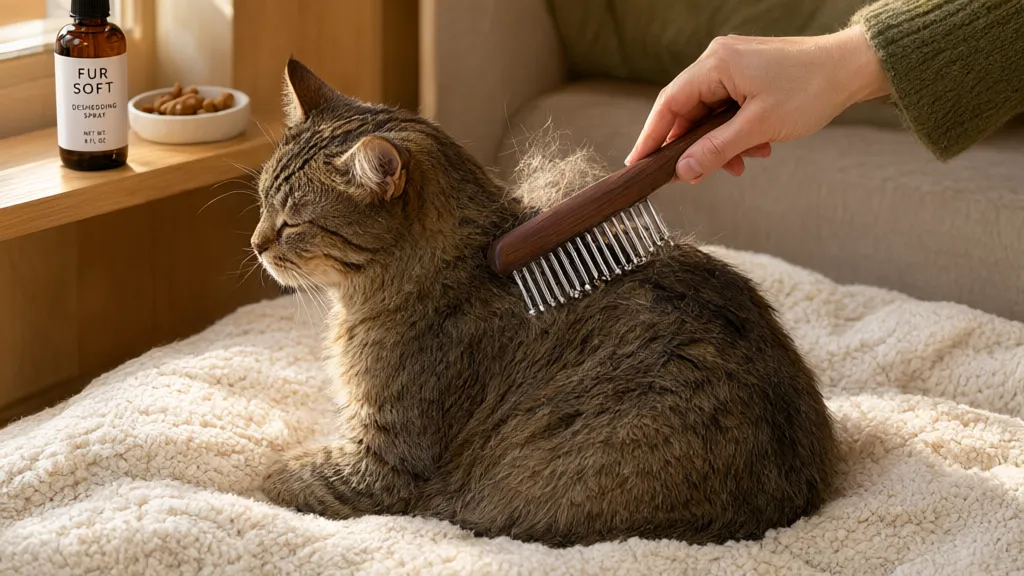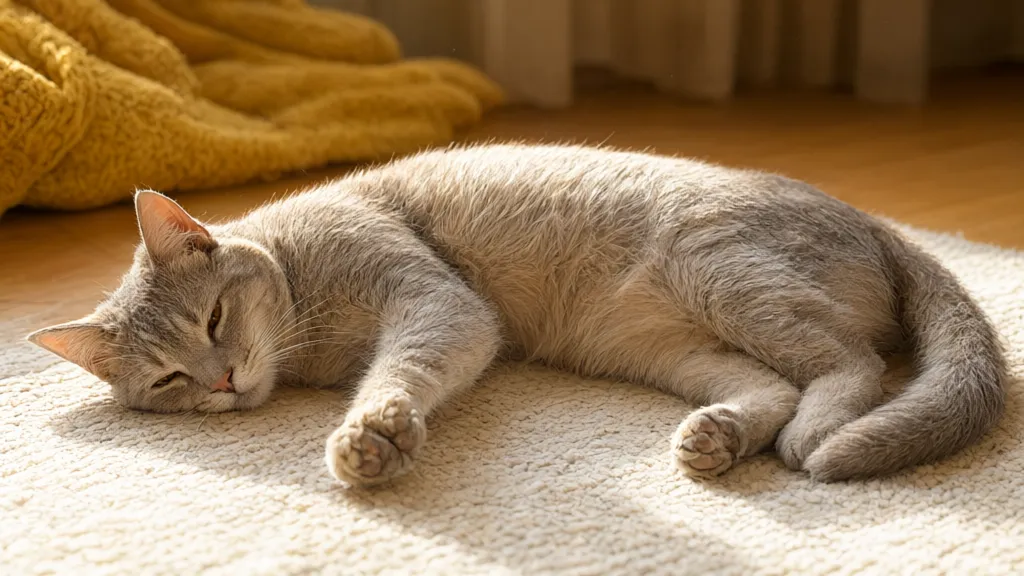
A comfortable cat typically carries its body without bracing: muscles look loose, weight is evenly supported, and the spine rests in a natural curve rather than a rigid crouch. A cat lying on its side or with paws tucked beneath the body may be resting, provided the limbs and shoulders remain relaxed and the cat can change position easily. An exposed belly indicates physical ease in that moment, not necessarily an invitation to touch; reaching toward it can trigger a defensive response because the abdomen is vulnerable.
Relaxed facial muscles produce soft, partly closed eyes, a smooth brow, and whiskers resting loosely to the sides. Slow blinking can occur when a cat is calm and not preparing to react. It is a useful sign only in context: assess the whole body, the cat’s distance from you, and whether the gaze remains soft rather than fixed. A relaxed cat may look away or blink rather than maintain prolonged eye contact.
Neutral ears point forward or rest slightly to the sides, without being pressed flat or swiveling rapidly toward multiple sounds. The muzzle remains loose, and the mouth is closed without jaw tension. Whiskers held naturally forward can accompany interest, so whisker position alone does not distinguish comfort from arousal; a stiff body, fixed stare, or abrupt tail movement changes the interpretation.
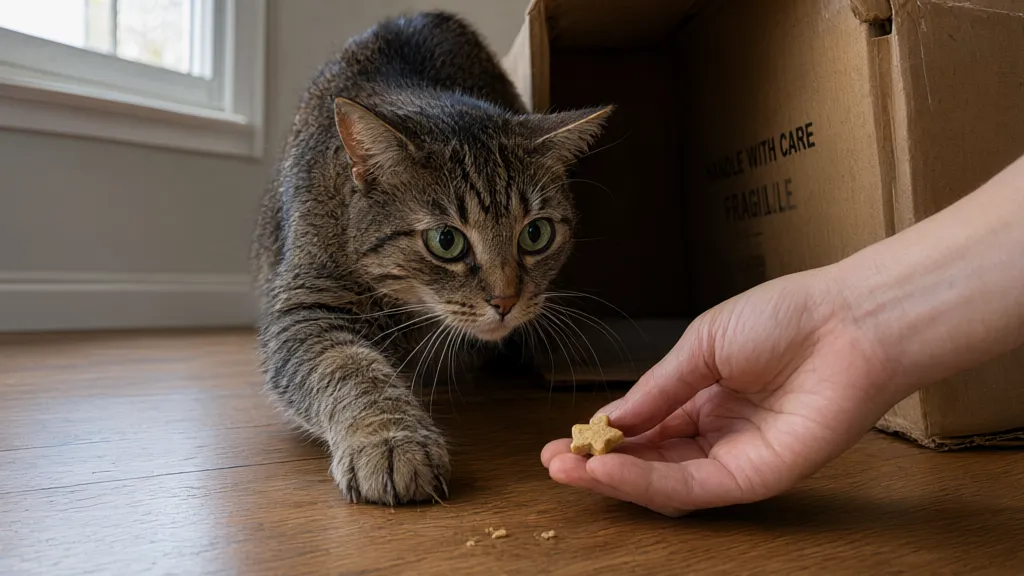
Comfort is also reflected in voluntary behavior. A cat may stretch, groom with smooth repeated movements, settle near a person, or resume resting after a mild interruption. These behaviors suggest the environment feels manageable, but they do not prove the cat wants handling. Pause before touching, offer a hand for the cat to approach, and stop if the body stiffens, the head turns sharply toward the hand, or the cat moves away.

Purina Fancy Feast Seafood Classic Pate Variety Pack, 3 oz Cans, 30-Pack | Grain free wet cat food made with no artificial colors or preservatives, 100 percent complete and balanced
(as of November 5, 2026 05:15 GMT +00:00 - More infoProduct prices and availability are accurate as of the date/time indicated and are subject to change. Any price and availability information displayed on [relevant Amazon Site(s), as applicable] at the time of purchase will apply to the purchase of this product.)Compare each cat with its usual posture and facial expression. Age, arthritis, injury, obesity, and respiratory or abdominal discomfort can alter how a cat lies or moves; older cats may avoid side-lying or stretching because joint movement hurts. Persistent squinting, asymmetrical facial movement, a hunched posture, or reluctance to settle warrants veterinary assessment, particularly when accompanied by reduced appetite, hiding, or changes in mobility.
Stress often appears first as a change in ordinary behavior, not as dramatic aggression. A cat may stop entering a room, remain under furniture, avoid a familiar person, or spend less time in shared spaces. Hiding can be a normal coping choice, but a new pattern that persists or interferes with eating, drinking, litter-box use, or rest signals that the cat may feel unsafe or unwell.
A tense cat may hold its body low and compact, brace its limbs, keep its head drawn in, or remain unusually still. Freezing is not relaxation: the cat may be monitoring a threat and delaying movement until it can escape. Other stress behaviors include abrupt grooming, repeated lip-licking, yawning outside a sleepy context, pacing, or repeatedly changing resting places. These are most useful as clues when they occur in a specific situation and differ from the cat’s baseline.
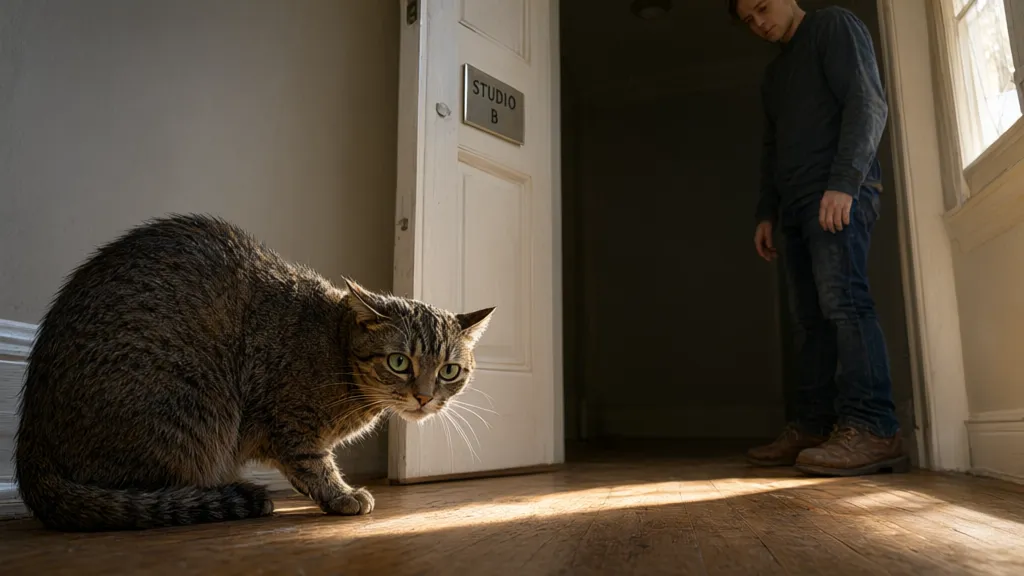
Fear can progress from avoidance to defensive behavior when escape routes are blocked. A cat that crouches, withdraws, or refuses food is already communicating discomfort; reaching into a hiding place, cornering it, or continuing to handle it can increase the risk of scratching or biting. Give the cat an unobstructed route to a secure retreat, reduce noise and unfamiliar activity, and allow it to reappear without pursuit. For transport or necessary care, use gradual carrier conditioning and low-restraint handling rather than force whenever circumstances permit.
Repeated stress can affect health as well as behavior. Some cats exposed to ongoing conflict, unpredictable handling, or competition over resources develop overgrooming, urine marking, reduced play, or changes in appetite and elimination. Provide separate, accessible food and water stations, resting sites, scratching surfaces, and litter boxes in multi-cat homes; distribute them so one cat cannot block another’s access. A predictable routine and hiding places at different heights can reduce pressure without requiring social contact.
Pain and illness can look like fear: a cat may hide, resist touch, move cautiously, or become unusually irritable because movement or contact hurts. Arrange veterinary evaluation for a sudden or persistent behavior change, especially with reduced eating, weight loss, vomiting, altered urination, difficulty jumping, or litter-box avoidance. Straining to urinate, repeated unproductive trips to the box, open-mouth breathing, collapse, or inability to keep food down requires prompt veterinary care.
Read the tail as a pattern of movement and tension, not as a simple mood signal. A tail held upright with a softly curved tip often accompanies a social greeting; a rigid, upright tail can instead reflect high arousal. Slow swishes or a twitching tip may indicate focused attention, while increasingly forceful side-to-side lashing signals rising agitation. A tail wrapped tightly around the body may help conserve warmth, but when paired with a tense crouch or tucked limbs it can also indicate insecurity. A puffed tail reflects piloerection, an involuntary response to fear or intense arousal—not a deliberate threat display.
Ear position changes quickly as a cat tracks sound and evaluates its surroundings. Ears turned sideways or backward can signal unease, especially when the head is lowered or the body is braced; ears flattened tightly against the head often precede defensive action. Rapid swiveling may mean the cat is monitoring several sounds, not that it’s ready to interact. Ear shape affects what is visible: folded-ear cats and cats with cropped or damaged ears may show subtle movements, so give greater weight to the eyes, body tension, and behavior.
Vocalizations depend on context and the individual cat. A meow directed at a person may request food, access, or attention; changes in pitch, frequency, or timing can be more informative than the sound alone. Growling and hissing communicate a need for distance, and approaching or restraining the cat can escalate its defensive response. Chirps and trills often occur during greetings or when a cat is directing someone toward a location, but they do not by themselves indicate that handling is welcome.
Purring is not a reliable stand-alone sign of contentment. Cats may purr while injured, frightened, or ill, so assess whether the body is loose and the cat is eating, moving, and responding normally. Persistent yowling, sudden increases in vocalization, or a new change in voice can accompany pain, sensory decline, cognitive changes in older cats, or medical disease. Record when the sound occurs and what precedes it; seek veterinary assessment when the change is sudden, repeated, or accompanied by altered appetite, mobility, breathing, or elimination.
Interpret signals in combination and against the cat’s usual behavior. A forward tail with pinned ears, a fixed stare, and a growl indicates conflict or high arousal despite the tail’s upright position. Pause interaction when signals intensify, increase distance, and leave an escape route open; do not punish warning sounds, which are useful communication and may disappear before defensive behavior does.