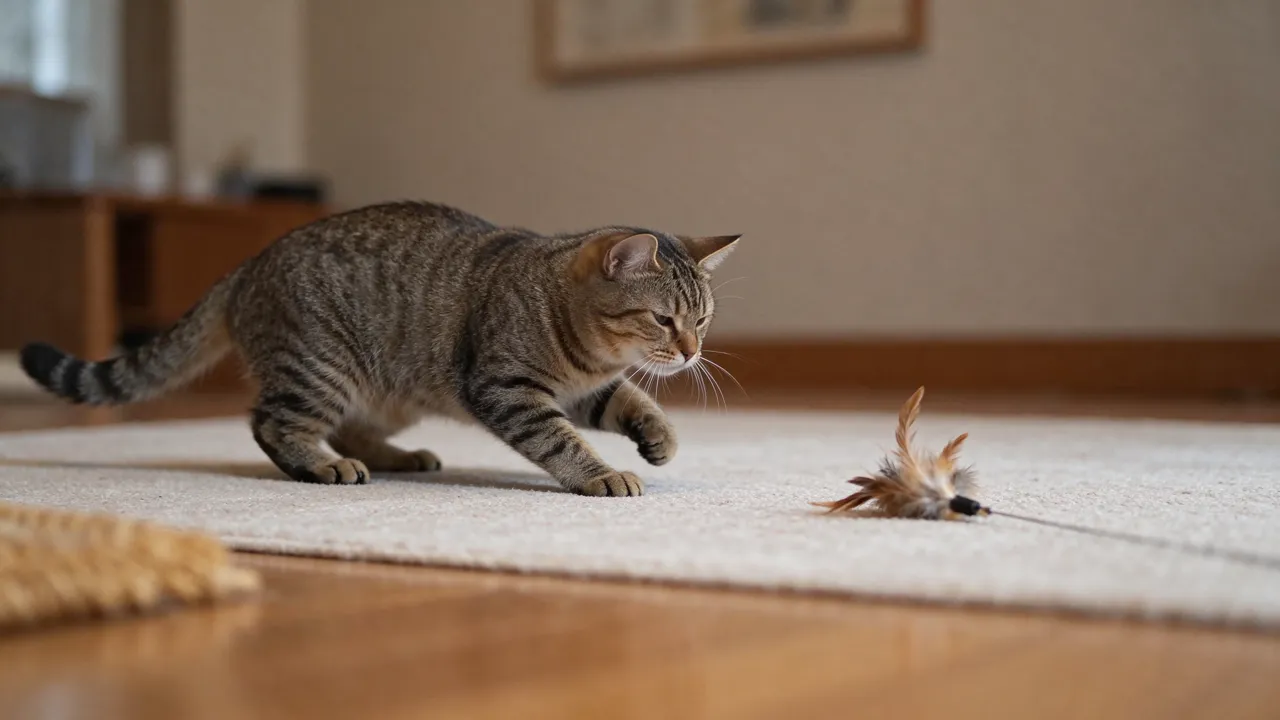
Play is a safe outlet for the predatory sequence: orienting, stalking, chasing, pouncing, grabbing, and biting. Domestic cats retain these motor patterns even when food is reliably provided, so a cat may seek movement and concealment rather than simply run around. Opportunities to complete several parts of the sequence can reduce frustration and help prevent play from shifting toward ankles, hands, or other moving targets.
Activity often rises around dawn and dusk, when cats are naturally more alert, but individuals vary with age, health, household routine, and prior experience. Kittens usually engage in frequent, brief bursts as coordination develops; adult cats may prefer shorter sessions, while older cats may play less because of arthritis, dental pain, vision loss, or other illness. A sudden decline in play, reluctance to jump, or repeated stopping during activity warrants veterinary assessment rather than an assumption that the cat has become less playful.
Watch the cat’s movement and posture to gauge engagement. A focused gaze, crouch, weight shifted forward, tail held low or gently moving, and quick pursuit suggest predatory interest. Flattened ears, a tense or tucked posture, repeated retreat, panting, or attempts to hide indicate stress or excessive intensity; pause and allow the cat to disengage. Some cats are highly motivated by movement, while others show interest only when they can observe, stalk, or approach at their own pace.
Play also develops social and motor skills. Kittens learn to moderate biting through interactions with littermates and other cats; a kitten raised without them may need careful redirection from biting people. Do not use hands or feet as targets, because repeated practice teaches the cat that human skin is part of the hunt. If play becomes rough, stop movement briefly, withdraw attention, and resume only with an appropriate target. Never punish stalking or pouncing; punishment can increase fear without changing the underlying drive.

Ring Indoor Cam 2K (newest model), Home and business security, White
(as of November 28, 2026 11:51 GMT +00:00 - More infoProduct prices and availability are accurate as of the date/time indicated and are subject to change. Any price and availability information displayed on [relevant Amazon Site(s), as applicable] at the time of purchase will apply to the purchase of this product.)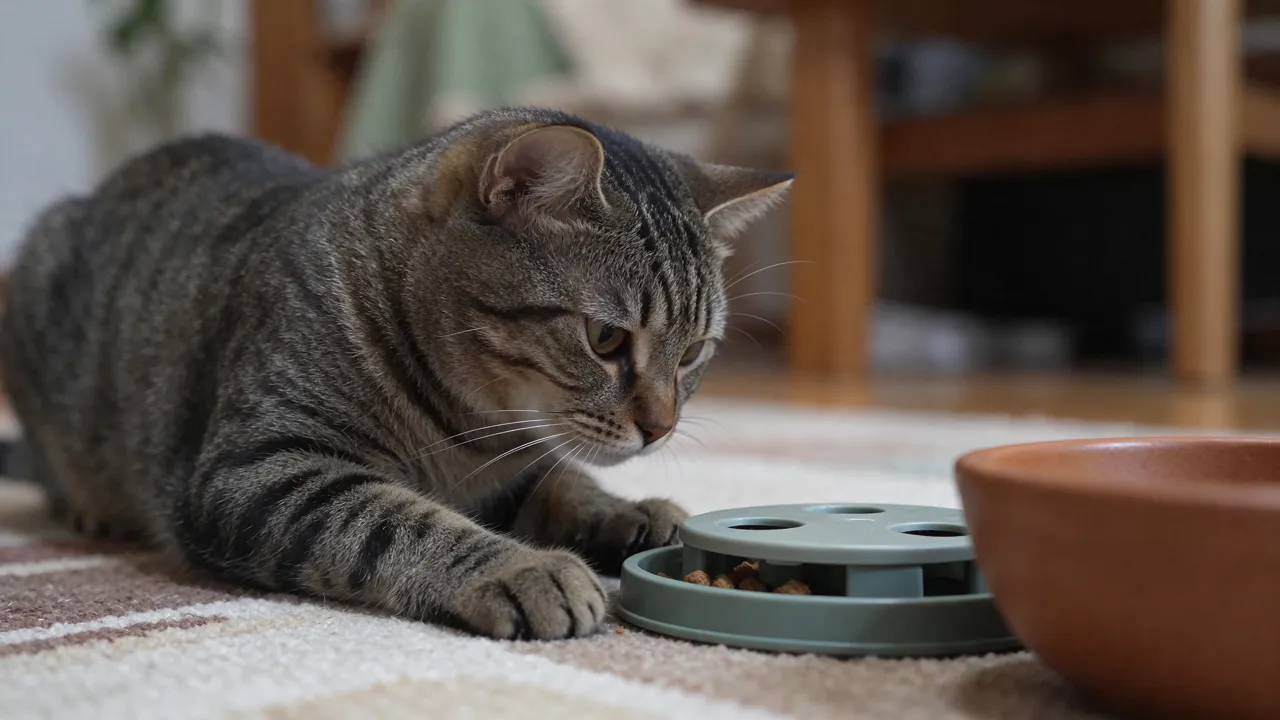
Choose toys by the behavior they invite, not by appearance. A wand lure that skims behind furniture or pauses at cover can prompt stalking and short bursts of pursuit; moving it in quick, irregular bursts better resembles small prey than sweeping it continuously overhead. Let the cat catch and bite the lure regularly. A toy that remains unreachable can raise arousal without providing the satisfying capture that completes the sequence.
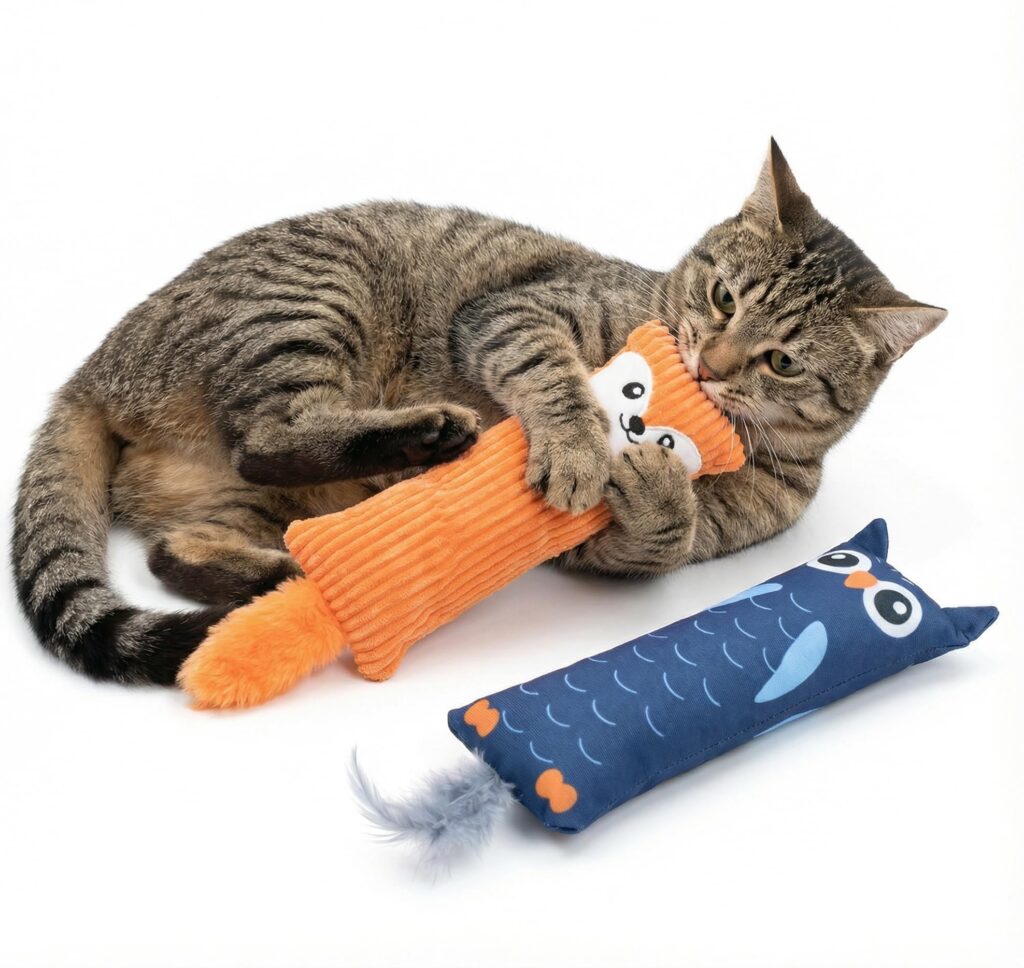
Match movement and effort to the cat’s body. Lightweight balls or soft toys that roll and can be gripped suit many cats; larger, slower-moving toys may be easier for kittens still developing coordination or older cats with reduced mobility. For cats with arthritis, place toys on the floor and avoid repeated high jumps. Stop if play brings limping, stiffness, open-mouth breathing, or unusual fatigue, and seek veterinary advice if these signs recur.
Food puzzles add problem-solving and can slow eating, but difficulty should increase gradually. Begin with food visible and easy to retrieve, then adjust openings or movement only after the cat succeeds reliably. Measure puzzle portions as part of the daily ration; treats and food used for play count toward total calories, especially for sedentary or overweight cats. A cat that paws at a puzzle without eating may be frustrated, physically uncomfortable, or uninterested in that food texture—not necessarily unwilling to engage.
Rotate a small selection of toys every few days to restore novelty, while leaving familiar, safe objects available. Cats differ in preferred prey-like features: some pursue fluttering objects, others favor ground-level movement, crinkling textures, or toys they can carry. Observe which actions sustain attention, then choose similar toys rather than accumulating many that go unused. Catnip response varies genetically and developmentally; it isn’t required for play, and some cats show little or no response.
Inspect toys for loose eyes, feathers, bells, elastic, damaged seams, or pieces small enough to swallow. Put away wand toys, string, ribbon, and thread after supervised use; ingestion can cause intestinal obstruction or a life-threatening linear foreign body. Laser pointers should never be the sole target: end the session by directing the beam onto a tangible toy or treat so the cat can capture something. Avoid toys that encourage chewing plastic or ingesting detachable parts.