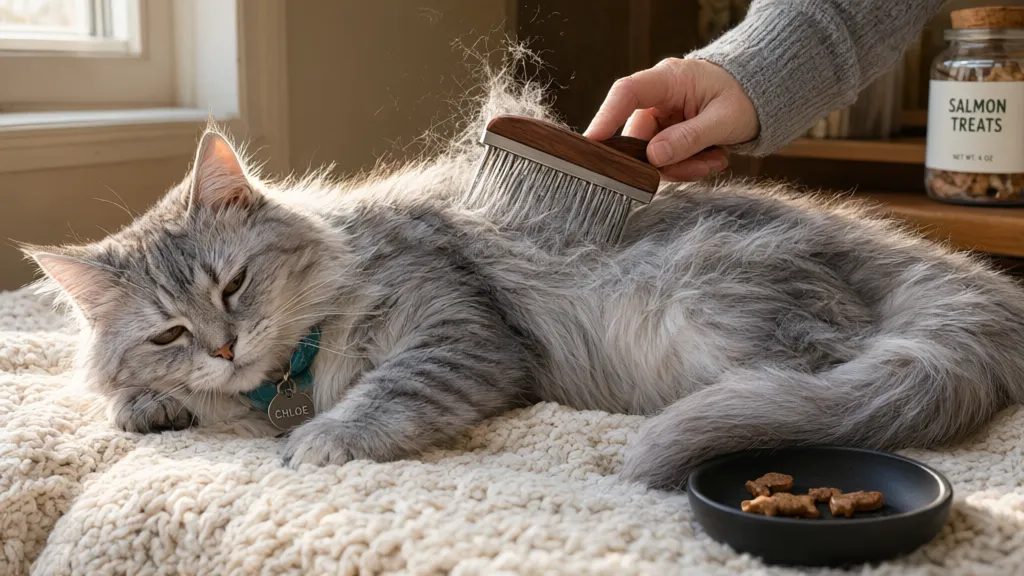
Cats ingest hair during grooming because the backward-facing keratin spines on the tongue catch loose hairs and carry them toward the throat. Most swallowed hair moves through the digestive tract and leaves in the stool. Hairballs form when hair accumulates in the stomach, mixes with mucus or food, and is expelled by vomiting; the usual elongated shape reflects passage through the esophagus, not the shape of the stomach.
The amount swallowed depends partly on coat length and shedding. Long-coated cats and cats with dense undercoats may ingest more loose hair, particularly during seasonal shedding, but coat type alone does not explain frequent hairballs. Repeated episodes can result from excessive grooming caused by fleas, allergic skin disease, pain, or stress-related overgrooming. Patchy hair loss, broken hairs, skin lesions, or persistent licking of one area warrant investigation of the underlying cause.
Hairballs can also become more likely when normal movement of stomach or intestinal contents is disrupted. Gastrointestinal disease, reduced motility, and some medications may affect transit, while conditions that cause nausea can alter eating and grooming patterns. A cat that repeatedly produces hairballs, especially alongside appetite changes, weight loss, constipation, diarrhea, or lethargy, should be assessed rather than assumed to have a routine grooming problem.
Not every hacking sound is an attempt to bring up a hairball. Coughing from airway disease—such as feline asthma—may involve a crouched posture and repeated dry, forceful breaths, often without producing hair or stomach contents. Vomiting typically includes abdominal contractions and may produce food, fluid, bile, or hair; regurgitation is usually more passive and occurs soon after eating. Persistent unproductive retching, breathing difficulty, or repeated vomiting requires prompt veterinary attention because an obstruction or respiratory disorder may resemble a hairball episode.

Greenies Feline Natural Dental Cat Treats, Roasted Chicken Flavor, 9.75 oz | #1 vet-recommended, clinically-proven oral care, cleans teeth and freshens breath, cleans to gumline, natural ingredients
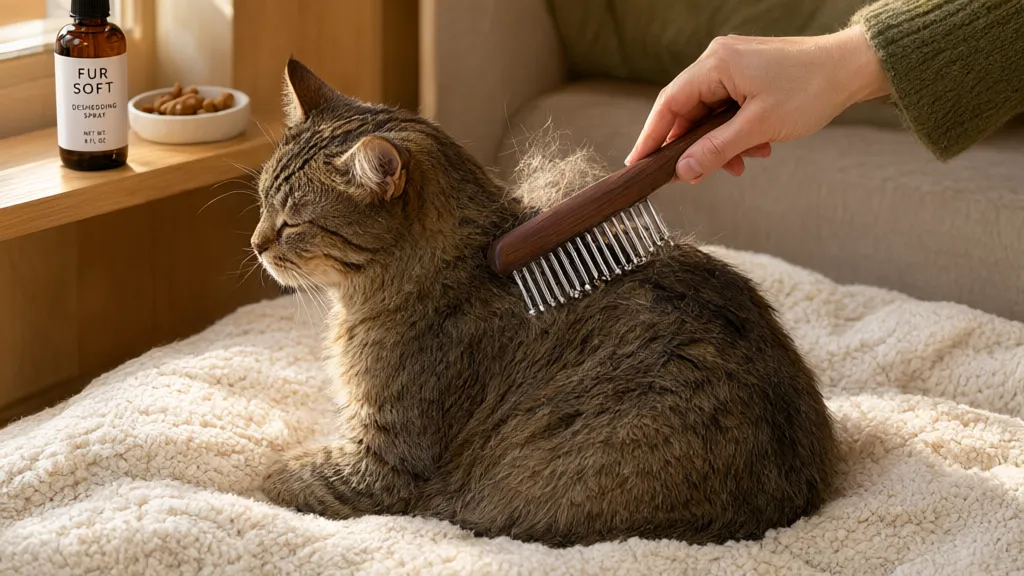
(as of November 7, 2026 05:18 GMT +00:00 - More infoProduct prices and availability are accurate as of the date/time indicated and are subject to change. Any price and availability information displayed on [relevant Amazon Site(s), as applicable] at the time of purchase will apply to the purchase of this product.)Remove loose coat before the cat removes it with the tongue. Comb long-haired cats down to the undercoat daily during heavy shedding; short-haired cats often need less frequent brushing, but increase sessions when shedding rises. A comb that glides only over the topcoat misses the loose undercoat, while forceful brushing can damage skin and make grooming aversive. Check for mats rather than pulling them; tight mats may need clipping by a veterinary professional.
Make grooming predictable and brief: let the cat inspect the tool, brush a few strokes in a tolerated area, then stop before struggling begins. Pair handling with a small food reward, and build duration gradually. If grooming triggers biting, hiding, or persistent avoidance, reduce the intensity and reassess the tool and technique; restraint can increase stress without improving coat removal.
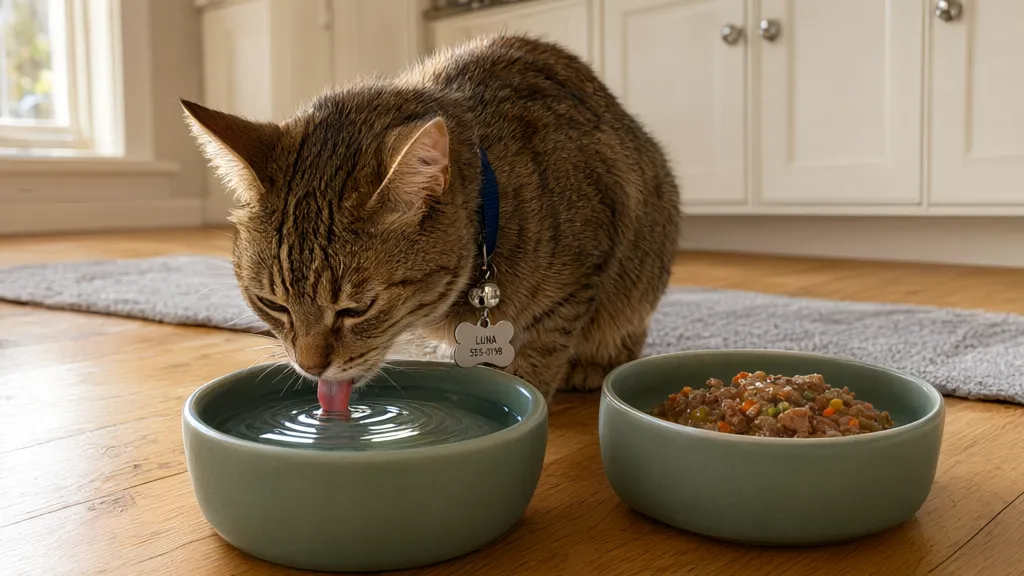
Feed a complete, balanced diet in measured portions. Some veterinary hairball-formula diets add fiber to help move swallowed hair through the intestines and out in stool, but response varies and these diets do not treat excessive shedding, skin disease, or impaired gut motility. Change food gradually over about a week, and monitor stool consistency, appetite, and vomiting. A sudden increase in fiber can cause loose stool or constipation, particularly if water intake is low.
Keep fresh water available in several accessible locations; wet food can also increase dietary moisture. Do not add butter, cooking oil, or mineral oil as a hairball remedy: they do not reliably prevent hairballs, and liquid oils can be inhaled into the lungs if given by mouth. Use hairball pastes only according to label directions and veterinary advice, especially for cats with chronic illness or a restricted diet.
When licking or chewing coat excessively, address the driver rather than relying on brushing or a hairball diet. Fleas may be present even when none are seen, and allergic skin disease, pain, or stress-related overgrooming can sustain hair ingestion. Veterinary assessment is warranted for itch, skin sores, thinning coat, or a sudden change in grooming; treating the cause can reduce both hair loss and swallowed hair.
A single hairball followed by normal appetite, activity, and stool usually needs observation rather than treatment. Keep water available and note whether the cat eats, defecates, and behaves normally over the next day. Do not force food or water, induce vomiting, or give human laxatives, oils, or medications; mineral oil and other liquids can enter the lungs if swallowed incorrectly, and laxatives can worsen dehydration or delay diagnosis of an obstruction.
Hairball pastes may help some cats pass ingested hair, but they are not a reliable remedy for repeated vomiting. Use only a product labeled for cats, follow its directions, and check with a veterinarian before giving it to a cat with chronic disease, a prescription diet, or ongoing gastrointestinal signs. If retching continues, stop home treatment and seek veterinary advice rather than giving additional doses.
Arrange an examination when hairballs recur frequently, vomiting occurs more than occasionally, or the pattern changes. The same applies if episodes accompany reduced appetite, weight loss, constipation, diarrhea, increased thirst, lethargy, or excessive grooming. A veterinarian may assess the skin and abdomen, review diet and medications, and use blood tests or imaging when the history or examination suggests gastrointestinal disease, impaired motility, or a foreign-body obstruction.
- Seek urgent veterinary care for repeated unproductive retching, repeated vomiting, inability to keep water down, marked weakness, abdominal pain or swelling, or little to no stool with straining.
- Seek emergency care immediately for open-mouth breathing, labored breathing, blue or very pale gums, collapse, or suspected ingestion of string or another foreign object. Do not pull visible string from the mouth or anus.
- Call promptly if a kitten, senior cat, or cat with diabetes, kidney disease, or another chronic condition stops eating or begins vomiting; dehydration and metabolic complications can develop faster in these patients.
Bring a record of episode frequency, appearance of expelled material, appetite, stool output, and any recent food or medication changes. A brief video of the episode can help distinguish vomiting from coughing when the event is difficult to describe.