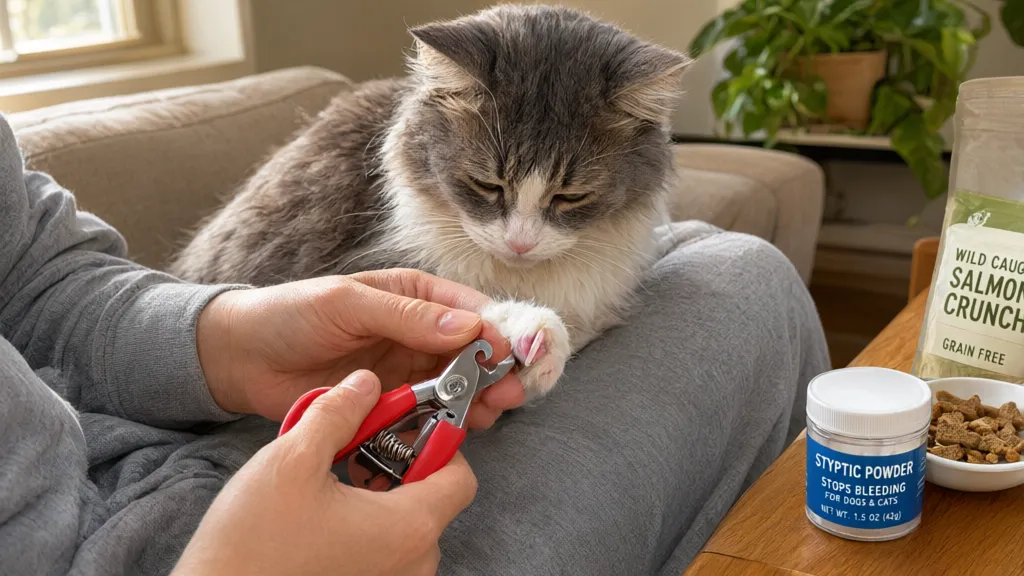
Choose a sharp, cat-sized claw clipper that gives you a clear view of the cutting edge. Scissor-style clippers suit many adult cats; small, sharp human nail clippers can work for tiny kittens if they do not crush or split the claw. Avoid dull blades, which squeeze the claw and can cause pain or make it crack. Keep styptic powder within reach in case a claw is accidentally cut too short; cornstarch can serve as a temporary substitute.
Set out the clippers, styptic powder, a few small treats, and a towel before bringing your cat over. Use bright, steady lighting so you can distinguish the translucent outer claw from the pink quick, which contains blood vessels and nerves. If your cat has dark claws, arrange a light source behind the claw when possible; the quick may still be difficult to see, so plan to remove only a small amount at a time.
Choose a familiar, quiet location with a stable surface and minimal foot traffic. Turn off loud appliances, keep other pets away, and avoid a slippery tabletop; a nonslip mat or your lap may help your cat feel secure. Allow an easy escape route rather than cornering the cat, since feeling trapped can trigger struggling or defensive biting.
Work when your cat is relaxed, such as after a meal or play session, rather than when the cat is alert, hungry, or already agitated. Keep sessions brief and end before signs of escalating stress—tail lashing, flattened ears, tense muscles, repeated paw withdrawal, growling, or rapid breathing. For a cat that tolerates handling only briefly, prepare to address one or two claws per session instead of forcing completion.

Sheba Perfect Portions Cuts Wet Cat Food, Multipack, 2.6 oz, 24 ct | Chicken, Salmon & Turkey cuts in gravy, grain-free, protein-rich, no corn/soy, essential vitamins & minerals, twin-pack trays
(as of November 20, 2026 10:33 GMT +00:00 - More infoProduct prices and availability are accurate as of the date/time indicated and are subject to change. Any price and availability information displayed on [relevant Amazon Site(s), as applicable] at the time of purchase will apply to the purchase of this product.)A towel can gently limit movement if your cat accepts it, but wrapping tightly or restraining the body can increase fear and make breathing harder. Never use human sedatives or attempt chemical restraint without veterinary direction. If your cat shows intense fear, pain when a paw is touched, or sudden resistance unlike its usual behavior, pause; pain, arthritis, an injured claw, or another medical problem may need assessment before home care.
Let your cat remain in a position it can tolerate—sitting beside you, resting on your lap, or lying on a nonslip surface. Support the paw without squeezing it. Press gently on the toe pad to extend one claw, then release the pressure as soon as the claw is exposed; forceful extension can make the paw painful and prompt withdrawal.
Identify the quick before cutting. On a light claw, it appears as the pink area within the translucent keratin. Place the clipper across the sharp, curved tip, cutting only the clear hook and staying several millimeters away from the quick. Angle the cut slightly across the curve rather than flattening the entire tip. Removing the hook reduces snagging and furniture damage while preserving the claw’s protective structure and normal use.
For dark claws, take off only a very thin sliver at a time and inspect the freshly cut surface after each snip. Stop when a small dark center or moist-looking oval becomes visible; these changes indicate that the cut is approaching the quick. Do not keep trimming to make every claw appear the same length. The quick can extend farther into overgrown claws, so shortening them gradually over several sessions allows it to recede without bleeding.
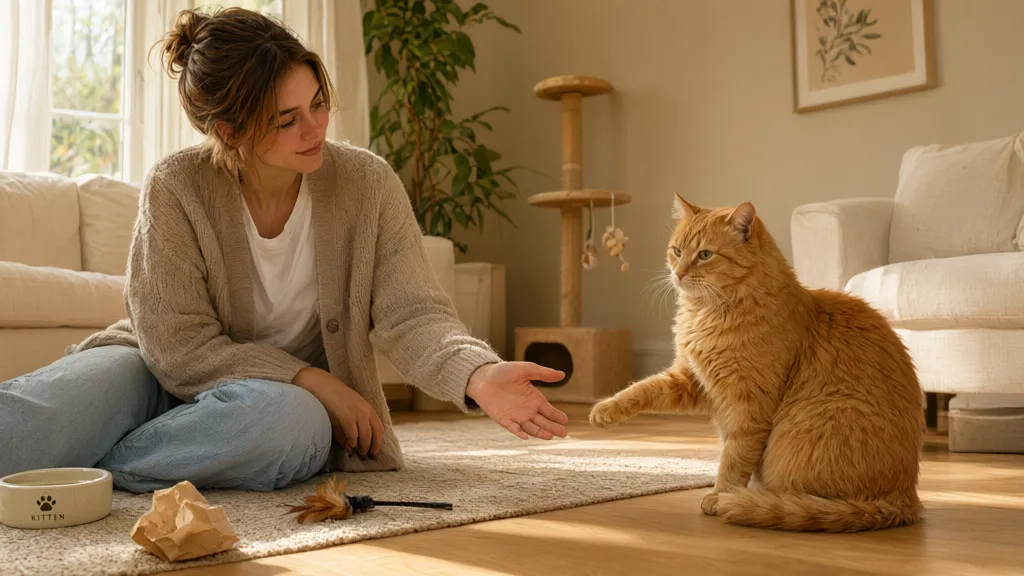
Clip one claw at a time, then pause to reward calm behavior. Check the dewclaws on the inner sides of the front legs as well as the other claws: they do not contact the ground during walking and may continue growing in a curve toward the paw pad. Inspect them regularly for curling, skin contact, swelling, or discharge. Kittens’ claws grow quickly, while older cats may wear theirs down less through activity; adjust inspection frequency to the individual cat’s growth and mobility.
If a claw bleeds, keep your cat still enough to apply styptic powder directly to the tip with gentle pressure. Avoid wiping repeatedly, which can disturb clotting. Contact a veterinarian if bleeding continues after several minutes of steady pressure, the claw is split or torn, or the toe becomes swollen or painful. Persistent limping, repeated paw licking, or a claw embedded in the pad also warrants prompt veterinary care.
If your cat pulls a paw away, pause rather than tightening your grip. Let the paw go, give the cat a moment to settle, and resume only if its body softens and it remains willing to stay nearby. Repeatedly chasing a withdrawn paw teaches the cat that handling predicts restraint and can make later sessions harder.
Build tolerance outside clipping sessions by briefly touching a shoulder, leg, and paw, then rewarding calm behavior. Progress to holding a paw, touching a toe, and gently extending a claw on separate occasions. Keep each practice step short; if the cat tenses, turns to watch your hand, pins its ears, or tries to leave, return to an easier step rather than pushing through.
Do not scruff, pin a cat on its back, or clamp the legs between your knees. These methods may suppress movement temporarily but often increase defensive fear and can provoke biting or scratching. A towel is appropriate only if the cat remains calm and can breathe and shift position normally. If safe handling requires force, stop and ask a veterinary team about cooperative-care training or professional trimming.
A sudden change in tolerance deserves attention. Cats may resist because of arthritis, sore toes, an old injury, or a claw that has split or grown into the pad; older cats are particularly likely to have reduced joint mobility. Note which paw triggers the reaction and whether there is limping, swelling, heat, discharge, or persistent licking. Do not keep manipulating a painful paw; arrange a veterinary examination.
Common errors include trying to finish every paw in one sitting, cutting while the cat is struggling, and trimming closer to the quick to compensate for an uneven result. These increase the chance of injury and make future handling less predictable. A calm partial session is safer than a complete trim achieved through escalating restraint.
If the clipper catches, crushes the claw, or causes splitting, stop and inspect the blade; replace a dull or damaged tool. Never punish hissing, growling, or a warning swat. These signals indicate that the cat needs distance, and ignoring them can turn a warning into a bite. When you cannot complete the trim without distress, a veterinary clinic or experienced groomer can assess the claw and help establish a safer plan.