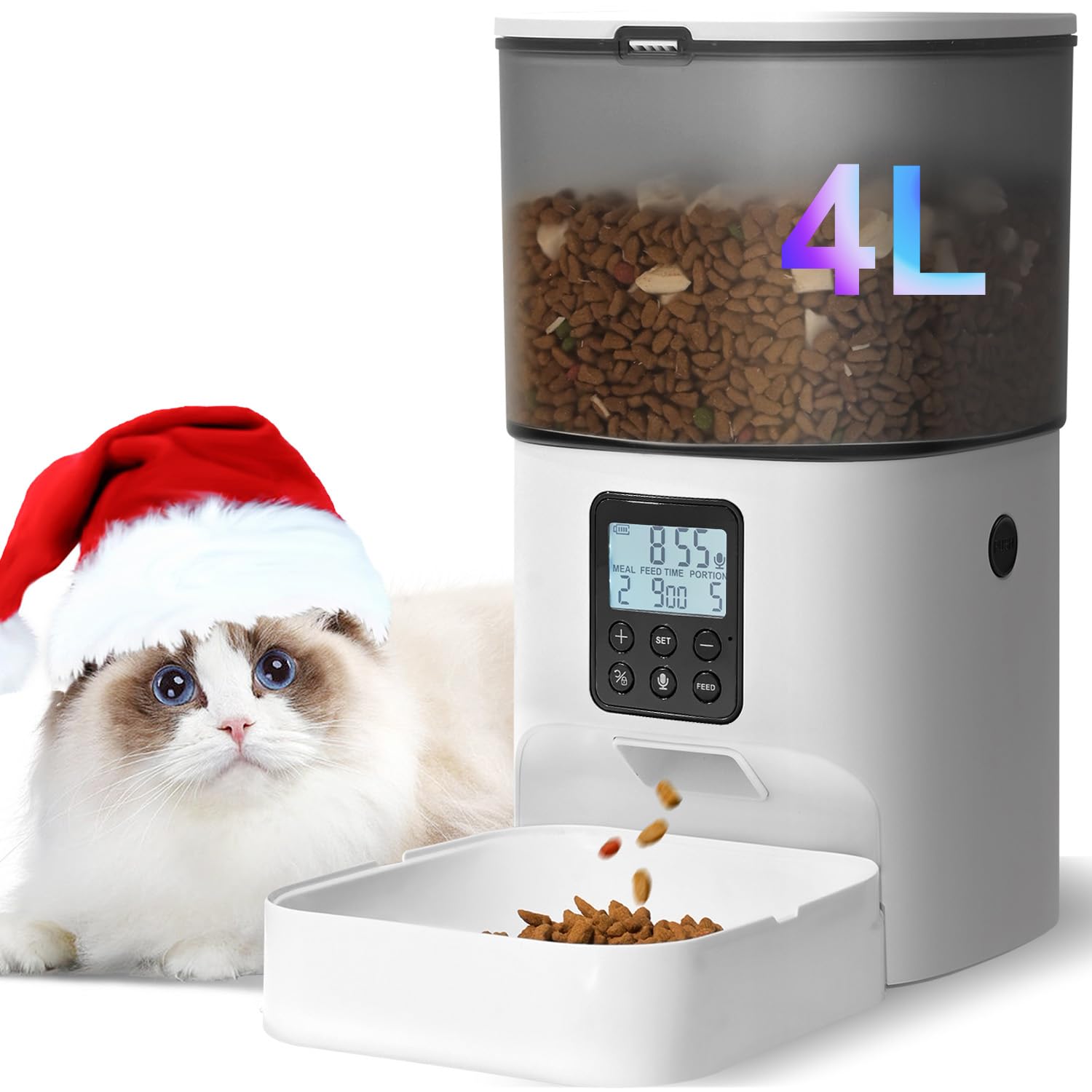
The ANDOLL HOME automatic feeder offers useful scheduling features for cats who eat dry food: a 4-liter hopper, up to eight meals a day, adjustable portions, a recorded voice prompt, and both plug-in and battery power. Its anti-jam mechanism and tilted bowl may make daily feeding more convenient, but an automatic feeder is best treated as a feeding aid—not a substitute for checking your cat’s health, appetite, and access to fresh water.
What may work well for cats
- Frequent, timed meals: Several small meals can suit cats who do better with a routine or who tend to eat their daily ration quickly. Check the portion settings against your cat’s food label and body condition; the number displayed by a feeder is not necessarily the same as a measured amount of calories.
- Voice recording: A familiar call may help some cats notice mealtime, especially when the feeder is in a consistent, quiet spot. It is a cue, not a guarantee that a cat will eat—watch to make sure the food is actually being consumed.
- Backup batteries: The option to use three AA batteries during a power interruption is reassuring. Install fresh batteries as directed and test the backup before relying on it. This product description does not explain how long the batteries will last.
- Food-storage features: A lid, seal, and desiccant compartment may help limit exposure to air and moisture. They do not make food immune to spoilage, so use dry food within its recommended storage period and keep the hopper clean and dry.
Points to consider before buying
- Dry food only: This feeder is not suitable for wet food, which needs different handling to remain safe. Cats eating a prescription diet or a food that must be served fresh may need another feeding arrangement.
- Portion accuracy needs checking: Food size and shape can affect how much falls through a dispenser. Weigh a few test portions with a kitchen scale, compare them with the intended serving, and recheck if you change foods.
- One cat may not mean one cat gets the food: In a multi-pet home, a faster or more assertive animal may eat another pet’s portion. Separate feeding areas or supervised meals may be necessary.
- Cleaning is part of safe use: Follow the manufacturer’s directions for removing and washing the bowl and food-contact parts. Let washed components dry fully before adding kibble; trapped moisture can undermine the effort to keep food fresh.
- Test for jams and missed meals: Run the feeder with your cat’s usual kibble before depending on it. Check that food reaches the bowl at every scheduled time, and inspect the chute regularly for crumbs or buildup.
- Desiccant needs care: Keep the desiccant secured in its designated compartment and out of your cat’s reach. Replace it according to the instructions, and do not let your cat chew or swallow it.
Introduce the feeder gradually: place it beside your cat’s usual feeding area, offer a few meals from it while you’re home, and keep an eye on eating habits. A sudden change in appetite, repeated missed meals, vomiting, or weight change deserves attention rather than a timer adjustment; contact your veterinarian when appropriate.
The advertised capacity and scheduling flexibility could be helpful for predictable dry-food routines, and the backup power option adds a practical safeguard. Still, no feeder can confirm that a cat has eaten or spot a health problem. For a short absence, arrange for someone to check your cat, refill water, and verify the feeder is working rather than relying on the machine alone.