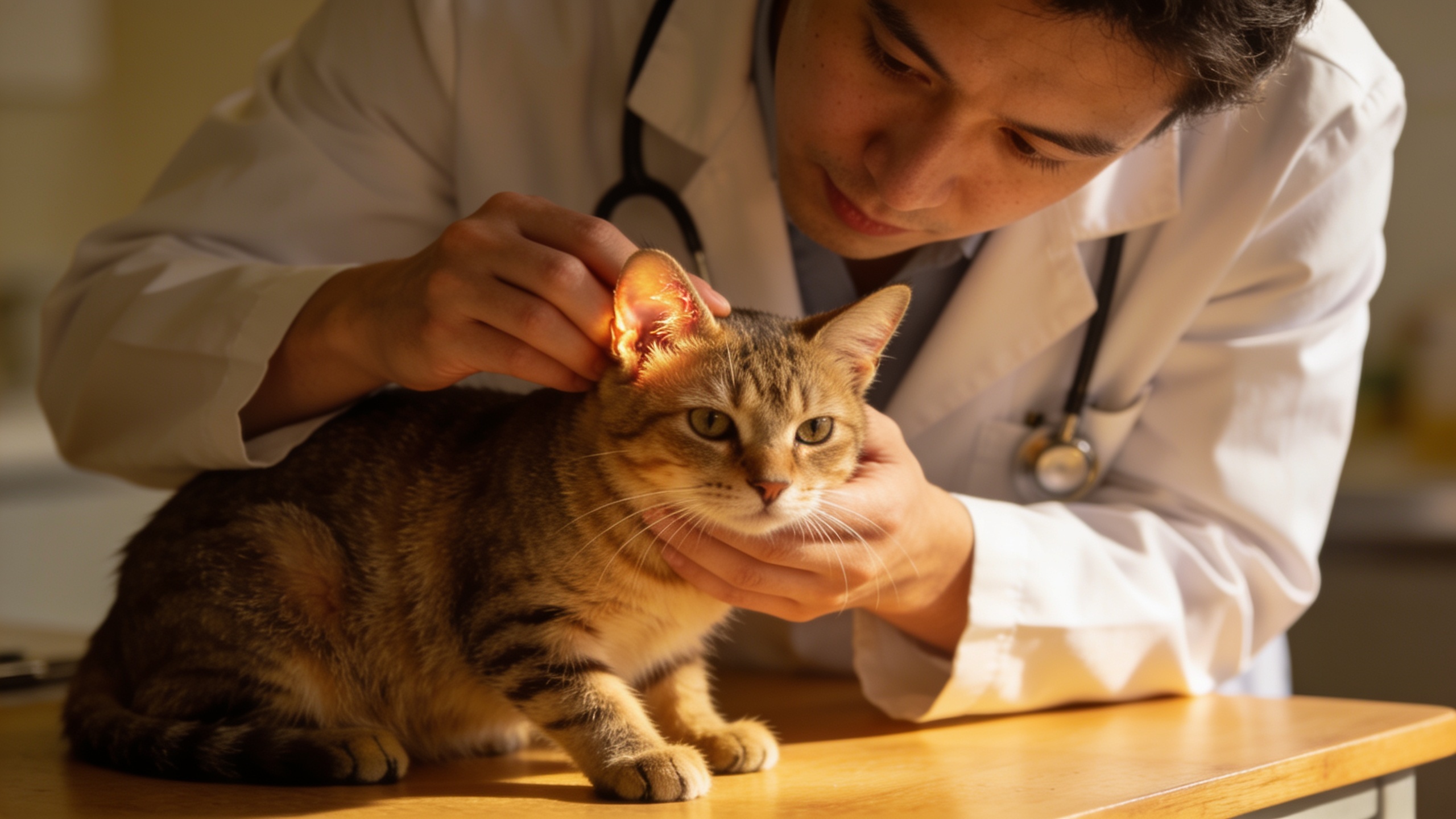
Feline skin disease is often the visible endpoint of a problem that begins elsewhere: hypersensitivity, parasites, infection, endocrinopathy, immune dysfunction, or self-trauma driven by pain, itch, or stress. The most common presentations include allergic dermatitis, flea allergy dermatitis, dermatophytosis (ringworm), bacterial pyoderma, Malassezia overgrowth, psychogenic or overgrooming-related alopecia, and parasite-induced pruritus from mites. Because cats are fastidious groomers, primary lesions are frequently obscured by licking, chewing, and barbering, leaving hair loss, broken hairs, crusts, erosions, or miliary papules as the main clues.
Flea allergy dermatitis is one of the most frequent causes of intense itch in cats, even when fleas are not seen. A single flea bite can trigger disproportionate inflammation in sensitized cats, especially on the lumbosacral area, tail base, caudal thighs, abdomen, and neck. Indoor cats are not protected if fleas are carried in on clothing, other pets, or wildlife. In multi-cat homes, one highly reactive cat may be severely affected while others show little or no irritation, which can delay recognition.
Food-responsive skin disease is usually driven by an adverse reaction to dietary proteins rather than by carbohydrates or “food quality.” Cats may develop facial pruritus, head and neck excoriations, recurrent ear inflammation, symmetrical alopecia, or chronic vomiting and soft stool alongside skin signs. Common protein triggers include chicken, fish, beef, and dairy, but any protein can be involved because sensitization is individual. Chronic exposure is more likely to perpetuate inflammation than a brief dietary change, and intermittent treats can completely invalidate elimination efforts.
Environmental allergy in cats often looks less dramatic than in dogs but can be equally persistent. Pollens, molds, dust mites, and indoor irritants can drive seasonal or year-round pruritus, with licking of the abdomen, paws, and flanks, plus secondary otitis or eosinophilic plaques in some cats. Brachycephalic cats and those with dense coats may retain heat and moisture around the skin, increasing friction, microbial growth, and grooming-related breakage. Young adults commonly develop atopic patterns, but any age can be affected once sensitization has occurred.
Rocco & Roxie Enzyme Stain & Odor Eliminator, 32 Fl Oz | Bio-enzymatic urine destroyer; CRI Certified Safe; made in USA; for carpets, bedding, litter boxes, crates & cars
EUR 21.40 (as of October 13, 2026 08:25 GMT +00:00 - More infoProduct prices and availability are accurate as of the date/time indicated and are subject to change. Any price and availability information displayed on [relevant Amazon Site(s), as applicable] at the time of purchase will apply to the purchase of this product.)Ringworm is a fungal infection, not a worm, and may present as circular alopecia, broken hairs, scaling, or subtle facial and limb lesions with little itch. It spreads efficiently in shelters, multi-cat households, and environments with poor cleaning protocols, and infected cats can remain contagious before obvious lesions appear. Kittens, seniors, and immunocompromised cats are at higher risk for more extensive disease, but even clinically mild cases matter because fungal spores persist in dust, fabrics, and grooming tools.
Parasites other than fleas are often missed because the skin signs are nonspecific. Notoedres cati typically causes severe crusting and pruritus of the head and ears, while ear mites can trigger head shaking, ear scratching, and self-induced facial trauma. Cheyletiella infestation may produce dandruff-like scaling along the back, and harvest mites can cause seasonal itch after outdoor exposure. Visible severity does not always correlate with parasite load; a few mites can provoke marked inflammation in sensitive cats.
Any cat with recurrent hair loss, crusting, or itch that does not resolve with routine flea control should be treated as having a medical skin disorder until proven otherwise, because persistent grooming, secondary infection, and environmental contamination can rapidly amplify the problem.
Less obvious but clinically significant causes include acne on the chin and lips from follicular plugging, stress-related overgrooming after household disruption or conflict, and endocrine disease such as hyperthyroidism or diabetes that alters coat quality and wound healing. Oily, scaly skin, recurrent infections, or poor coat regrowth after clipping suggest an underlying systemic issue rather than a simple external irritation. Cats with compromised nutrition, especially inadequate protein intake or essential fatty acid imbalance, may show dull coat, increased shedding, and slower recovery from skin inflammation.
Skin patterns matter: localized lesions often suggest trauma, parasites, or contact irritation, while symmetric hair loss raises concern for endocrine, behavioral, or metabolic disease. Pruritic cats commonly scratch the face, neck, and ears, but cats that cannot tolerate grooming may lick the abdomen, inner thighs, or flanks until the hair is broken or absent. Recognizing the distribution, lesion type, and whether the cat is truly itchy versus simply overgrooming helps distinguish inflammatory disease from compulsive or pain-associated self-directed behavior.
Diagnosis begins with confirming whether the primary problem is itch, infection, hair loss, pain, or a mixed picture, because cats often present after self-trauma has hidden the original lesion. A careful history must include flea prevention product, frequency, adherence, diet changes in the past 8 to 12 weeks, treats and flavored medications, outdoor access, contact with other animals, recent stressors, and the timeline of lesion onset. Sudden onset after a move, new pet, boarding, construction noise, or inter-cat tension increases suspicion for stress-exacerbated overgrooming, but stress commonly amplifies an underlying inflammatory disease rather than replacing it.
Physical examination should map the lesion distribution and look for miliary crusts, eosinophilic plaques, broken hairs, excoriations, comedones, scale, greasiness, and symmetry. The ears, chin, lips, ventrum, axillae, groin, tail base, and distal limbs deserve special attention because these sites often reflect the underlying trigger more reliably than the area of hair loss. Wood’s lamp can support suspicion of some dermatophytes, but a negative result does not exclude ringworm. Cytology from skin surface, tape preparations, or ear debris can quickly identify bacteria, yeast, inflammatory cells, and mites, and it should be done before anti-inflammatory therapy masks the findings.
Flea allergy is diagnosed by response to strict ectoparasite control, not by seeing fleas. That means treating every in-contact pet with a veterinary-grade product, continuing long enough to break the life cycle, and addressing the environment when infestation pressure is high. If the cat improves only when coverage is consistent and relapses when doses are missed, fleas remain a major driver even if live fleas are never found. Concurrent bacterial pyoderma or Malassezia often sustains itch after the initiating problem has been controlled, so secondary infection must be treated rather than assumed to resolve on its own.
When food allergy is suspected, the only reliable test is a strict elimination diet trial using a truly novel or hydrolyzed protein source for the full prescribed period, usually 8 to 12 weeks or longer in chronic cases. The diet must be exclusive: no flavored chews, treats, pill pockets, table scraps, or access to another pet’s food. Many trial failures occur because owners unknowingly reintroduce the allergen through medication flavoring or tiny snack exposures. If signs improve and then recur with challenge, that pattern confirms food-responsive disease more reliably than blood or saliva allergy tests, which do not accurately diagnose food allergy in cats.
Ringworm diagnosis requires fungal culture, PCR, or direct microscopy of plucked hairs and scale, and the choice depends on lesion extent and the need for speed. Because environmental contamination is a major source of reinfection, treatment must pair systemic or topical antifungals with thorough cleaning of bedding, vacuums, grooming tools, and contaminated soft furnishings. Isolation is often needed in catteries or foster settings to protect other cats and immunocompromised people. Do not stop treatment when lesions look better if culture remains positive, because spores can persist after clinical clearing.
- Rule out parasites first with appropriate flea control and mite evaluation.
- Use cytology early to detect infection this is maintaining itch.
- Confirm food allergy with a strict elimination trial, not guesswork.
- Test for dermatophytes when alopecia is circular, scaly, or shelter-associated.
- Assess behavior and pain when hair loss is symmetric or concentrated on easily reached areas.
Treatment is most effective when it targets both the trigger and the self-trauma loop. Antipruritics such as glucocorticoids, ciclosporin, or other veterinarian-directed agents may be needed to interrupt licking and scratching while the cause is addressed, but they should be chosen cautiously if infection, diabetes, or systemic illness is present. Antibiotics or antifungals are justified only when cytology or culture supports them, because repeated empiric treatment can create resistance and mask unresolved allergy or parasite exposure. Environmental modification, weight control, and stress reduction can materially change skin outcomes in cats that groom excessively, because chronic arousal increases licking frequency and delays barrier repair.
Nutrition matters at the tissue level: adequate high-quality animal protein supports keratin production, and balanced omega-3 fatty acids may reduce inflammatory signaling in some cats. Overweight cats are harder to groom, develop more skin fold moisture, and may suffer more friction-related irritation, while undernourished cats often have poor coat density and delayed healing. In senior cats, persistent dandruff, coat untidiness, or recurrent infections should prompt evaluation for systemic disease rather than being dismissed as normal aging.