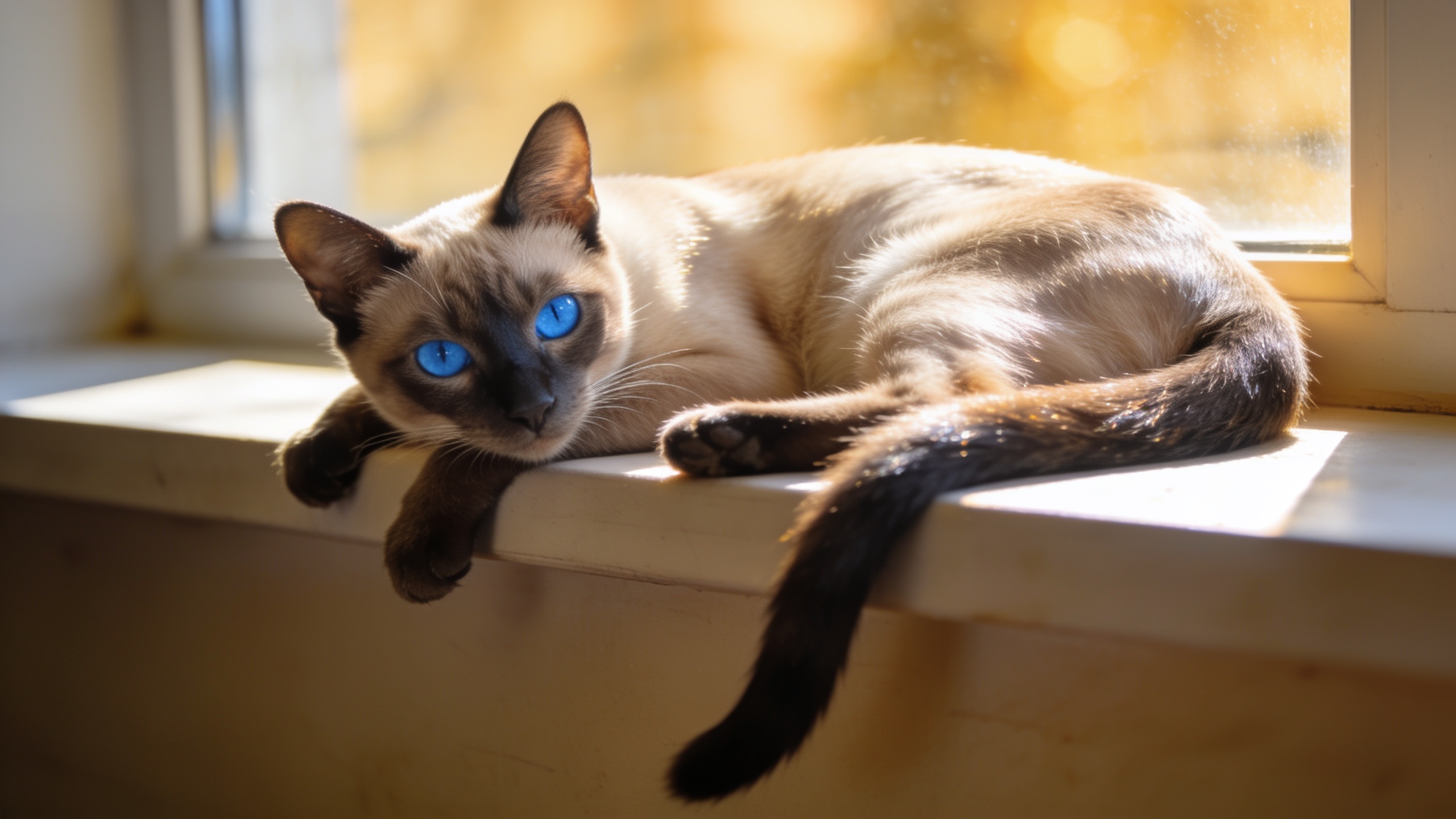
The Balinese is not a separate ancient landrace but a selectively developed longhaired colorpoint Siamese line that emerged when breeders began retaining kittens carrying the recessive long-hair gene, likely introduced historically through spontaneous mutation or outcrossing. The trait is autosomal recessive, so two copies are required for the coat to express; when paired with the Siamese colorpoint pattern, the result is a cat with a silky, medium-length coat and temperature-sensitive pigment expression on the extremities. Early breeding programs in the United States in the mid-20th century treated these kittens as faults within Siamese litters, but a small number of breeders recognized that the coat length did not alter the cat’s narrow head, vocal temperament, or high social drive.
Formal development accelerated in the 1950s and 1960s, when breeders deliberately stabilized the long-haired phenotype while preserving Siamese type. The name “Balinese” was chosen to evoke the fluid, dancer-like carriage of the coat rather than geographic origin; this breed is not from Bali and has no documented foundation in Indonesian native cats. During selection, breeders prioritized a fine single coat, reduced undercoat, and a sleek outline so the long hair would not obscure the body shape characteristic of the Siamese family. This narrow breeding focus preserved the breed’s extreme outline but also concentrated traits already present in the Siamese gene pool, including colorpoint coat pattern, blue-eye linkage, and vocal, human-directed behavior.
Because this breed descends from a limited number of foundation animals, pedigree lines can show increased homozygosity for inherited conditions seen in Siamese-related cats, including progressive retinal atrophy in some lines, amyloidosis risk in certain families, and occasional congenital cardiac or craniofacial anomalies when inbreeding is excessive. From a genetic management standpoint, the breed’s history means that outcross decisions, when permitted by registry rules, have been used to broaden the gene pool while maintaining the desired phenotype. Responsible breeding records should document health screening, longevity of relatives, reproductive performance, and the presence of persistent tail kinks, strabismus, or neurologic signs, since these can indicate hidden heritable defects in tightly managed lines.
Breed recognition came later than development; different registries accepted the Balinese under varying standards and sometimes used different names for the same longhaired colorpoint phenotype. In practice, this means the modern Balinese reflects a deliberate preservation of Siamese structure with one added coat-length mutation, rather than a distinct regional breed shaped by local environment. As a result, its history is inseparable from modern show breeding: this breed exists because breeders chose to value a recessive coat trait while maintaining the intensely refined, social, and athletic Siamese body plan.

Fresh Step Advanced Odor Shield Clumping Cat Litter with Gain, 18.5 lb, 2Pk | Odor Shield with Ammonia Block Technology, Low Dust, Multi Cat, Compatible with Most Automatic Litter Boxes
EUR 25.89 (as of October 10, 2026 08:15 GMT +00:00 - More infoProduct prices and availability are accurate as of the date/time indicated and are subject to change. Any price and availability information displayed on [relevant Amazon Site(s), as applicable] at the time of purchase will apply to the purchase of this product.)The Balinese is a medium-sized, finely muscled cat with a tubular body, narrow torso, and long, elegant lines that make the skeleton appear more elongated than it is. The frame is light-boned but not fragile; the chest is narrow, the abdomen is tucked, and the hindquarters are slightly higher than the shoulders, which supports the breed’s springy, efficient gait. Adult males typically carry more substance through the shoulders and neck than females, yet both sexes should remain sleek rather than coarse. Excessive roundness, heavy jowls, or a cobby silhouette usually indicate deviation from correct breed type or, more commonly, excess body fat this is masked by the coat.
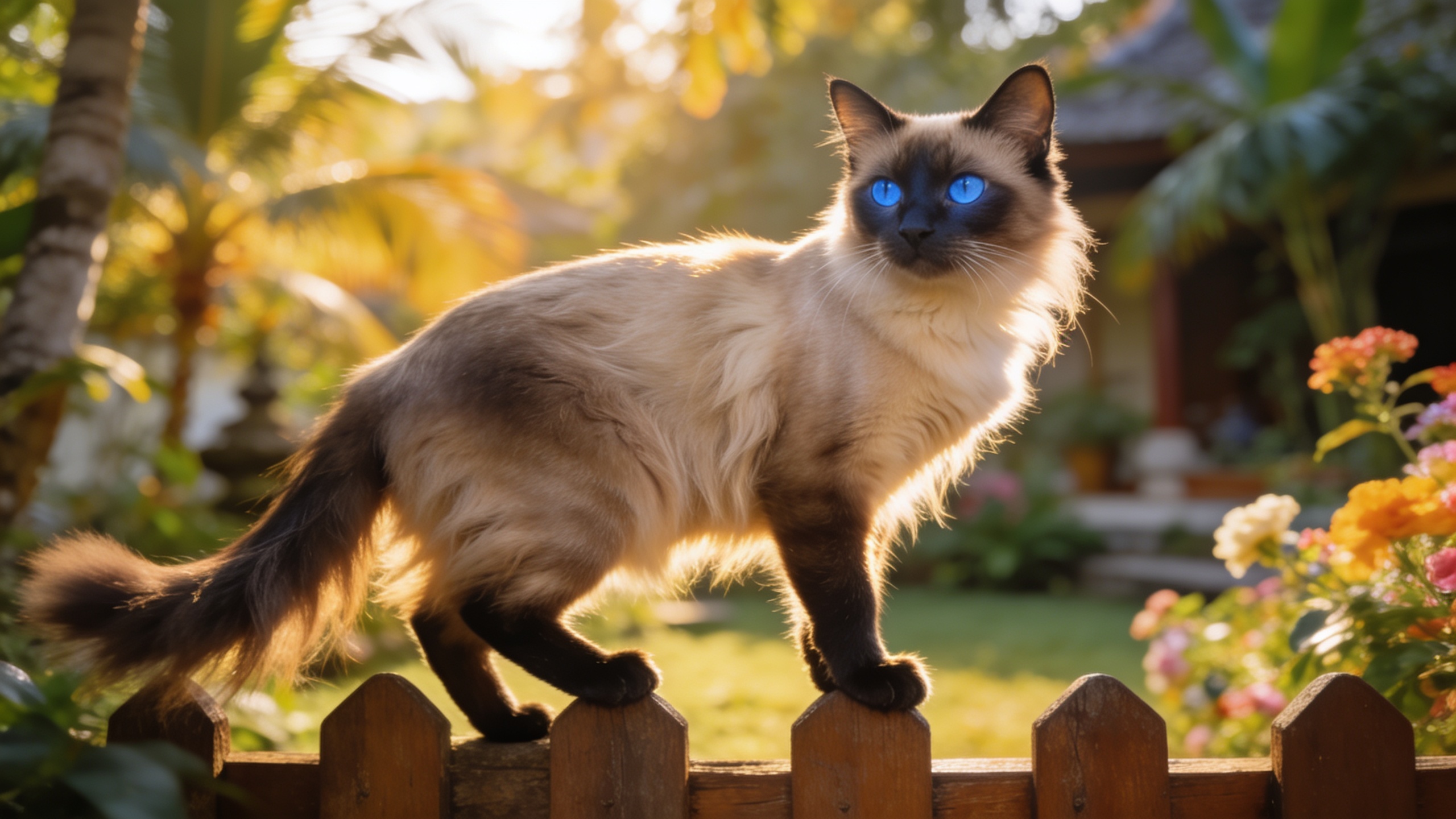
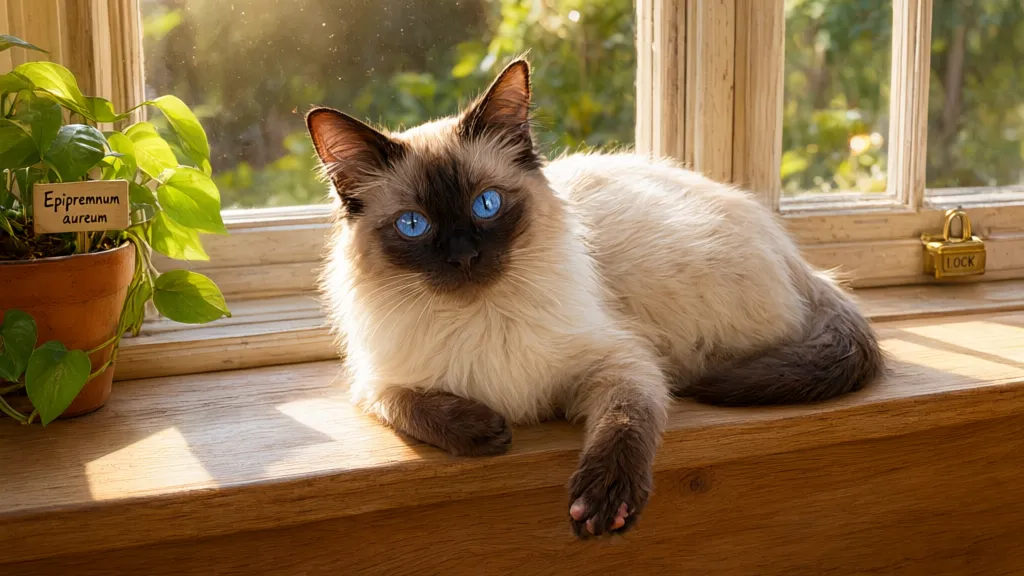
The head is a modified wedge rather than a blunt triangle, with a straight profile, fine muzzle, and large ears that continue the lines of the face. Ears should be broad at the base and set low enough to accentuate the angular outline; overly small or high-set ears reduce the characteristic expression. The eyes are almond-shaped, vivid blue, and slightly slanted, a consequence of the colorpoint pattern’s effect on pigment distribution in the iris. Because blue eyes are associated with the breed’s colorpoint genetics, any cloudy appearance, asymmetry, persistent squinting, or reduced visual tracking warrants ophthalmic evaluation rather than being dismissed as a normal breed trait.
The coat is the breed’s defining physical distinction: medium length, fine in texture, and lacking a dense undercoat. This produces a close-lying, silky pelage that moves freely and does not form the heavy “plume” seen in many semi-longhaired breeds. A reduced undercoat is the reason the coat rarely mats extensively, but feathering still develops on the tail, breeches, and ruff. Seasonal coat density can vary with daylight and indoor temperature, and spay/neuter status may influence hair texture and fullness through hormonal effects on follicle cycling. Because the coat is relatively light, skin health is often visible directly; dandruff, scaling, or broken hairs are easier to detect than in more plush breeds.
Color is restricted by the Siamese colorpoint mechanism, in which pigment expression is limited by temperature-sensitive enzyme activity. Cooler body regions develop darker pigment on the ears, mask, legs, and tail, while the trunk remains lighter. Kittens are born pale because uterine temperature suppresses pigment deposition; points deepen gradually as the cat matures, with full expression often not reaching final intensity until adulthood. Point shading can be influenced by ambient temperature, age, and genetics, so a darker coat in winter or a paler coat in hot climates is not abnormal. Accepted point colors vary by registry, but the pattern should remain sharp enough that the contrast between body and extremities is obvious.
In movement, the Balinese should appear balanced, athletic, and deliberate, with long reaching strides and a fluid spinal line. The breed’s physical structure supports agility, jumping, and climbing, so a loss of jumping ability, stiffness on landing, or avoidance of elevated surfaces may signal pain in the hips, knees, or spine rather than simple laziness. Because the body is lean and the coat does not conceal contour well, small changes in condition score are visually apparent. A healthy adult should feel supple over the ribs with only a thin fat cover, and the waist should remain evident from above without the prominent bony prominence of underconditioning.
Tail carriage is another important structural marker: it should be long, tapering, and free of kinks. Persistent deviation, shortening, or palpable irregularities can reflect vertebral anomalies that occasionally occur in colorpoint lineages. Similarly, crossed eyes are not considered desirable and may be linked to the same developmental genetics that affect ocular alignment in some Siamese-derived cats. Structural assessment should therefore focus not only on appearance but also on symmetry, normal range of motion, and absence of neurologic or orthopedic compromise.