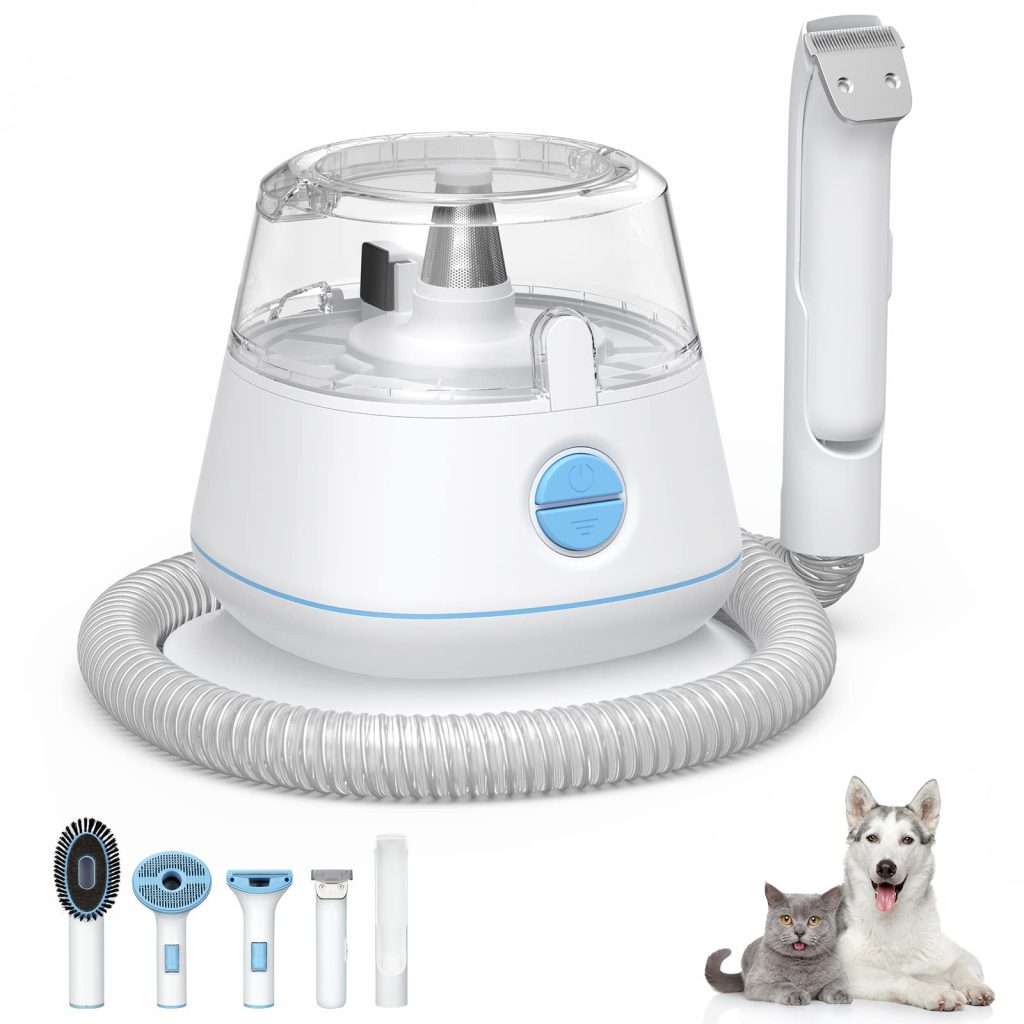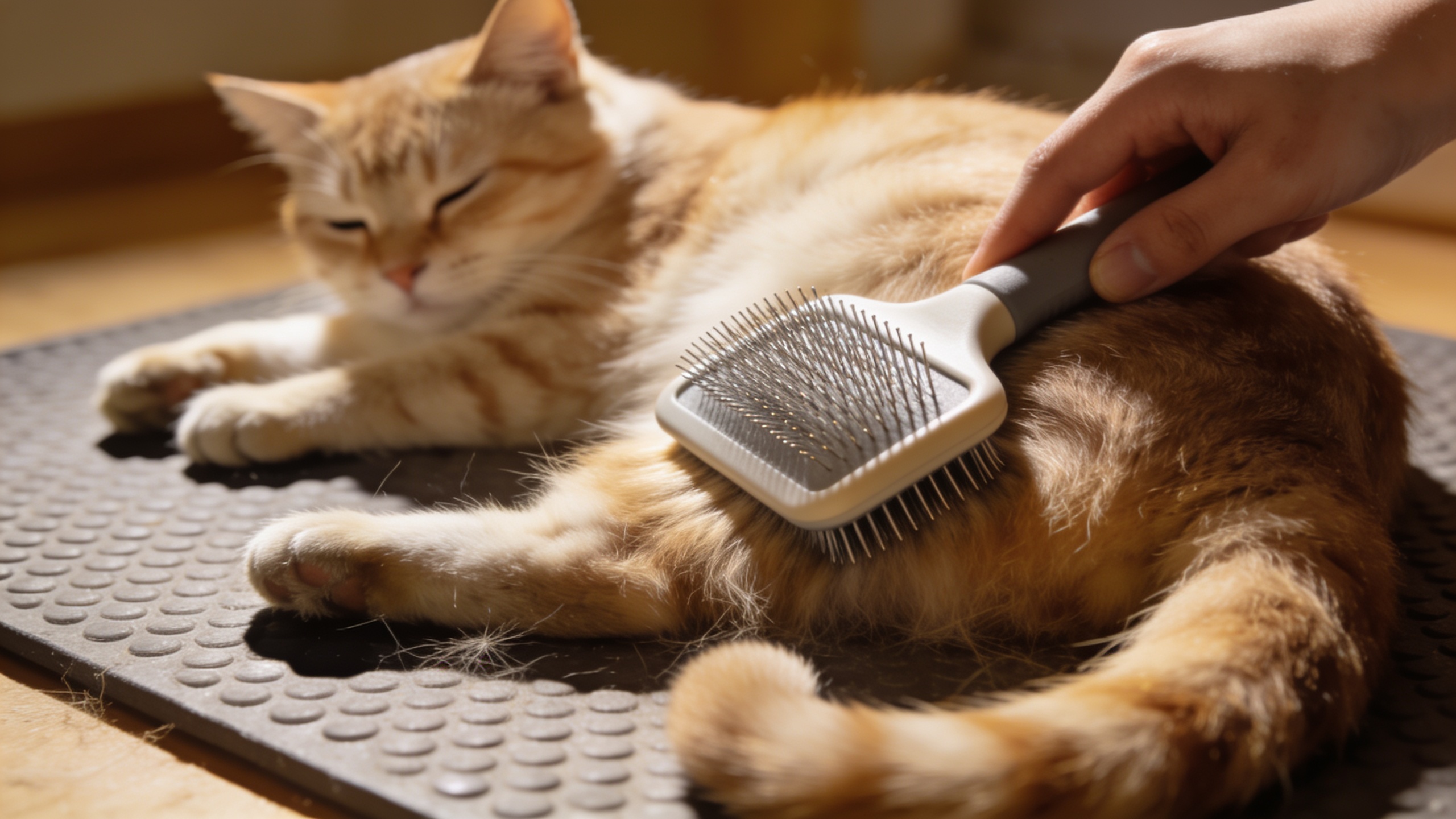
Cats with arthritis often react to grooming not because they dislike brushing, but because joint pain makes twisting, reaching, and prolonged restraint intolerable. The cervical spine, shoulders, elbows, hips, and lumbosacral region are common pain sites, so a brush stroke that bends the cat into a flexed posture can trigger muscle guarding, flinching, or sudden aggression. Shorthaired cats may still need daily friction removal, but the goal is to reduce mechanical load on painful joints rather than to achieve a cosmetic finish. A soft slicker, rubber grooming mitt, or fine-tooth comb used with minimal pressure is usually better tolerated than stiff bristles or a rigid dematting tool.
Work in the direction of the coat growth and keep the cat in a neutral, weight-bearing posture whenever possible. Support the trunk with one hand under the chest and use the other hand for brushing so the cat does not have to stabilize itself on an unstable surface. For many arthritic cats, a non-slip mat on a table or counter is less stressful than being handled on the floor, but some do better on the floor where they can step away without falling. If the cat prefers lateral recumbency, brush only the side that’s uppermost and switch sides later; forcing full-body repositioning can worsen pain perception through repeated joint compression.
Start with low-sensitivity areas such as the cheeks, neck, and upper back, then assess whether the cat’s body language remains loose. Tail lashing, pinnae rotated back, flattened whiskers, skin rippling, dilated pupils, or a sudden attempt to roll away indicate that the session is exceeding the cat’s pain threshold. Stop before these signals escalate, because repeated pairing of grooming with discomfort can create anticipatory stress and make even brief handling aversive. For cats with chronic pain, several 30- to 60-second sessions are often more effective than one prolonged session that causes sensitization.
Mats must be addressed early, before they tighten enough to tether the skin and amplify joint pain with each movement. Hold the hair at the base of the mat to protect the skin, then split the mat with fingertips or a mat splitter instead of pulling downward. A mat over the hips, groin, axillae, or along the flanks is especially problematic because those areas move with every step, causing persistent traction and sometimes focal dermatitis. If a mat cannot be separated without force, clipping may be kinder than brushing, but clip blades should never contact the skin closely enough to cut through thin, senescent, or inflamed tissue.
Temptations Classic Crunchy and Soft Cat Treats, Tasty Chicken, 30 oz | Under 2 calories per treat, crunchy outside & soft inside, resealable tub, 100% complete & balanced, snack, meal or topper
EUR 12.87 (as of October 2, 2026 19:09 GMT +00:00 - More infoProduct prices and availability are accurate as of the date/time indicated and are subject to change. Any price and availability information displayed on [relevant Amazon Site(s), as applicable] at the time of purchase will apply to the purchase of this product.)Older cats, obese cats, and brachycephalic breeds with reduced flexibility or limited self-grooming are at higher risk for coat packing because they cannot reach the caudal back, tail base, and hindquarters effectively. Long-coated breeds such as Persians, Maine Coons, and Ragdolls may need prevention-focused grooming of friction zones even when the cat otherwise appears tidy. Nutrition also influences coat manageability: inadequate omega-3 fatty acids, poor protein quality, or dehydration can worsen coat dryness and static, increasing snagging and tugging. Adequate hydration and a diet that supports lean body mass reduce both grooming resistance and the biomechanical stress that intensifies arthritic pain.
Grooming success in an arthritic cat depends less on force and more on preserving joint neutrality, minimizing restraint, and stopping at the first sign that touch is becoming noxious.
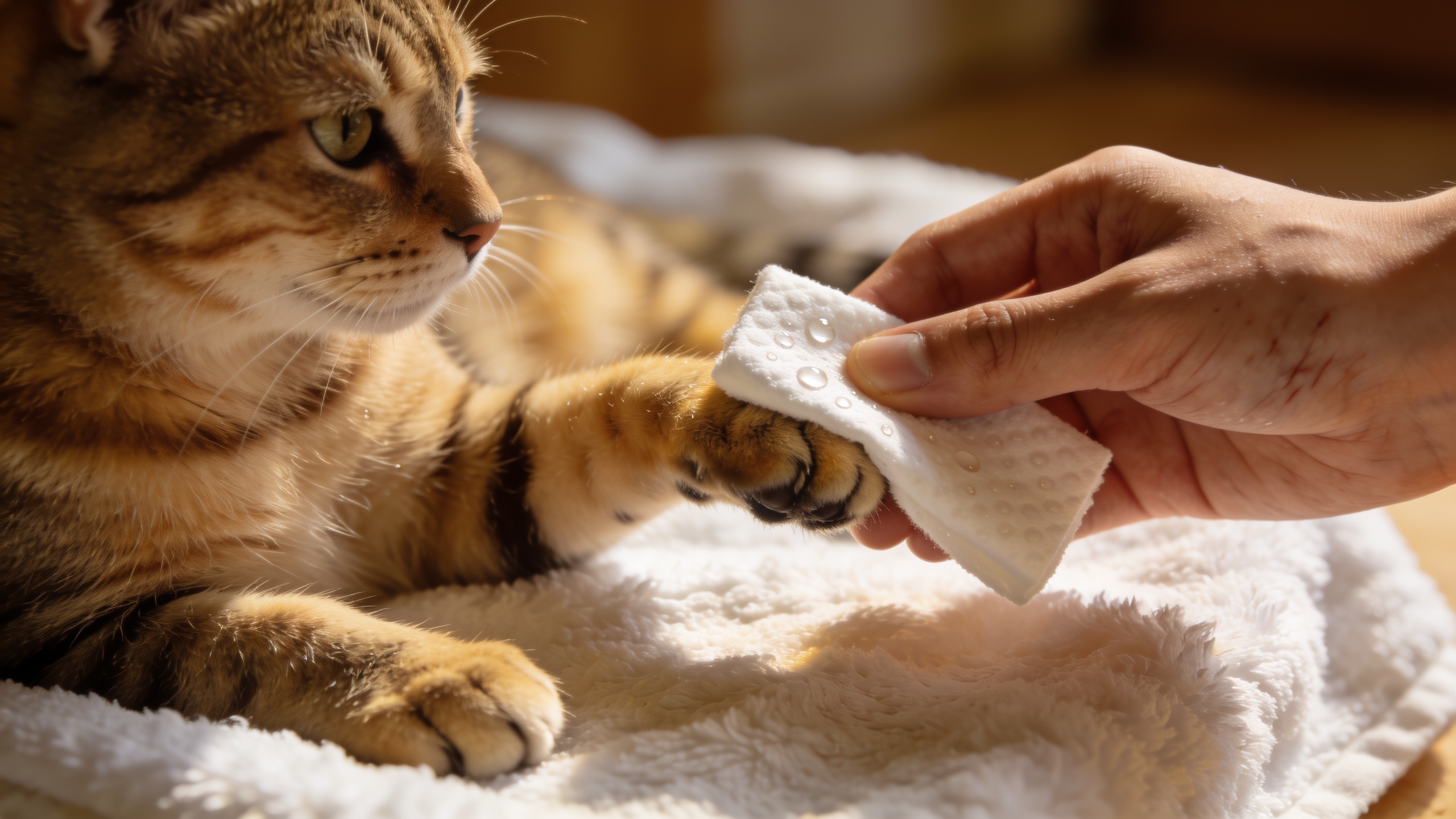
Bathing should be reserved for specific problems such as urine scald, fecal contamination, greasy seborrhea, or a topical product that must be removed, because immersion and repetitive lifting place stress on painful hips, elbows, shoulders, and the spine. Older arthritic cats often compensate poorly for slippery surfaces, so a bath can provoke panic, muscle bracing, and a marked rise in pain sensitivity. If cleaning is necessary, a shallow basin, sink insert, or damp microfiber cloth is usually preferable to full immersion; the less the cat must stand, twist, or be restrained, the lower the mechanical load on affected joints. Use lukewarm water only, since cold water increases peripheral vasoconstriction and muscle tightness, which can worsen stiffness after handling.
Prepare everything before the cat is lifted so the session is brief: towels, a rinsing cup or low-pressure sprayer, a feline-formulated shampoo, and a dry towel in a warm room. Non-slip traction is critical, because cats with arthritis often cannot rapidly correct balance when one limb slides. Keep the cat’s chest and hindquarters well supported, and avoid forcing hips into extension when lifting in and out of the tub or sink. Cats with hip dysplasia, cruciate disease, spinal pain, or severe hindlimb weakness may be safer with spot cleaning rather than a bath, because the act of standing in water can be more stressful than the dirt itself.
Dry shampoo powders and heavily fragranced products are poor choices for many arthritic cats because residues can irritate the skin and prompt more self-grooming, which is tiring and sometimes painful. Use a species-appropriate shampoo with low residue and rinse thoroughly; leftover surfactant can cause pruritus and coat dullness, increasing licking and skin inflammation around the lumbar region and abdomen. Afterward, blot rather than rub, since aggressive towel drying forces the cat to tense against the towel. A low-heat dryer should only be used if the cat tolerates noise and airflow; otherwise, forced drying can create more stress than benefit. Cats with cardiac disease, hyperthyroidism, or advanced frailty may decompensate more quickly from prolonged restraint, so shorten the process and monitor respiratory effort closely.
Nail care matters more in arthritic cats because reduced activity allows claws to grow longer and alter weight distribution on the paw. Overgrown nails can catch in bedding or carpet, increasing the risk of sudden jerking that strains already painful joints, and they can curl into the digital pad if left unchecked. When a cat avoids fully extending the toes because of pain, the nails may not wear normally, so clipping becomes preventative orthopedic care rather than cosmetic maintenance. Trim only the sharp distal tip, and stop well before the quick; repeated microtrauma to the toe can make paw handling aversive and increase defensive scratching. If the nails are thick, brittle, or pigment-dense, inspect under bright light and clip in tiny increments.
Arthritic cats often resent having a front limb extended to expose the claw, so support the limb close to the body and clip one or two nails at a time between brief pauses. Some do better when handled in their preferred resting position, with the paw gently advanced rather than held aloft. If the cat resists strongly, the issue is often pain amplification rather than stubbornness; the wrist, elbow, shoulder, carpus, or tarsal joints may be sore enough that paw manipulation feels threatening. In those cats, nail trims during a calm period, after a modest meal, or paired with a veterinarian-approved analgesic plan are usually more successful than forcing the procedure.
Watch for nail splitting, toe swelling, licking of one paw, altered stance, or refusal to jump after grooming, because these signs can indicate that handling aggravated an underlying orthopedic problem or exposed a preexisting nail-bed issue. Cats with recurrent matting between the toes, ingrown claws, or chronic periungual inflammation need a different maintenance schedule, not more force. If sedation is ever being considered for bathing or nail care, it should be discussed with a veterinarian familiar with the cat’s pain status, age, hydration, and concurrent disease, because some sedatives are poorly tolerated in frail geriatric patients or those already using analgesic medications.