Begging is usually a learned operant behavior reinforced by people, not a moral failing or a sign of “greed.” Cats quickly detect which human actions predict food: opening a cupboard, entering the kitchen, sitting at the table, or waking at a certain hour. If the cat meows, paws, rubs, stares, or knocks items over and then receives kibble, treats, cooked meat, or even eye contact and conversation, the behavior is strengthened. Many owners accidentally reinforce the behavior with intermittent rewards, which makes it more persistent; a cat this is fed only after escalating vocalization learns to escalate.
Hunger can contribute, but true caloric hunger is less common than habit, anticipatory arousal, or frustration. Cats are biologically adapted for multiple small prey-sized meals, so long fasting intervals can increase food-seeking behavior, especially in kittens, adolescents, highly active cats, and queens in late pregnancy or lactation. Rapidly eating large meals and then acting hungry again may reflect low meal frequency rather than inadequate calories. A cat that appears ravenous after a meal may also be underfed, fed a low-protein or low-fiber diet that leaves it unsatiated, or consuming a food with poor digestibility.
Medical causes must be considered when begging is new, intense, or paired with weight loss, vomiting, diarrhea, dull coat, ravenous appetite, polydipsia, or increased urination. Endocrine disease such as diabetes mellitus, hyperthyroidism, and less commonly exocrine pancreatic insufficiency can drive marked hunger. Intestinal parasites, malabsorption, inflammatory bowel disease, and some medications, especially corticosteroids, can also increase appetite. In older cats, cognitive dysfunction can alter meal-time behavior and increase vocal demand for food, particularly at night.
Some cats are more prone to food-focused persistence because of temperament, early reinforcement history, and breed tendencies toward high food motivation. Orientals, Bengals, and many mixed-breed cats with high activity levels may show stronger persistent food seeking, but environment and reinforcement matter more than breed alone. Early-life free-feeding, frequent treat use, or hand-feeding from the table can create a cat that scans humans as a predictable food dispenser.

Purina Fancy Feast Gravy Lovers Wet Cat Food, 3 oz Cans, 30-Pack | Variety Pack with poultry and beef grilled gourmet recipes, made with no artificial colors or preservatives
EUR 24.60 (as of September 23, 2026 14:31 GMT +00:00 - More infoProduct prices and availability are accurate as of the date/time indicated and are subject to change. Any price and availability information displayed on [relevant Amazon Site(s), as applicable] at the time of purchase will apply to the purchase of this product.)Begging is often worse when the cat’s daily schedule is inconsistent. Cats are excellent pattern learners, so variable mealtimes, unpredictable treat delivery, and human snacking routines create anticipation and checking behavior. Stress can amplify food-seeking in some cats: a new pet, limited resources, competition at feeding stations, or insufficient environmental enrichment may shift the cat toward attention-seeking and food-related behaviors because food becomes the most reliable coping target.
Red flags that begging is not just learned behavior include sudden onset, weight loss despite good appetite, vomiting, increased thirst or urination, swallowing problems, diarrhea, lethargy, or a cat that acts hungry but does not maintain body condition.
Observable differences matter. A cat that begs only in the kitchen or at human mealtimes is usually cue-driven. A cat that searches constantly, steals nonfood items, or becomes frantic around feeding time may have stronger hunger, anxiety, or a medical issue. A cat that begs but is overconditioned can still be under-stimulated or habituated to food as enrichment, not necessarily underfed.
The fastest way to understand the cause is to assess body condition score, weight trend, diet composition, feeding frequency, treat calories, and whether the behavior is context-specific or generalized. If the cat’s begging is paired with weight loss, increased appetite, or systemic signs, appetite should not be treated as a training problem until a veterinary workup rules out metabolic, gastrointestinal, and endocrine disease.
Reduce begging by removing the reinforcement schedule the cat has learned. If begging has been rewarded even occasionally, every successful trial strengthens persistence; the cat is not “being stubborn,” it is running a highly efficient reinforcement-seeking algorithm. Meals, treats, and table scraps must become noncontingent on vocalization, pawing, or counter-surfing. Feed on a fixed schedule, place food down when the cat is not actively demanding it, and avoid the common mistake of quieting the cat with a small snack, which teaches that escalation pays.
Use scheduled, species-appropriate meal frequency to reduce drive. Most cats do better with 3 to 6 smaller feedings daily than with one or two large meals, especially juveniles, active cats, and animals with a strong pre-meal arousal response. Automatic feeders are useful because they uncouple food delivery from human presence, which weakens cue association. For wet food, timed feeding with short exposure windows is often superior to leaving food out, because it preserves structure without encouraging grazing in cats that trigger on food availability.
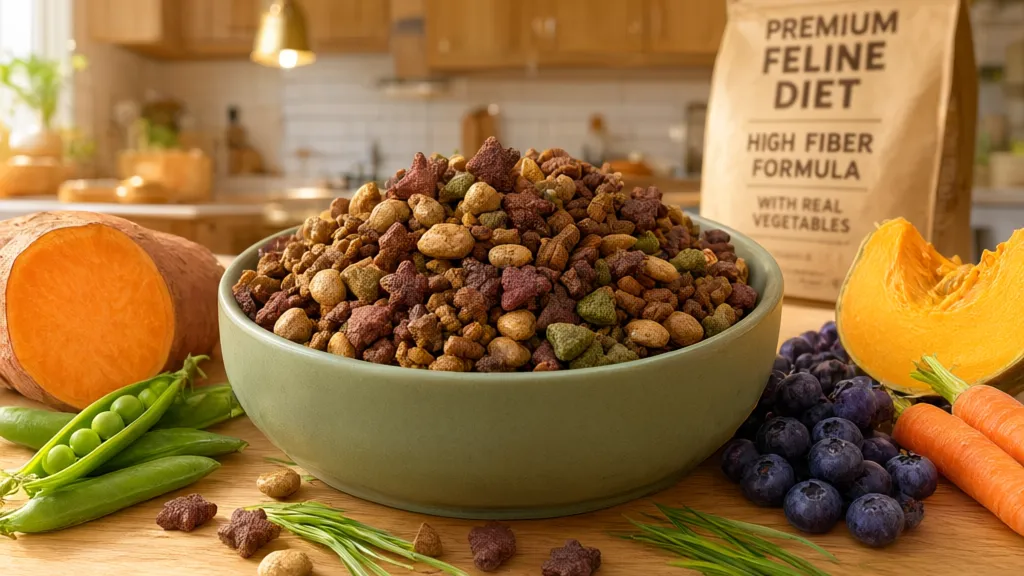
Increase satiety without increasing begging triggers. Higher-protein, lower-carbohydrate diets generally improve post-meal fullness in obligate carnivores, and moderate fiber can help some cats feel more “filled” by slowing gastric emptying and prolonging intestinal feedback. This is not universal: some cats with inflammatory bowel disease, constipation, or small body size tolerate less fiber better. The practical test is stool quality, weight stability, and whether food-seeking decreases over 2 to 3 weeks after a diet change.
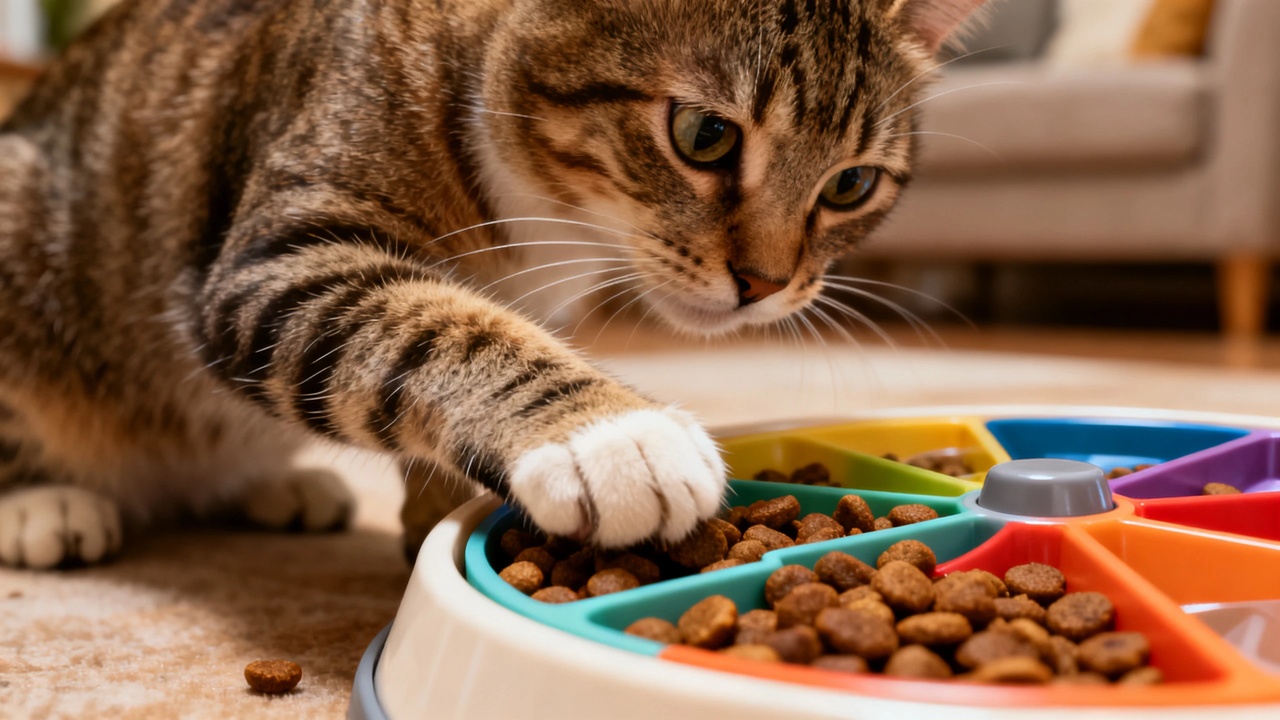
Use food-puzzle devices and scatter feeding to convert feeding from rapid intake to foraging behavior. This increases meal duration, reduces anticipatory fixation, and provides species-typical problem solving. Slow feeders are especially useful for cats that inhale food and then act hungry again within minutes; they reduce rapid gastric emptying sensations and can blunt postprandial arousal. Rotate puzzle difficulty so the cat does not simply learn a single trick and race through it.
Eliminate human-pattern cues that trigger checking. If the cat begins begging when you enter the kitchen, change your movement sequence: ignore the cat, prepare food at fixed times, and avoid speaking, touching, or making eye contact during begging episodes. For table begging, the family must be consistent; one person feeding from the plate can maintain the behavior for everyone. Put the cat on an alternate station with a defined resting place and reinforce that location with nonfood rewards such as gentle brush contact only when the cat is already settled.
If the cat is overweight, weight-loss feeding must be measured, not intuitive. Obese cats are often “begging” because they are on a calorie-restricted plan that is too sparse in volume or too dense in energy. Use a veterinary-calculated target based on ideal body weight, and choose diets with high protein and adequate moisture to preserve lean mass while lowering caloric density. Rapid restriction can provoke intense food-seeking and hepatic lipidosis risk in predisposed cats, particularly those with prior obesity and sudden anorexia.
Do not use punishment, which increases arousal and can redirect the cat into stealthier or more persistent strategies. The goal is not suppressing communication; it’s changing the contingency so begging no longer works. If a cat becomes more vocal during the first days of extinction, this is an expected extinction burst, not evidence that the method is failing. Consistency is the operative variable. If the cat’s appetite remains excessive despite strict management, or if begging intensifies with polyphagia, inspect for endocrine, gastrointestinal, and medication-related causes rather than escalating restriction.