Choose a product whose label specifically permits use on grooming equipment or compatible nonporous surfaces, and whose claims match the organism of concern. Routine cleaning does not require the same product as a suspected infectious-disease exposure; ringworm spores and feline panleukopenia virus, for example, require products with appropriate fungicidal or virucidal claims. If a cat has a diagnosed or suspected contagious infection, ask the veterinarian which organisms must be targeted and follow the product label rather than relying on a general-purpose cleaner.
Check the labeled dilution, temperature range, and contact time. The surface must remain visibly wet for the full contact time; wiping it dry early can reduce effectiveness. Do not assume that a stronger mixture works better: excessive concentration can corrode metal, damage rubber or plastic, and leave residues that irritate skin. Never combine disinfectants or mix them with other cleaners, especially acids or ammonia.
Cat grooming tools can retain disinfectant between teeth, in hinge joints, and beneath blade guards. Use only products compatible with the tool materials, and follow label directions about rinsing after treatment. If rinsing is required, use clean water and dry the tool completely to limit corrosion and prevent damp storage. Keep cats away until the equipment is dry and any label-specified re-entry interval has passed.
Avoid products containing phenolic compounds and do not use essential oils as disinfectants; cats may be harmed by exposure through skin contact, grooming, or inhalation. Quaternary ammonium products can also cause problems if cats contact wet treated surfaces or lick residues, so use them only as labeled and prevent access until treatment is complete. Store concentrates securely away from food, pet supplies, and animals.

Purina Fancy Feast Petites Gravy Wet Cat Food Variety Pack, 2.8 oz, 24-Pack | 48 single servings made with Chicken or Fish, and no artificial colors or preservatives. Convenient break-apart tubs
(as of November 27, 2026 11:25 GMT +00:00 - More infoProduct prices and availability are accurate as of the date/time indicated and are subject to change. Any price and availability information displayed on [relevant Amazon Site(s), as applicable] at the time of purchase will apply to the purchase of this product.)Bleach can be effective against some pathogens when the label specifies the correct dilution and contact time, but it can corrode tools and is inactivated by organic material. Alcohol evaporates quickly, may not provide the required contact time, and is flammable; it is not a dependable substitute for a product with the needed label claim. When a product’s instructions do not clearly cover the tool material or intended use, choose another product or confirm suitability with the manufacturer.
Remove loose hair, dander, and visible debris before applying any disinfectant. Organic material can shield microorganisms from contact with the product, and oils or skin scales may reduce the activity of some disinfectants. A tool that looks clean may still retain debris between comb teeth, beneath brush pins, around clipper blades, or inside hinge joints.
Separate removable parts when the manufacturer permits it. Unplug clippers first, then detach blades or guards according to the device instructions; forcing a blade assembly can damage its alignment. Use a small cleaning brush to loosen trapped hair from teeth, pins, blade edges, and joints. Keep water away from motors, switches, batteries, and other components not rated for washing.
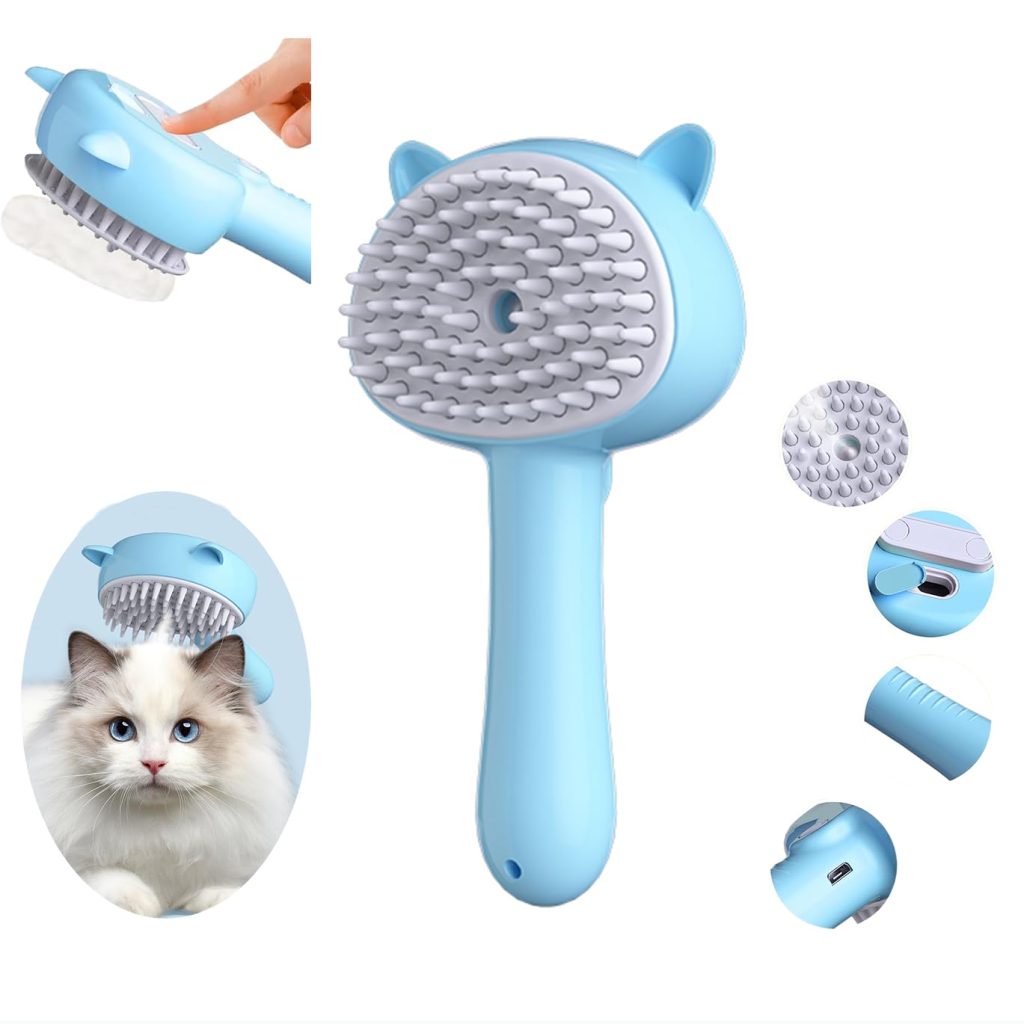
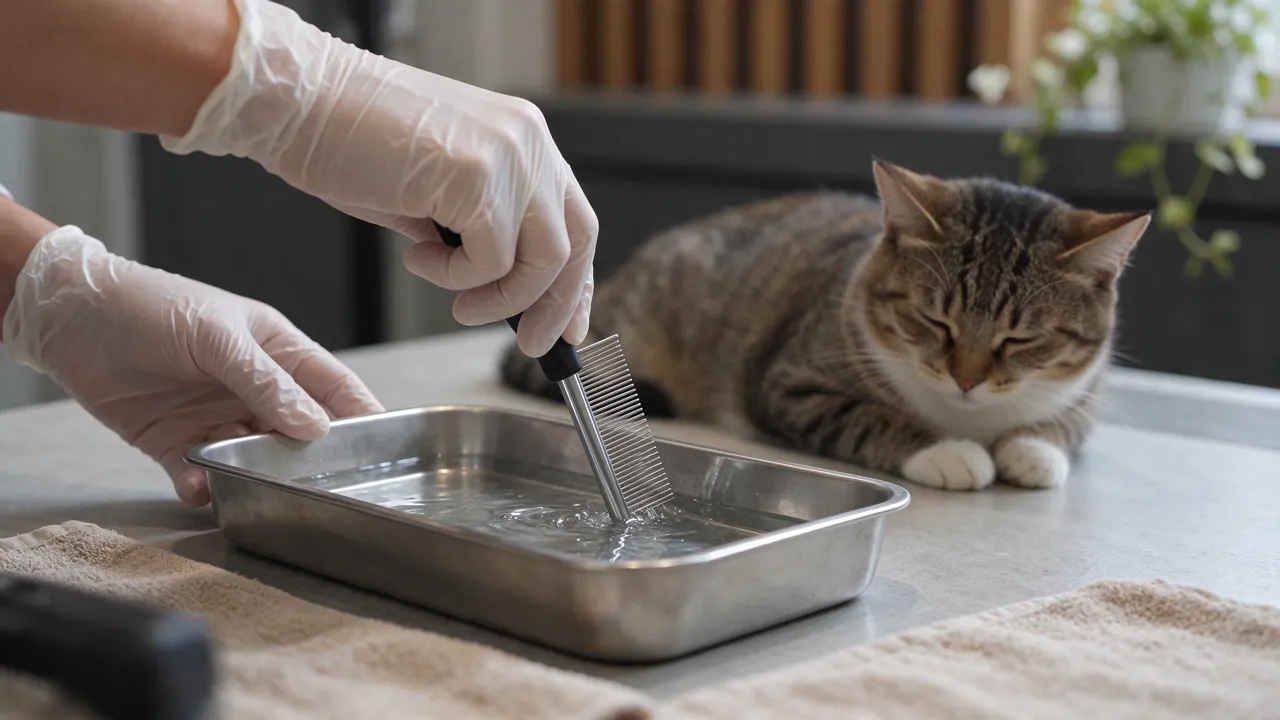
Wash compatible nonporous parts with detergent and warm water, using a dedicated brush to reach crevices. Work the teeth of combs and the base of brush pins from more than one direction; hair can pack tightly at the pin cushion and remain hidden when viewed from above. Rinse until detergent and loosened residue are gone, since leftover soap can interfere with subsequent treatment.
Do not immerse wooden handles, leather components, or electric tools unless their instructions specifically allow it. These materials can absorb moisture, swell, crack, corrode, or retain contamination in inaccessible spaces. Replace brushes with damaged pin cushions, cracked plastic, deep scratches, or parts that cannot be cleaned thoroughly; compromised surfaces are difficult to treat consistently.
Keep tools used on a cat with suspected contagious skin disease separate from routine grooming equipment while they await cleaning. Wear disposable gloves if there is visible discharge or heavy scale, and discard collected hair in a sealed bag rather than shaking it into the room. After washing, drain and dry tools as directed by the manufacturer before proceeding to the disinfection step; moisture trapped in joints can promote corrosion and dilute a disinfectant.
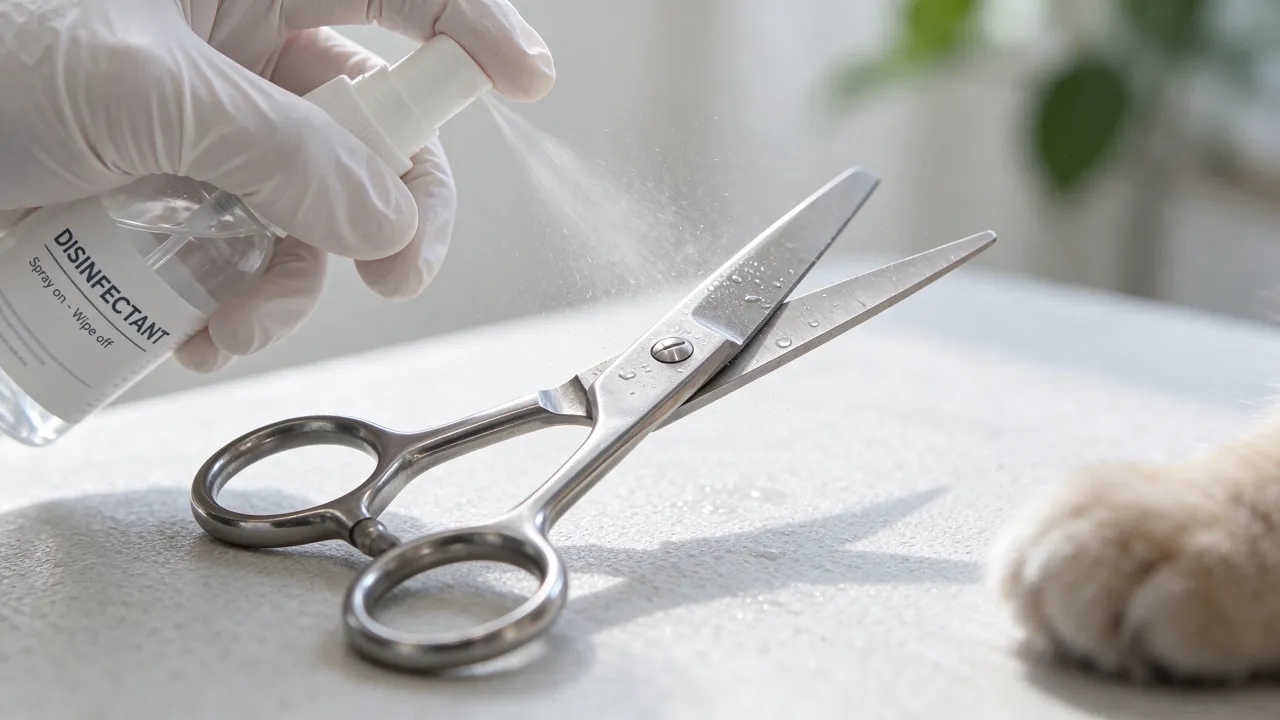
Apply the disinfectant to every surface that contacts the cat, including comb teeth, brush pins and their bases, clipper blades, and the inner faces of opened scissors or hinges. Keep movable joints open during treatment so the product reaches sheltered surfaces. Use the application method specified on the label; spraying from a distance can miss narrow gaps, while soaking can damage tools that are not designed for immersion.
Allow the full labeled contact time before rinsing or wiping, if the instructions require either. If a surface dries before that time, reapply as directed so it stays wet for the complete interval. Do not return a tool to a cat while it is wet with disinfectant or has a strong chemical residue. Rinsing requirements vary by product, so do not skip a required rinse or add one when the label prohibits it.
For clipper blades, disconnect power and follow the manufacturer’s instructions for disinfection; keep liquid away from the clipper body, motor, and electrical contacts. After treatment, dry blades thoroughly and apply clipper oil only if the manufacturer recommends it. A blade that becomes hot, stiff, pitted, or discolored should be removed from service, since corrosion and damaged edges can injure skin or pull hair.
Use a separate, clearly marked set of tools for cats being evaluated or treated for contagious skin disease. Keep those tools apart until they have completed the appropriate cleaning and disinfection process; if a tool has porous, cracked, or inaccessible parts, replacing it may be safer than attempting repeated treatment. Do not share disinfectant containers or cleaning brushes between contaminated and routine equipment unless those items are also cleaned and disinfected.
Once tools are fully dry, store them in a clean, dry drawer or closed container where dust, litter, and grooming debris cannot settle on them. Avoid sealed storage while any moisture remains, because trapped dampness can promote corrosion and microbial growth. Keep disinfected tools separate from used tools, and inspect them before each use for residue, rust, loose pins, damaged teeth, or hair trapped in joints.