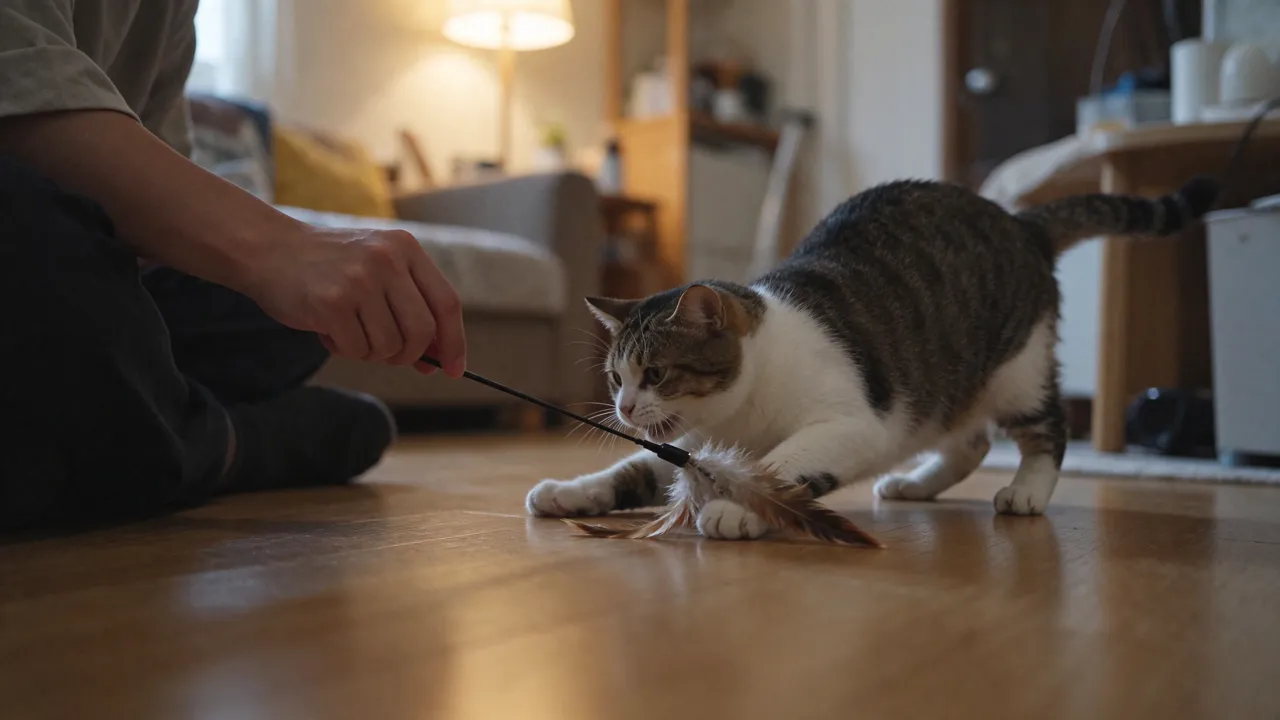
Interactive play strengthens the human–cat bond when the person becomes a predictable partner in the cat’s hunting sequence: orient, stalk, chase, capture, and disengage. Move a wand toy away from the cat in short, irregular bursts, then let it pause behind cover or under a light cloth so the cat can track and pounce. Allowing frequent captures prevents frustration; keeping the toy just out of reach throughout the session can make play less rewarding.
Match the game to the cat’s preferred hunting pattern. A cat that watches and ambushes may engage more with a toy that slips behind furniture, while a pursuer may prefer a lure that travels across open floor. Keep the toy low and moving like prey rather than circling it over the cat’s head. Rotate toys when interest declines, and use distance or a barrier for cats that become overstimulated by close handling.
Let the cat control whether interaction continues. A cat that approaches, tracks the toy, or re-engages after a pause is showing interest; turning away, hiding, flattening the ears, lashing the tail, or repeatedly grooming can indicate stress or excessive arousal. End the session before agitation escalates, and never restrain a cat to make it participate. For cats that tire quickly, older cats, or cats with painful joints, use brief ground-level play with easy access to resting places.
Use toys rather than hands or feet. Hand-wrestling teaches a cat that human skin is a target and can turn normal predatory play into painful biting or scratching. Keep string, ribbon, elastic, and feather attachments under direct supervision; swallowing them can cause intestinal obstruction. Store them securely after play, and inspect toys for loose parts.

Cat's Pride Antibacterial Litter, Odor-Eliminating Scented 12lb
$9.48 (as of November 21, 2026 10:35 GMT +00:00 - More infoProduct prices and availability are accurate as of the date/time indicated and are subject to change. Any price and availability information displayed on [relevant Amazon Site(s), as applicable] at the time of purchase will apply to the purchase of this product.)Consistent, brief sessions can create a reliable positive routine without forcing contact. Pairing play with a small portion of the cat’s regular food can complete the hunt–eat–rest sequence, but account for that food in the daily ration to avoid excess calories. Finish with calm behavior and allow the cat to leave; predictable interaction, successful captures, and respect for withdrawal build trust more effectively than prolonged or high-intensity play.
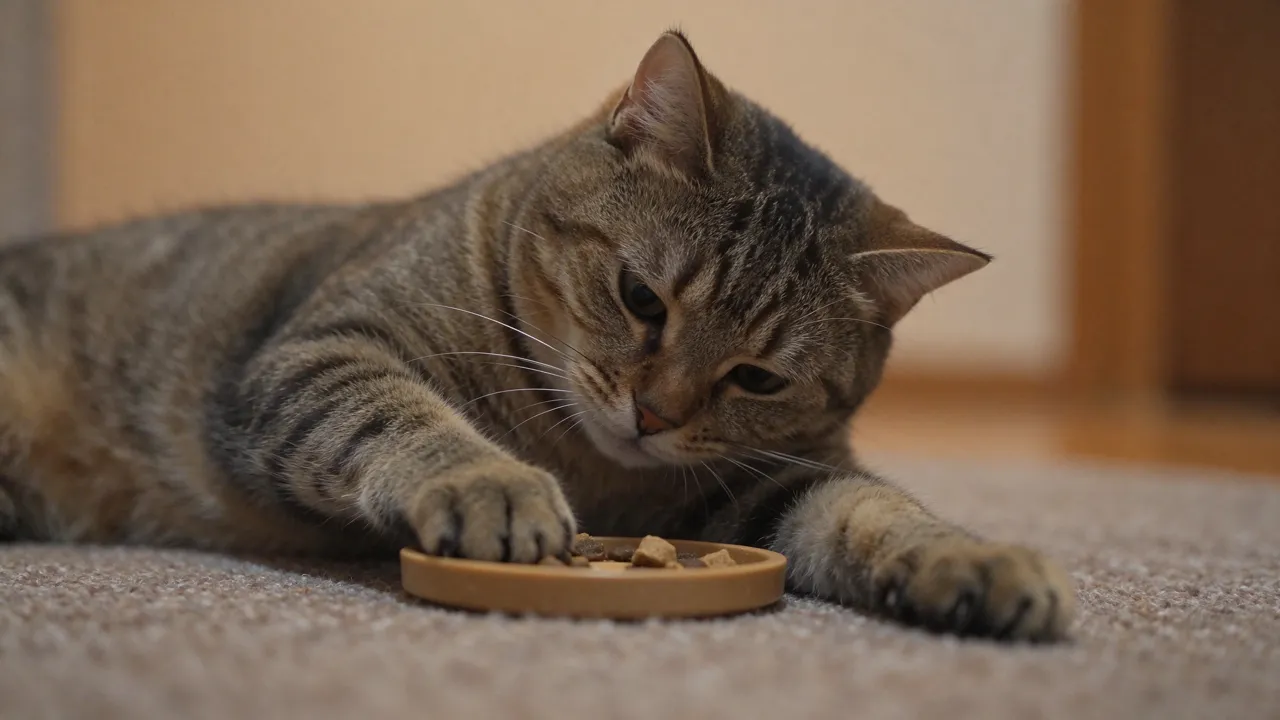
Identify preferences by changing one feature at a time: movement speed, direction, distance, sound, texture, and whether the toy appears in the open or from behind cover. Offer two safe options in alternating trials and note which one the cat approaches, follows, or returns to after a pause. A lack of response to one toy is not evidence that the cat dislikes play; the movement pattern or setting may be wrong.
Some cats prefer activities that recruit more than chasing. Scatter a few pieces of the daily ration across a room for a gradual search, or place them in a simple food puzzle that the cat can solve without frustration. Start with food visible and the task easy, then increase difficulty only if the cat continues to engage. A cat that paws repeatedly at a closed feeder, abandons it, or vocalizes may be encountering a task that is too difficult rather than showing poor motivation.
Training games suit cats that attend closely to people or enjoy predictable problem-solving. Reward a voluntary behavior—such as touching a target, stepping onto a mat, or entering a carrier—with a tiny portion of regular food. Use short trials and stop while the cat is still responding; repeated cues without reinforcement can weaken the behavior and make the interaction less clear.
Adjust the physical demands to the cat’s body and environment. Kittens often benefit from brief, varied bouts with frequent pauses; older cats and cats with osteoarthritis may prefer slow ground-level pursuits and wide turns over jumping. A brachycephalic cat, an overweight cat, or one with respiratory or cardiac disease may need lower-intensity play, with panting, open-mouth breathing, coughing, or prolonged recovery treated as reasons to stop and seek veterinary advice.
Use the cat’s response to refine the activity, not assumptions about breed or personality. Breed tendencies may influence average activity or sociability, but individual experience, health, age, and reinforcement history are more useful guides. Keep a simple record of which games produce relaxed engagement and voluntary return; that pattern identifies activities the cat values without requiring prolonged or forced participation.