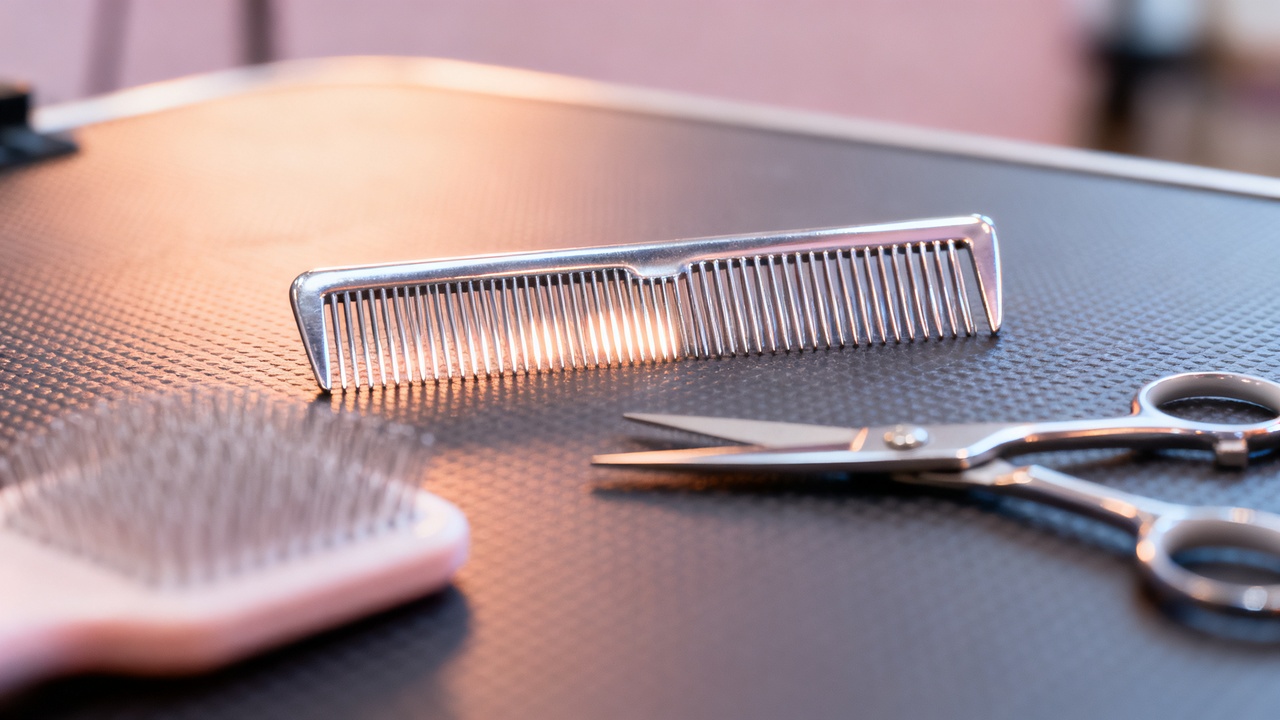
Creative grooming in cats should be built on tools that remove dead coat, control product load, and minimize skin trauma. The baseline kit starts with a fine-tooth stainless steel comb for detecting mats close to the skin, a soft slicker brush for short sessions on dense coats, and rounded-tip grooming scissors for isolated tangles that cannot be combed out without tension. A high-velocity dryer is useful only when the cat tolerates air movement; it lifts loose coat before dye application and helps reveal hidden mats, but it can provoke panic in noise-sensitive individuals and should never be aimed directly at the face, ears, or genital area.
Cat-safe clippers with low vibration and adjustable blades are preferred for pattern work and sanitary trims. Blade heat rises quickly on fine feline skin, especially over the flanks, groin, axillae, and behind the ears, so blades must be checked frequently and cooled before each pass. Guard combs reduce the risk of taking the cut too close, which matters because feline skin is thin, mobile, and easily sheared when the coat is pulled tight. For precision, a #10 or #15 blade is commonly used for clean lines, but the choice must be adjusted to coat density, skin condition, and whether the cat has a history of post-clipping alopecia or clipper irritation.
Detangling spray should be non-oily and fragrance-light so it reduces static without creating a residue barrier that interferes with dye adherence or scalp inspection. For styling, only feline-formulated, non-toxic colorants should be considered, with tools dedicated to product mixing and application: disposable microbrushes, silicone applicators, nitrile gloves, and small ceramic or stainless dishes that do not react with pigments. Human hair dyes, bleach, oxidizing developers, glitter products, and temporary sprays designed for dogs can contain solvents, dispersants, or fragrances that cats may ingest during grooming and are not appropriate.
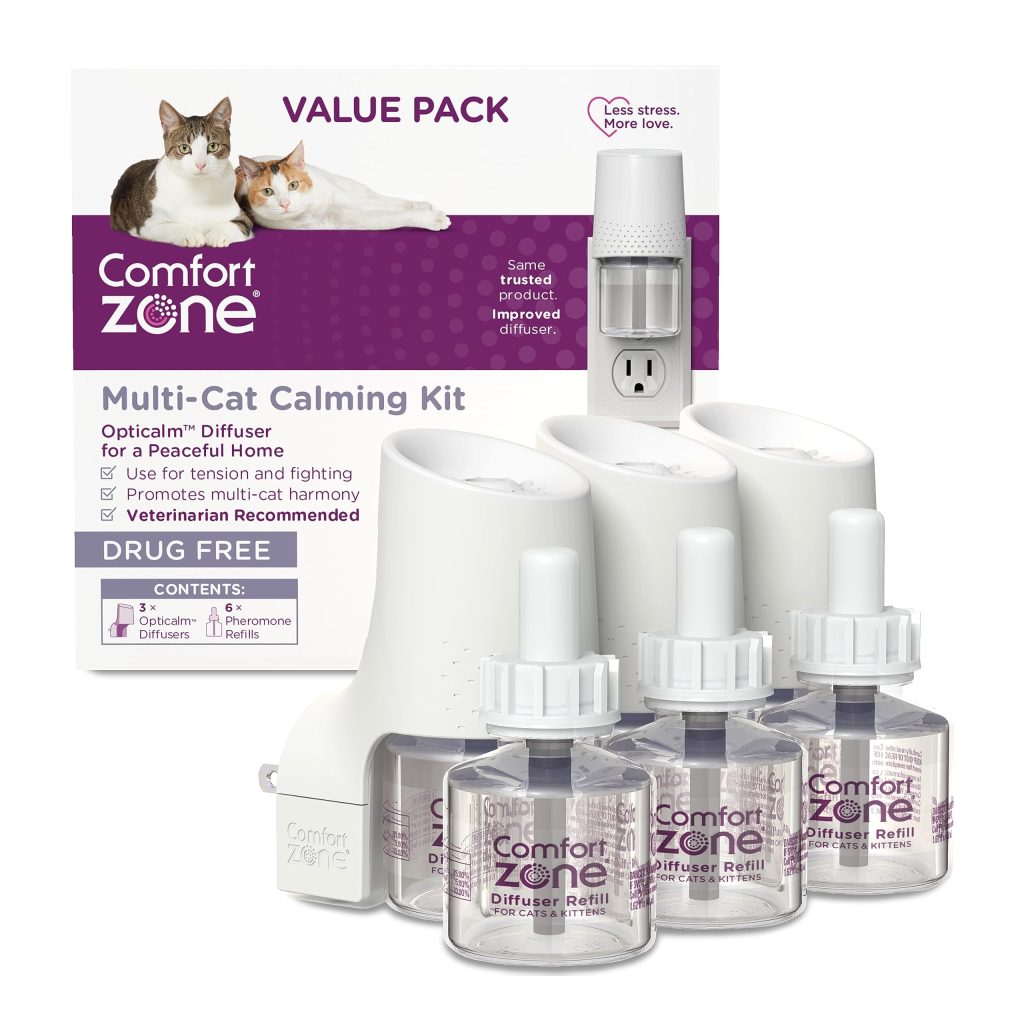
Drying and finishing tools matter because damp coat can trap product against the skin and increase maceration, especially in overweight cats or those with long hair and poor airflow under the tail or in skin folds. Microfiber towels absorb water without roughening the coat, and a low-heat dryer or cage-free drying setup reduces chilling in kittens, seniors, and cats with low body fat. For cats prone to stress-induced shedding or overgrooming, a pheromone-scented calming environment is more useful than heavy restraint equipment; grooming loops, muzzles, and no-sit restraints are inappropriate for most feline styling sessions because they increase struggle, abrasion, and respiratory stress.
Sheba Perfect Portions Pate Wet Cat Food, Seafood Variety, 2.6 oz, 24 ct | Salmon, Seafood & Whitefish and Tuna, grain-free, protein-rich, no fillers/artificial flavors, 48 servings, twin-pack trays
EUR 24.15 (as of September 23, 2026 14:31 GMT +00:00 - More infoProduct prices and availability are accurate as of the date/time indicated and are subject to change. Any price and availability information displayed on [relevant Amazon Site(s), as applicable] at the time of purchase will apply to the purchase of this product.)Skin and coat assessment should be supported by a magnifying light or headlamp, because creative trimming should never be done over dermatitis, flea allergy lesions, ringworm, sunburn, or areas of self-trauma. A cat with thin coat, endocrine disease, or chronic steroid exposure may bruise or nick more easily, so visual inspection before tool selection is not optional. Cleaned and disinfected tools are essential when multiple cats are groomed, since dermatophytes, bacterial folliculitis, and ectoparasites can be transferred on combs and blades. Keeping tools dedicated by cat or disinfecting between uses lowers the chance that a cosmetic session becomes a route for skin infection or parasite spread.
- stainless comb, slicker brush, clipper with cooling blades, rounded-tip scissors, microfiber towels.
- feline-safe colorant, nitrile gloves, small applicators, nonreactive mixing dishes.
- bright inspection light, blade coolant, disinfectant compatible with grooming equipment.
- human dye, bleach, aerosol glitter, high-scent sprays, heat dryers used too close to the coat, and tools that retain excessive heat or create sharp edge drag.
Tool choice should always reflect the cat’s coat type and medical profile. Persian, Maine Coon, and Ragdoll coats mat deeply at friction points and require combs that reach the undercoat; short-haired cats with seborrhea or very fine coats often need less aggressive brushing to prevent follicular irritation. Kittens, geriatric cats, and cats with hyperesthesia, arthritis, or cardiac disease tolerate shorter grooming intervals and quieter equipment better than prolonged sessions with multiple devices running at the same time.
Preparation begins with a physiologic and behavioral screen, because styling is safest only when the cat is capable of tolerating handling without escalating catecholamine release. Assess body condition, gait, respiratory effort, mucous membrane color, and areas of pain before any restraint is applied. A cat with tachypnea, open-mouth breathing, dehydration, fever, or marked lethargy should not be groomed for cosmetic purposes, since stress can unmask occult cardiac, endocrine, or infectious disease. Cats with recent surgery, corticosteroid use, diabetes mellitus, hyperthyroidism, chronic kidney disease, or immune-mediated skin disease need individualized handling because their skin integrity, thermal regulation, and wound healing differ from healthy adults.
Coat evaluation determines whether the session is mechanically feasible. Dense undercoat, felted mats, and clumping around the tail base, axillae, groin, or collar line increase traction on the skin and make even minor clipping more likely to cause abrasions or hematomas. Mats should be mapped before bathing or product application, because wetting compacted coat tightens the fiber network and can convert a manageable tangle into a painful pelt. If the coat is greasy, scurfy, or has odor, check for seborrhea, ectoparasites, and yeast overgrowth; cosmetic work should wait if there is active inflammation, exudate, pustules, or broken skin.
Behavioral preparation reduces escalation better than physical restraint. Many cats do best with short preconditioning sessions that pair handling with food reinforcement, predictable touch, and escape options. Sensitization often occurs around the head, paws, tail, and abdomen, so these zones should be touched briefly and released before tension builds. Cats that freeze are not necessarily calm; immobility may reflect fear-induced inhibition and can convert abruptly into biting when restraint increases. Dilated pupils, tail lashing, piloerection, flattened ears, vocalization, and refusal of treats are more reliable indicators that the session should stop than swatting alone.
Food timing matters because an overhungry cat becomes less cooperative and a recently fed cat may vomit under stress. A small palatable meal or lickable treat 30 to 60 minutes before grooming often improves acceptance without causing gastric discomfort. For cats with medical diets, use the approved formula rather than high-fat rewards, especially in pancreatitis-prone cats or those with obesity. Hydration should be adequate before long sessions, since dry skin and static increase friction and make coat separation more difficult.
Environmental setup should minimize sensory overload. Use a non-slip surface, stable table height, warm room temperature, and controlled lighting so the cat does not have to compensate for loss of footing or visual uncertainty. Loud appliances, scented sprays, and erratic movement increase startle responses in visually oriented or auditory-sensitive cats. A towel wrap can help some cats feel secure, but it must not compress the thorax or restrict the forelimbs for long periods; excessive wrapping raises body temperature and limits the cat’s ability to signal discomfort.
Pre-grooming failure usually shows up first as subtle stress: reduced appetite for treats, increased muscle tension, flattened posture, and repeated attempts to orient toward the handler’s hands. These signs should be treated as an early stop signal, not as a reason to “push through.”
Before any styling product is introduced, perform a small-area tolerance test on intact skin and on a region the cat cannot readily lick, such as the flank. Check for erythema, pruritus, salivation from incidental contact, and coat texture change over the next 24 hours. Cats with a history of contact dermatitis, asthma, or compulsive grooming may react to fragrance, preservatives, or carrier solvents even when this product is marketed as gentle. If the cat requires pre-visit anxiolytic support, this should be prescribed by a veterinarian familiar with feline pharmacology, because dosing, timing, and drug choice must account for age, liver function, heart disease, and concurrent medications.
Safe creative styling depends on limiting both chemical exposure and mechanical trauma. Product should be applied only to clean, fully dry coat unless the formulation specifically states otherwise, because damp hair increases capillary spread and makes it harder to keep pigment off the skin. The coat should be parted down to the skin in small sections so colorant sits on the hair shaft rather than pooling in the follicular opening, where it can increase irritation and make post-groom itching more likely. On sparse-coated areas, the safest approach is to avoid color entirely, because any visible “design” there will require more pigment concentration and create a greater risk of transdermal exposure.
Application should stay superficial and controlled. Use a microbrush or sponge with minimal saturation, then comb through once to distribute product evenly; repeated brushing drives material closer to the epidermis and can raise friction on already sensitive skin. The face, whisker pads, inner pinnae, perineum, genital area, and any site with acne, scabs, parasites, or a history of overgrooming should be excluded. Whiskers are sensory organs, not decorative hair, and trimming or coating them can alter spatial orientation and increase startle responses. Avoid clipping patterns that create sharp edges over joints or pressure points, because those edges can rub during movement and cause a low-grade dermatitis that appears later as licking or patchy alopecia.
Timing matters as much as product choice. Most feline-safe temporary pigments need the shortest contact time possible to achieve visible saturation. Prolonged exposure increases the chance of salivation from incidental grooming, and the cat may ingest pigment while removing residual product from the coat. Once the styling target is reached, remove excess material immediately with a minimally damp cloth if the product instructions allow it, then dry thoroughly with cool air or towels. Do not re-wet repeatedly in an attempt to intensify color; repeated wetting swells the hair shaft and raises the likelihood of matting, especially in long-coated breeds.
Secure handling should be low-pressure and continuously reversible. If a cat begins to brace, flatten, twist, or pull away, the process should stop before the animal escalates to defensive aggression. Forcible continuation increases the chance of claw injury, operator bites, and microtears in the skin from traction. Cats with a prior history of fear-based aggression often benefit from one-sided work, where the body is stabilized from behind the shoulders rather than held from the front, because direct face-to-face restraint is more threatening and can intensify the fight-or-flight response. Sedation is not a substitute for skill and should never be used for cosmetic work without veterinary oversight, monitoring, and a clear medical justification.
Post-application inspection should look for early toxicity or irritation rather than only aesthetic results. Red flags include pawing at the face, increased drooling, sneezing after facial proximity to product, head shaking, skin redness, focal swelling, hives, vomiting, diarrhea, or a sudden change in behavior such as hiding or aggression. Any of these signs warrants immediate removal of this product and veterinary assessment if the reaction persists. Cats with asthma, chronic rhinitis, or a history of scent sensitivity are particularly vulnerable to aerosols and fragranced carriers, which can provoke airway irritation even when the skin appears unaffected.
After styling, coat maintenance should shift to monitoring rather than repeated manipulation. Check the treated area over the next 24 to 48 hours for dull hair, breakage, excessive licking, or residue accumulation near the skin folds. If the cat develops focal alopecia, scaling, or a greasy film, that suggests this product interfered with normal grooming or skin barrier function. Repeated creative sessions should be spaced out enough to allow full coat turnover and follicular recovery, especially in senior cats, cats on long-term medication, and breeds with delicate skin such as Sphynx, Devon Rex, and Cornish Rex, whose follicular structure and hair density make them more vulnerable to overprocessing.