Cat shedding is a cyclical follicular process driven primarily by hair growth phase changes, light exposure, temperature, and endocrine status. Most domestic cats are not “constantly losing hair” in a pathological sense; they’re replacing coat fibers as follicles transition from anagen to catagen and telogen. In seasonal shedders, increasing daylight suppresses melatonin and alters hypothalamic-pituitary signaling, prompting a heavier turnover into spring and, in some climates, a second cycle in autumn. Indoor cats exposed to stable artificial light often lose this clear seasonal rhythm and may shed more evenly year-round, which can make normal coat turnover appear excessive.
Coat density, texture, and length influence how much loose hair remains trapped. Double-coated breeds and cats with dense undercoats, such as British Shorthairs, Maine Coons, and Norwegian Forest Cats, release a larger volume of dead undercoat when follicles synchronize their shedding phase. Shorthaired cats may still shed heavily if their coat is plush or if they groom frequently, because loose hairs accumulate in the gastrointestinal tract as hairballs or are released onto furniture and clothing. Cats with very fine coats, like Siamese-type cats, often shed less visibly but may still have significant microscopic hair turnover.
Age changes shedding patterns in predictable ways. Kittens shed their softer juvenile coat as adult guard hairs mature, while senior cats often shed more if grooming efficiency declines, because reduced flexibility, arthritis, or dental discomfort leads to poorer self-maintenance and more retained dead hair. Weight gain can worsen shedding-related matting by limiting reach to the tail base, flanks, and abdomen. Stress also alters coat cycling through cortisol-mediated effects on skin barrier function and grooming behavior; cats under environmental tension may overgroom specific zones or, conversely, neglect coat care entirely.
Shedding becomes clinically concerning when it is accompanied by broken hairs, patchy alopecia, scaling, pruritus, erythema, or a greasy, rancid coat. Those signs suggest parasitic disease, dermatophytosis, allergic dermatitis, flea hypersensitivity, pain-related overgrooming, or systemic disorders such as hyperthyroidism, diabetes mellitus, and renal disease. Poor-quality protein intake, inadequate essential fatty acids, and micronutrient imbalance can also increase coat fragility, making hairs detach more easily and creating the impression of heavy shedding. Zinc deficiency and essential fatty acid insufficiency particularly affect barrier integrity, while inadequate taurine or severe caloric restriction may worsen overall coat condition.
Fresh Step Odor Shield Multi Cat Clumping Cat Litter, 14 lb. | Febreze Freshness, Odor Shield with Ammonia Block Technology, Low Dust, Compatible with Most Automatic Litter Boxes
EUR 8.33 (as of September 22, 2026 14:28 GMT +00:00 - More infoProduct prices and availability are accurate as of the date/time indicated and are subject to change. Any price and availability information displayed on [relevant Amazon Site(s), as applicable] at the time of purchase will apply to the purchase of this product.)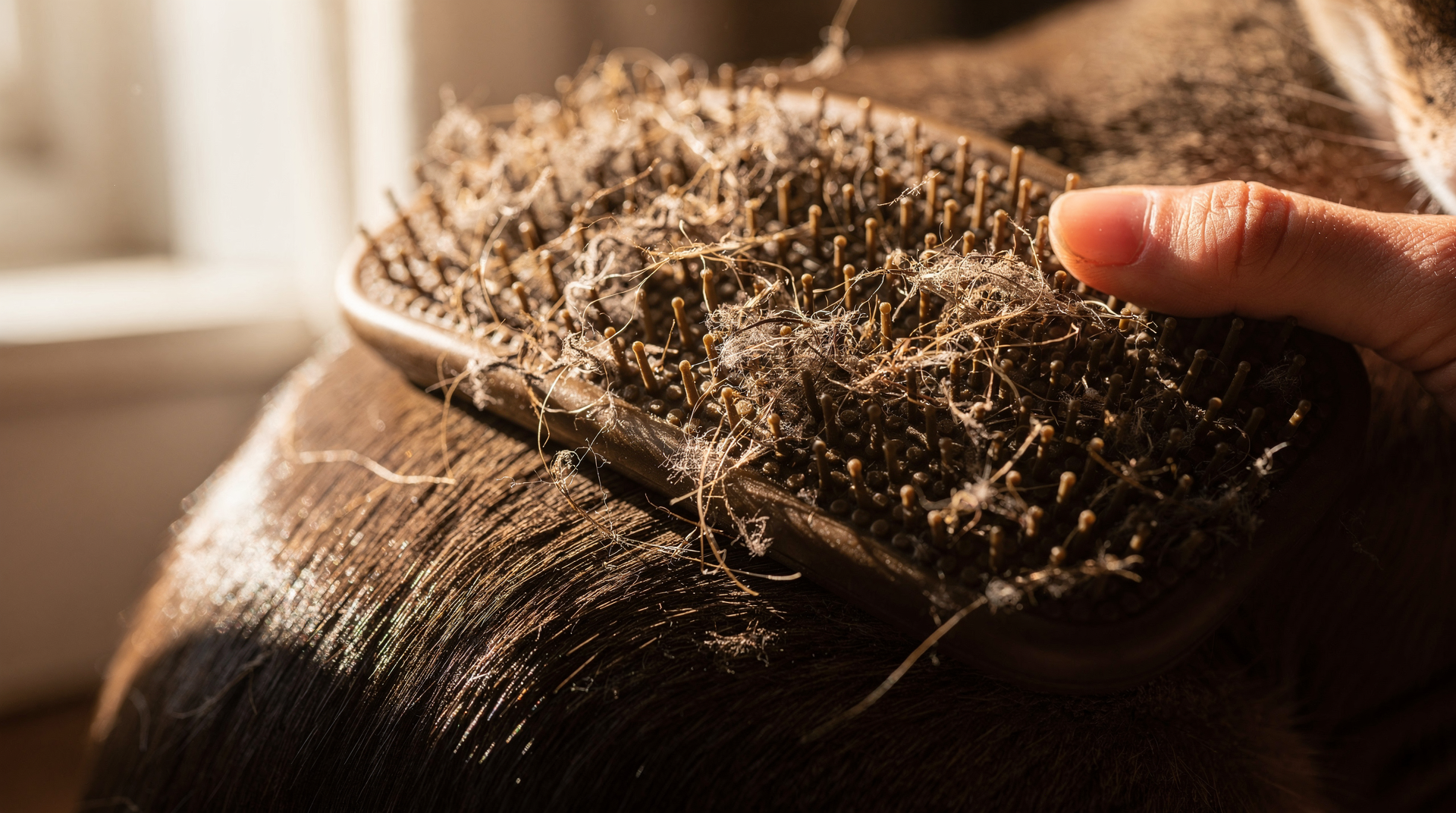
Observing where hair is lost helps distinguish normal shedding from disease. Uniform loose hair on bedding, combs, and clothing is typical of physiologic turnover, whereas focal thinning on the abdomen, inner thighs, or base of the tail often reflects licking, friction, or inflammation. Excessive hair ingestion may manifest as frequent hairballs, reduced appetite, or repeated retching; that’s more likely when loose undercoat is not removed regularly during high-shed periods. Cats that shed heavily in one region only may also be reacting to harness abrasion, carrier pressure, or overuse of a favorite sleeping surface.
Rule out illness when coat loss is sudden, localized, itchy, or paired with behavior change, weight loss, vomiting, increased thirst, or litter box changes; physiologic shedding should not produce skin lesions or systemic signs.
- High-shed periods are amplified by indoor lighting, nutritional deficits, obesity, and stress.
- Frequent grooming by the cat itself does not always reduce shedding; it often redistributes hair into the coat or gastrointestinal tract.
- Hair that comes out with a bulb is usually telogen hair; hair that breaks midshaft suggests damage from friction, parasites, or poor coat quality.
- Persistent dandruff with shedding points to dry skin, seborrhea, or reduced grooming, not simple coat turnover.
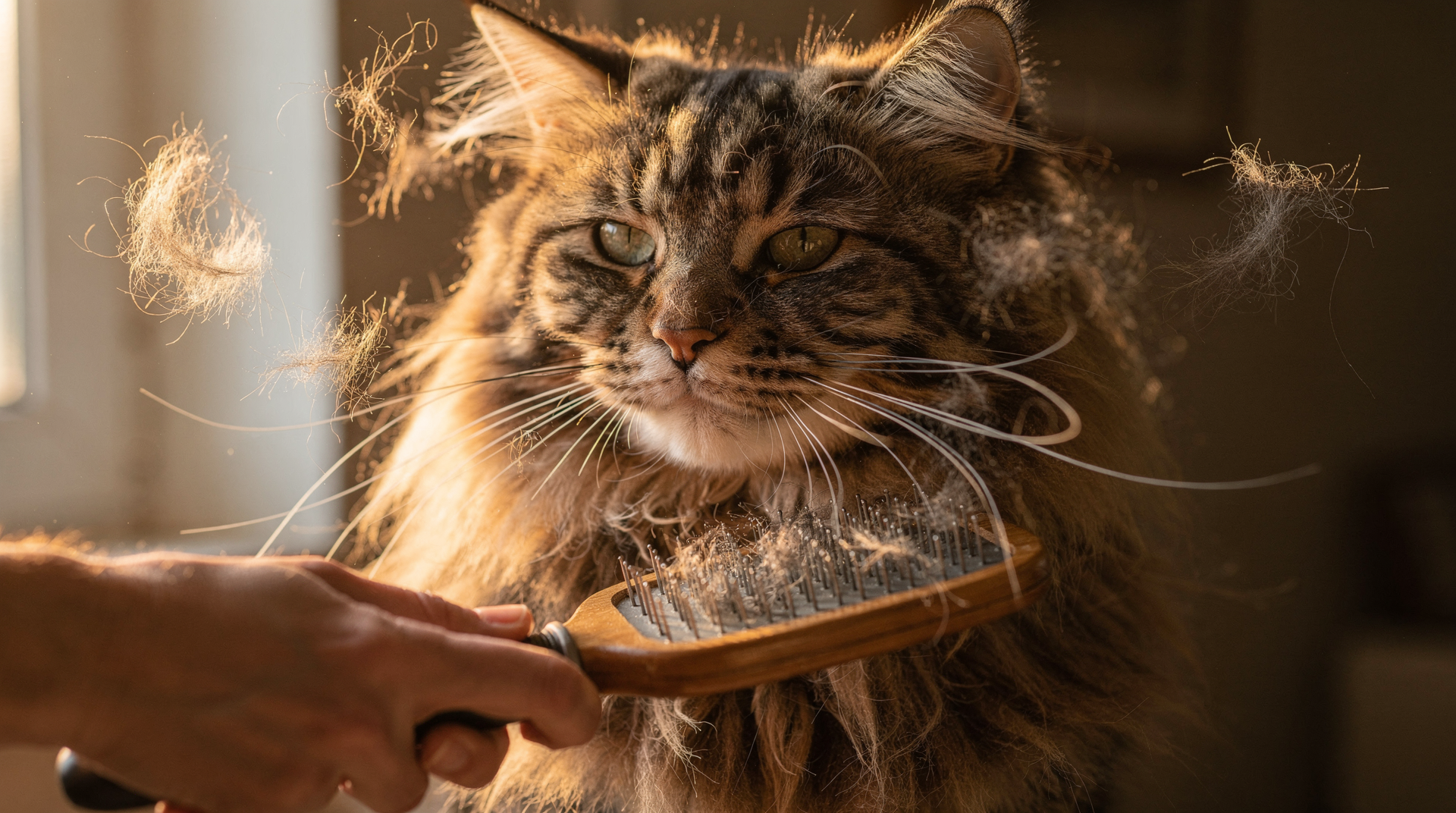
Grooming should remove loose telogen hairs before the cat ingests them or they compact into the undercoat. The most efficient tool depends on coat architecture: a fine-tooth stainless-steel comb reaches the skin and lifts trapped dead hair in longhaired and double-coated cats, while a soft slicker can help separate surface debris but should not be relied on as the primary de-shedding instrument. Rubber grooming mitts are useful for shorthaired cats with a dense coat because they increase friction at the hair shaft and collect superficial shed hairs without excessive traction. For cats with fragile skin, senior cats, or those with dermatitis, tool choice matters more than grooming frequency; aggressive brushing can trigger microtrauma, worsen inflammation, and increase defensive behavior around handling.
The goal is to work in the direction of coat lay with short, deliberate strokes and to stop before static, erythema, or skin twitching appears, because those signs indicate overstimulation or friction injury. Areas with the highest hair accumulation are the lateral thorax, flanks, rump, tail base, and axillae; these regions should be examined for mats, fleas, flea dirt, scabs, and odor, since any of these changes alters the grooming plan. Mats should be separated with a comb before they tighten into felted plaques. Once a mat is close to the skin, cutting at home is risky: feline skin is thin, mobile, and easily trapped in scissors, creating lacerations that may be hidden under the coat.
For cats that resist handling, brief sessions repeated daily are more effective than long grooming attempts because they preserve tolerance and reduce sympathetic arousal. Many cats accept grooming best after a meal or a play session when arousal is lower and the grooming routine predicts a positive outcome. Pressure matters: holding the cat in a way that restricts escape can increase struggle and vocalization, especially in cats with a history of painful experiences or arthritis. A stable surface, gentle support of the body, and frequent pauses improve cooperation and lower the risk of self-protective scratching. Cats with osteoarthritis often dislike grooming over the hips, spine, or hindquarters, so changes in grooming resistance in an older cat should prompt a pain assessment rather than be dismissed as temperament.
Coat type determines how often shedding control is needed. Heavy undercoated breeds may benefit from several short combing sessions per week during seasonal peaks, while many shorthaired cats do best with one to three brief sessions weekly, adjusted to individual coat density and grooming behavior. During peak shedding, grooming before dead hair disperses throughout the environment reduces the volume swallowed during self-grooming and can lower hairball frequency, though hairball remedies do not address the underlying need for coat removal. If a cat becomes greasy, especially along the tail or dorsal trunk, the issue may be sebaceous overactivity, obesity-related grooming failure, or endocrine disease, and bathing alone is not an adequate fix without identifying the driver.
If a grooming session reveals widespread dandruff, a rancid odor, crusts, or painful sensitivity to touch, the coat problem is no longer simple shedding and should be evaluated for dermatologic or systemic disease.
- Comb to the skin; brushing only the topcoat leaves the undercoat untouched.
- Start with the least sensitive body areas, then move to flanks, rump, and belly only if tolerated.
- Use grooming to monitor coat texture, because sudden dullness or brittleness often appears before overt hair loss.
- Increase grooming intensity gradually during seasonal sheds to prevent mat formation and reduce swallowed hair.
- Any cat that fidgets, spins, or bites during grooming may be painful, not merely uncooperative.