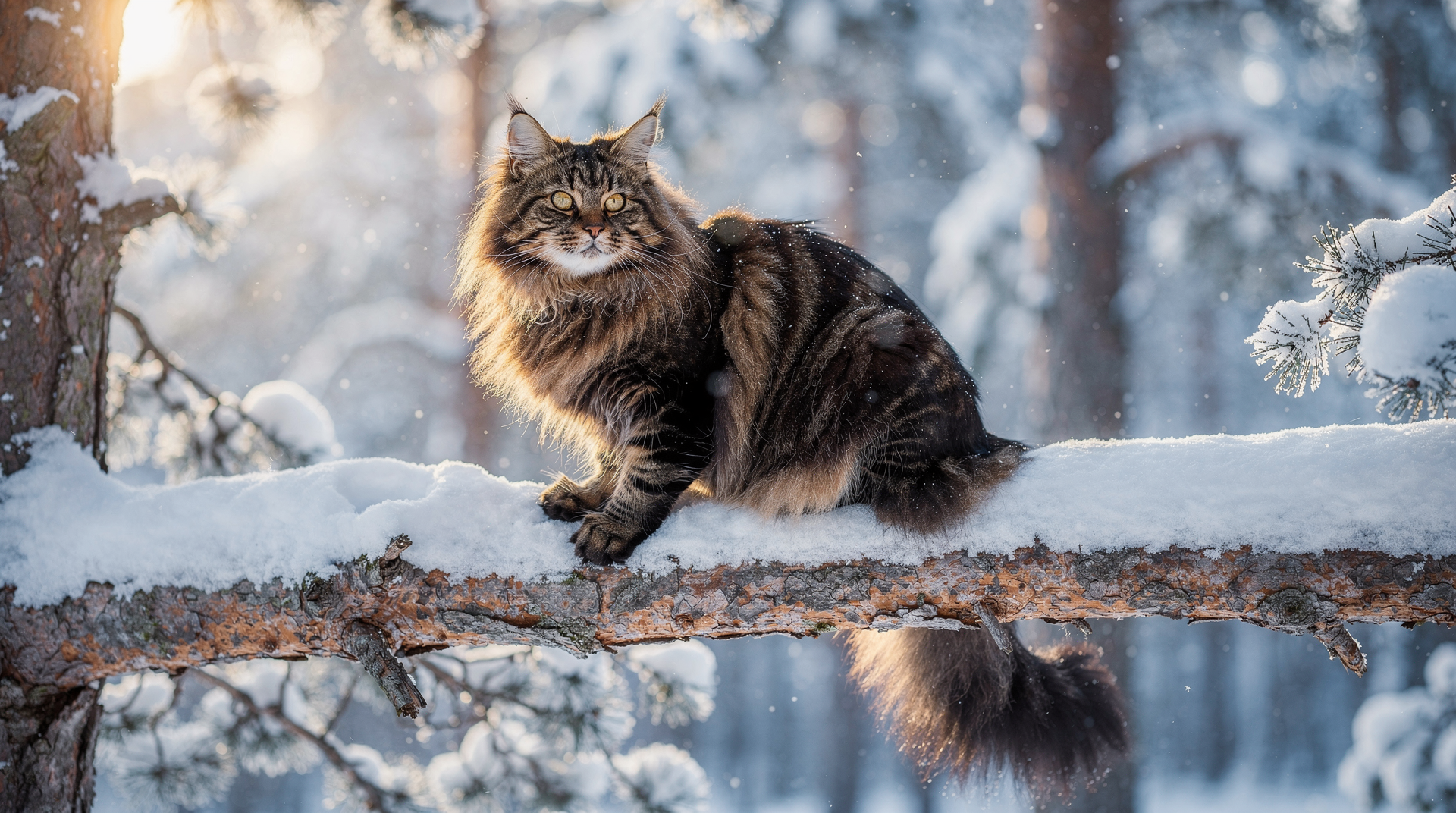
The Norwegian Forest Cat is a natural landrace shaped by cold, wet Scandinavian climates, and its body reflects that selective pressure: a large, muscular frame, heavy bone, and a dense double coat that functions as insulation and water resistance. Adults commonly appear more substantial than they’re in length alone because the thorax is broad, the hindquarters are powerful, and the rear legs are slightly longer than the forelimbs, a combination that improves climbing and descending stability on trees and uneven terrain.
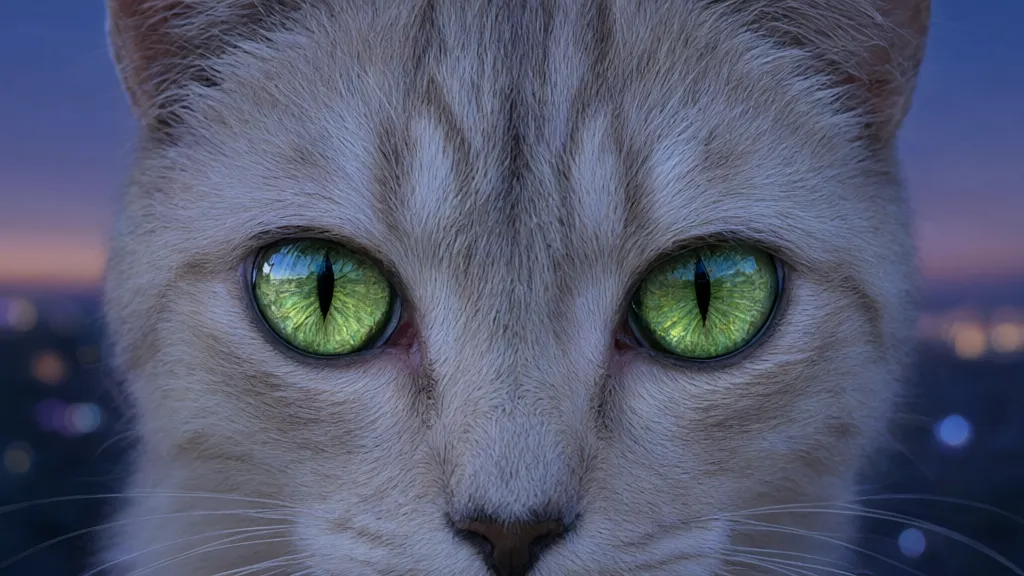
The head is a modified triangle with a straight profile, strong chin, and medium-to-large ears set high and wide, often with lynx tips that increase the visual impression of alertness. Almond-shaped eyes are set slightly obliquely and can appear more open in juveniles, then more hooded in mature cats as the facial furnishings develop. The muzzle is not extreme or flat; this matters clinically because this breed typically avoids the airway compromise seen in brachycephalic cats.
Coat structure is the defining trait. The outer coat is long, glossy, and semi-water-repellent, while the undercoat is dense but seasonally variable, becoming much lighter in warm months and dramatically fuller in winter. A full ruff, britches, and tail plume are normal and serve as thermal protection. Shedding is pronounced during seasonal coat change, not because the cat is unhealthy, but because photoperiod drives follicle cycling; indoor lighting can reduce the sharpness of that cycle and make shedding more continuous.
Color and pattern variety is broad, but this breed standard typically excludes pointed coloration. Eye color should harmonize with coat type rather than being tied to a single acceptable shade. Some lines show slow maturation, with full coat length, body mass, and facial development not reaching adult form until 3 to 5 years of age; this delayed physical maturity is characteristic and should not be confused with poor growth if the cat is otherwise thriving.

Rocco & Roxie Enzyme Stain & Odor Eliminator, 32 Fl Oz | Bio-enzymatic urine destroyer; CRI Certified Safe; made in USA; for carpets, bedding, litter boxes, crates & cars
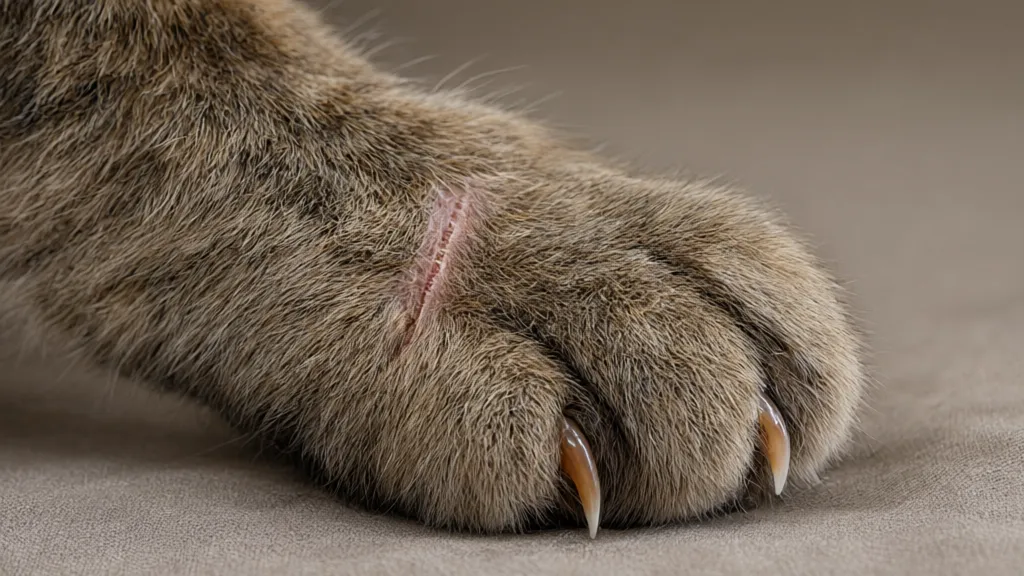
EUR 20.83 (as of September 21, 2026 14:21 GMT +00:00 - More infoProduct prices and availability are accurate as of the date/time indicated and are subject to change. Any price and availability information displayed on [relevant Amazon Site(s), as applicable] at the time of purchase will apply to the purchase of this product.)Sexual dimorphism is marked: males are often notably larger, with heavier jowls and more pronounced musculature, while females tend to remain finer in overall build without losing the breed’s strong-boned structure. Paw size is significant, with broad feet and tufting between the toes that improves traction on snow and rough surfaces. Tail length is typically long and bushy, and the cat uses it as a counterbalance during climbing and as additional insulation when curled at rest.
Several breed-linked traits can affect management. The dense coat mats most readily behind the ears, under the collar area, in the axillae, and in the groin where friction and moisture accumulate. During winter coat blow, dead undercoat can form tight felt if not removed. The same coat that provides excellent environmental protection also hides body condition; palpation over the ribs and waist is more reliable than visual assessment alone. In kittens and adolescents, a lean silhouette may be normal during growth spurts, but persistent narrowness with visible spine and hips suggests inadequate caloric intake or disease rather than breed type.
Breed phenotype should be read as function: the heavy coat, large frame, and climbing anatomy are adaptations, but they also change how weight gain, shedding, and skin health present in daily life.
Behaviorally, this breed tends to show measured confidence rather than constant sociability. Many individuals are people-oriented without being intrusive, preferring proximity, elevated observation points, and self-directed engagement over lap-seeking. That pattern reflects a cat that evolved in a working outdoor context: energy is spent efficiently, and attention is conserved until the environment is worth investigating. Owners often misread this reserve as aloofness, when it is more accurately selective interaction combined with strong environmental awareness.
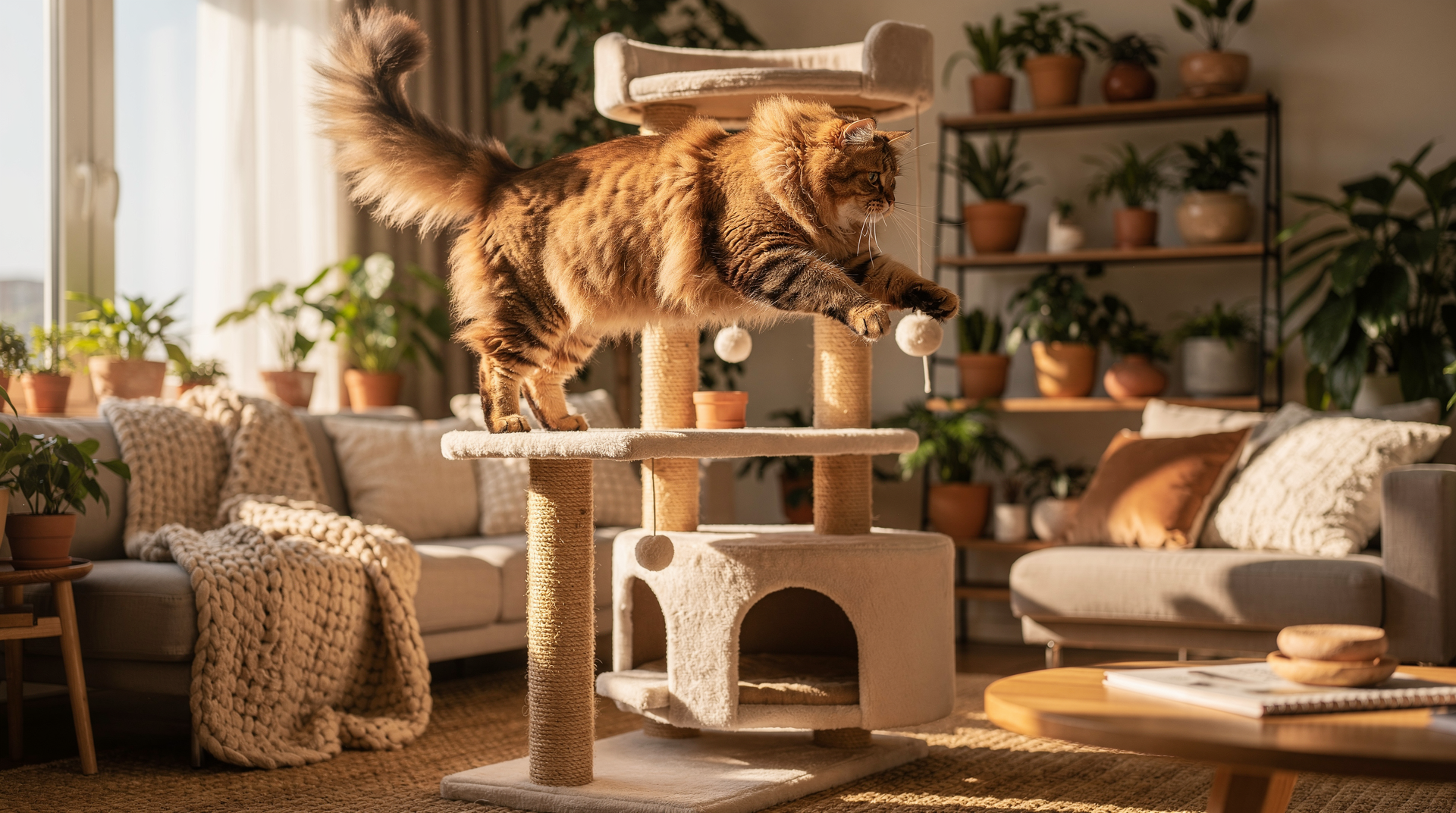
Play behavior is typically predatory and problem-solving in style. Norwegian Forest Cats often favor stalking, pouncing, climbing, and retrieving games that require sequence and spatial judgment rather than frantic repetition. Because their bodies are built for vertical movement, frustration is more likely when they lack shelves, cat trees, and routes that allow ascent and escape. Cats with insufficient outlets may redirect athletic drive into counter-surfing, door-darting, or nocturnal zooming, especially in young adults whose musculature develops faster than impulse control. Structured play that ends with a small food reward can reduce this arousal cycle by completing the hunt sequence.
They commonly tolerate handling well when introduced early, but tolerance should not be mistaken for indifference to restraint. The dense coat and heavy frame make prolonged grooming, lifting, or nail care physically more demanding than in lighter-coated breeds, so cooperative behavior must be built through short sessions with predictable touch patterns. Cats that freeze during handling may be suppressing distress rather than accepting it, and subtle signs such as tail twitching, skin rippling, ear rotation, and paw retraction usually appear before overt resistance.
Socially, many are stable with children and other pets if introductions are controlled and the cat has retreat options. Their size and climbing confidence can make them appear dominant, yet conflict usually escalates when their access to resources is blocked. Competition for litter boxes, feeding stations, or favored resting spots increases stress in a breed that often prefers defined territories within the home. Multi-level environmental design reduces friction because it allows choice without confrontation.
Vocalization is generally moderate and context-specific. Some individuals are chatty when greeting or requesting access to a room, but this breed is not typically characterized by incessant calling. A sudden increase in vocalization, especially at night, can signal boredom, thermal discomfort, hunger scheduling issues, or medical causes such as pain, hyperthyroidism, or cognitive change in older cats. In a large-bodied breed, behavior changes should always be interpreted alongside weight, mobility, and coat condition.
Adolescents may test boundaries through climbing onto high surfaces, pawing at doors, or repetitive attention-seeking during meal preparation. That behavior is not willful defiance; it’s often a consequence of high physical capacity paired with insufficient prediction of human routines. Rewarding calm waiting, feeding on a reliable schedule, and providing tall resting sites lowers arousal and makes the cat less likely to create its own entertainment.
Routine coat care is less about cosmetic grooming than about preventing mechanical and dermatologic problems created by a thick, weather-adapted pelage. The undercoat should be combed with a metal comb or slicker several times weekly, and more often during seasonal shed, because loose guard hairs and dead undercoat trap humidity against the skin and increase the risk of hotspots, dandruff, and mat formation. Mats are not merely untidy; they pull on the skin, restrict movement in the axillae and groin, and can hide dermatitis, ectoparasites, abscesses, or wounds until they’re advanced.
Bathing is usually unnecessary unless the coat is contaminated with grease, feces, or a skin product that cannot be removed by brushing, but the breed’s water-resistant coat means any shampoo must be thoroughly rinsed and the coat fully dried to avoid trapped moisture at the skin surface. Regular inspection of the ear fringes, tail base, and hindquarters is useful because these areas can accumulate debris even when the outer coat looks clean. Nail trimming matters more in a large, agile cat than many owners expect: long claws can alter climbing mechanics, snag in carpet, and contribute to painful toe flexion or ingrown tips in older, less active cats.
Body condition management is a major health priority because the coat masks early adiposity. The most reliable check is palpable rib coverage with a discernible waist and abdominal tuck; if ribs require pressure to feel or the back broadens without obvious muscle definition, the cat is overconditioned even if the coat makes the silhouette look athletic. Excess weight increases orthopedic load on the hips, elbows, and lumbosacral region, and in the breed the combination of large frame and exuberant appetite can make gradual fat gain easy to miss until mobility declines. Lean muscle should be preserved through measured portions, not free-feeding based on presumed high activity.
Nutrition should support slow maturation and coat turnover rather than merely calorie density. Growing kittens need adequate protein and controlled calcium-phosphorus balance to avoid abnormal skeletal development in a breed that continues to fill out for years. Adults do best on highly digestible diets with sufficient animal protein to maintain muscle mass and amino acids such as taurine, which supports myocardial and retinal function. During heavy shedding, omega-3 fatty acids can help modulate skin inflammation and coat quality, but they are adjuncts, not substitutes for appropriate protein and micronutrient intake. Over-supplementation of biotin or fat-soluble vitamins is unnecessary and can complicate formulation without measurable benefit.
Because this breed is athletic and often eager to climb, environmental injury prevention should focus on safe vertical structure rather than limiting activity. Stable cat trees with broad platforms, non-slip surfaces, and multiple exit routes reduce falls and conflict. Senior cats benefit from lower step heights and easier access to beds, litter trays, and feeding stations as muscle mass declines and joint stiffness increases. A cat that hesitates before jumping, lands short, or avoids high perches may be showing early pain, not laziness.
Health surveillance should include attention to inherited and common feline disorders that can be obscured by the breed’s hardy appearance. Hypertrophic cardiomyopathy occurs in many cat populations and may present as reduced stamina, quiet tachypnea, or sudden distress; a large frame does not protect against cardiac disease. Progressive retinal atrophy is uncommon but relevant in breeding decisions because early vision changes may first appear as night hesitation or enlarged pupils in dim light. Dental disease also deserves routine screening because the heavy coat can distract owners from subtle oral pain, which often shows up as slower eating, dropping kibble, or unilateral chewing.
Any combination of lethargy, reduced grooming, increased sleeping in low, hidden places, or reluctance to jump should be treated as a clinical sign, not a personality shift.
- Monitor litter box output daily; straining, small frequent urinations, or vocalization can indicate lower urinary tract disease.
- Weigh the cat monthly, ideally on the same scale, because gradual gain is easier to correct than established obesity.
- Inspect the coat during shed for mats, dandruff, scabs, flea dirt, and areas of thinning that may indicate overgrooming or pain.
- In seniors, screen for chronic kidney disease, arthritis, and hyperthyroidism when appetite, coat quality, or activity changes.